
Reviewed · GUIDED
Brussels: Fall and Rise of Art-Nouveau Guided Tour
Art Nouveau in Brussels is visual, but it can feel random until you know what to look for. This guided walk helps you read the style like a code, from architectural details to street-level craftsmanship.
I especially liked how the guide breaks down techniques you’ll see everywhere, with sgraffito getting real attention. I also enjoyed the chance to connect those details to Victor Horta and the Maison du Peuple remains, then keep the momentum with beautiful streets in the Brussels communes of Saint-Gilles and Ixelles. One thing to consider: it’s about 3 kilometers on foot for 150 minutes, so bring rain gear and expect a steady pace through real neighborhoods.
Key highlights worth your attention
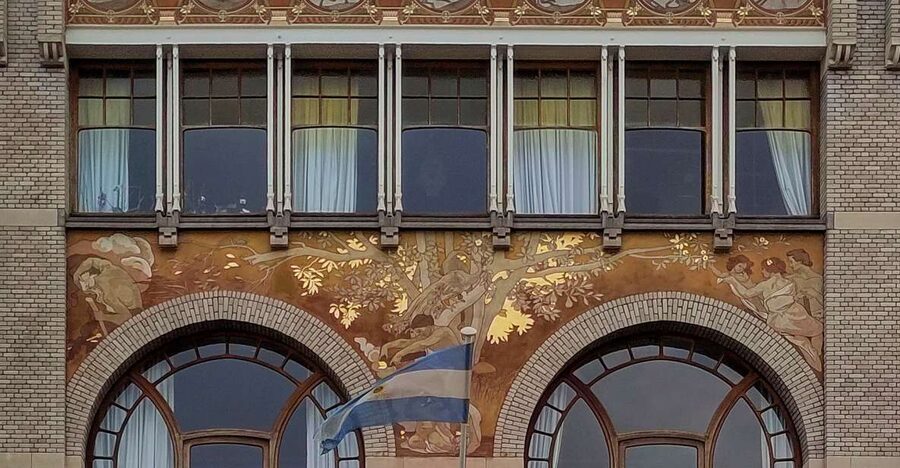
- Sgraffito explained clearly so you can spot it on building facades right away
- Technique comparisons that show how Art Nouveau surface decoration works in practice
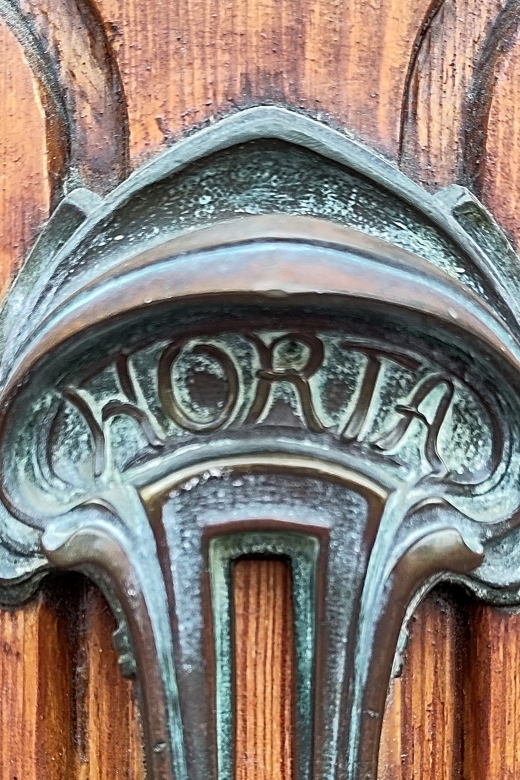
- Victor Horta focus, including the Maison du Peuple remains and its role in the story
- A walk through Saint-Gilles and Ixelles, two communes where Art Nouveau houses are especially stable
- A guide who answers questions, with a friendly, hands-on approach in Spanish
Art Nouveau in Brussels, why this tour clicks fast
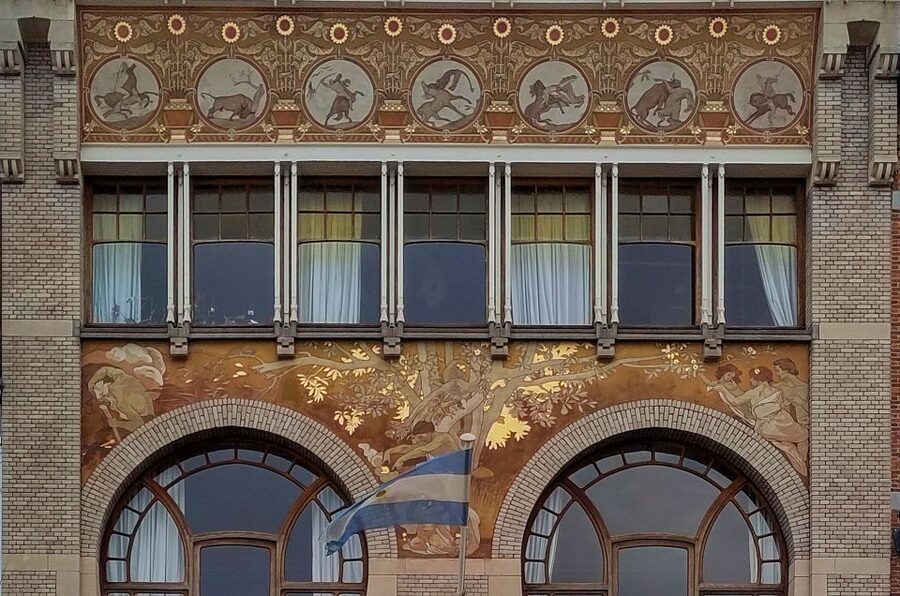
Brussels has a special relationship with Art Nouveau. The style isn’t just in one museum or one big landmark. It shows up on ordinary streets, on front steps, in doorways, and across building surfaces you would normally walk past without noticing.
This tour works because it gives you a practical lens. You’re not only looking at pretty facades. You’re learning how Art Nouveau gets made. The guide talks through the techniques that show up most often, then you apply those ideas as you move along a short route.
I like that this isn’t an all-day lecture. You get enough theory to understand what you’re seeing, then the walking keeps you engaged. It also helps that the route leans into areas where Art Nouveau houses are still standing with consistency, especially around Saint-Gilles and Ixelles.
If you want to enjoy Brussels more than you usually would from a quick photo walk, this format makes a difference. You come away with a set of clues you can use on your own the next day.
More days in Brussels:
- Brussels: Atomium Entry Ticket with Design Museum Ticket
★ 4.4 · 9,254 reviews - From Brussels: Guided Day Trip to Bruges and Ghent
★ 4.6 · 8,353 reviews - From Brussels: Bruges & Ghent Day Tour – 2 Fairytale Cities
★ 4.7 · 8,242 reviews
Getting oriented at Horta Metro, and why the starting spot matters
You meet next to Horta Metro station (lines 3 and 4), on the Chaussée de Waterlo, at number 187. The guide wears a Curiositas Mundus badge, which makes it easier to find the right person at the start.
Starting at a Metro stop matters in Brussels because the city is best explored in small legs. A meeting point near transit makes it simple to match your tour start time with your hotel location, and it also makes it easier to continue exploring afterward.
The tour runs for 150 minutes, which is a sweet spot for a walking experience. It’s long enough to cover meaningful streets and stop for explanations, but short enough that you won’t feel crushed if your schedule is tight.
Also, the tour includes additional audiovisual information. That’s useful on a walking tour because it gives you context without forcing the guide to explain everything while you stand in the rain or in front of a busy street.
One practical note: the tour is live in Spanish. If your Spanish is limited, you can still enjoy it, but plan on using a translation app. Having a few key architectural words ready can help you follow along.
What you learn about Art Nouveau techniques while you walk
The tour promises lessons on the most used techniques in Art Nouveau. That matters because Art Nouveau isn’t just curves and flowers. It’s also construction choices, surface treatment, and decorative effects that rely on real materials.
You’ll also get answers to the big “how does this work?” questions. For example, the tour focuses on what sgraffito is and how it’s different from frescoes. Even if you’ve never heard the terms before, the guide’s job is to turn those concepts into visible cues.
This is the type of learning that pays off immediately. Once you understand what a technique is meant to do, you stop seeing facades as flat pictures. You start noticing layers, texture, and intentional contrasts.
Art Nouveau also has a habit of blending function and decoration. The best examples look like they belong to a single design plan. During the walk, you get a sense for how architects and builders treated the building envelope as a canvas, not just a container.
And you’re not stuck on one corner. The route follows a route of around 3 kilometers, so you have time to see repeat patterns. That repeat view is where technique lessons become real. Your eye adjusts, and details become easier to find.
Sgraffito vs frescoes, the facade clue that changes everything
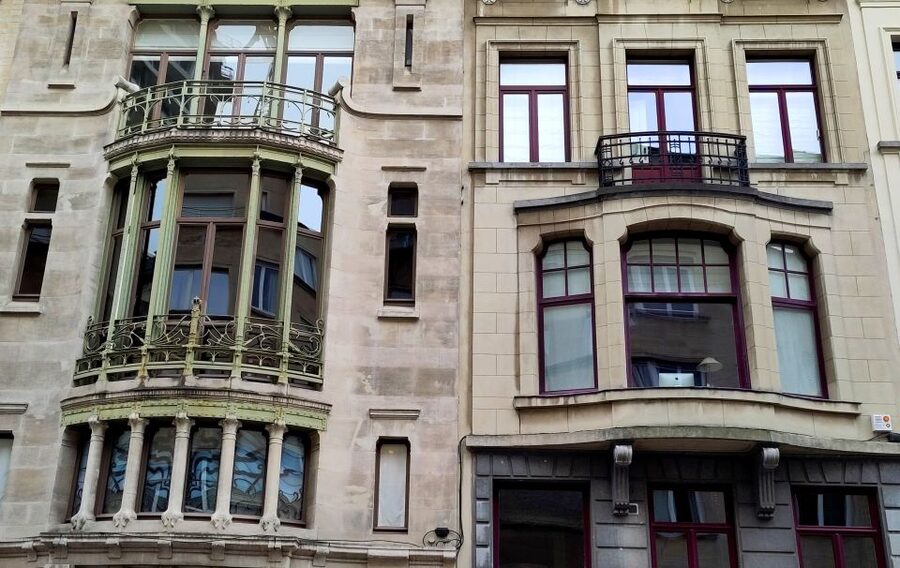
One of the most useful parts is the sgraffito segment, because it gives you a way to read facades quickly.
Here’s the core idea in plain terms. Sgraffito is a surface technique where artists scratch or cut patterns through a top layer to reveal a contrasting layer underneath. You usually notice it as drawn lines or carved-looking shapes on exterior surfaces, often in stucco or plaster finishes.
Fresco, on the other hand, is a painting method applied to plaster while it’s still wet, typically used more for interior wall decoration. Instead of “cutting down to reveal,” it’s about pigment working directly into plaster during application.
Why this matters for your Brussels walk: both techniques can show strong pattern effects, but they create different visual textures and you can spot them differently at street level. With the tour’s explanation, you’ll know what to look for when you see ornamental surface details.
That also helps you avoid a common travel mistake. Many people photograph facades without noticing whether the decoration is raised, carved, or painted onto the surface. Once you have the technique names in your head, your photos get better, too.
If you like architecture but sometimes feel you missed the point, this is the moment where it clicks. You’ll come away with at least one concrete tool for interpreting what you see on other buildings around Brussels.
A few more Brussels options to weigh up
- Brussels: Guided Walking Tour
★ 4.6 · 3,560 reviews - From Brussels: Full-Day Antwerp and Ghent Guided Tour
★ 4.6 · 1,019 reviews - Brussels: City Center Guided Food Tour with Tastings
★ 4.9 · 296 reviews - Brussels 3-Hour Guided Art Nouveau Tour
★ 4.0 · 282 reviews
Victor Horta’s Maison du Peuple remains, and why the story matters
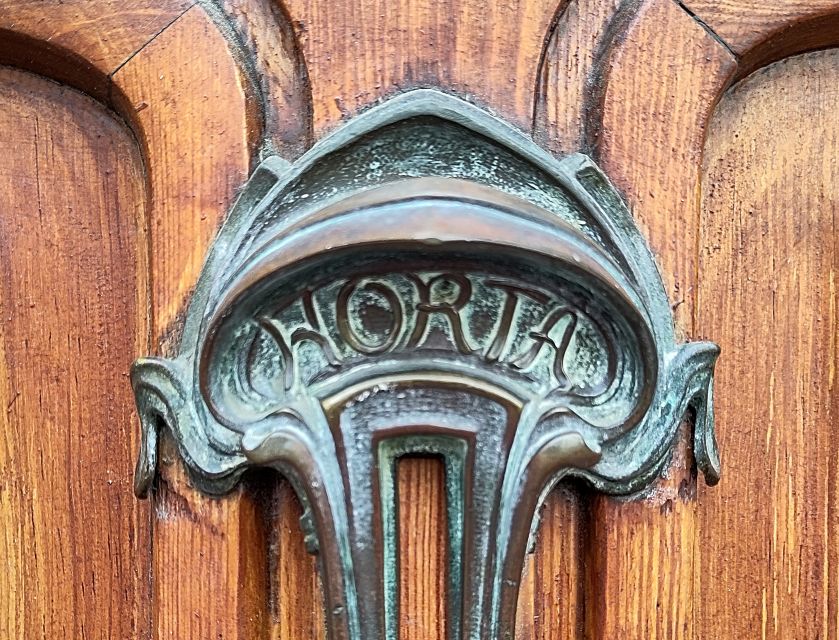
Victor Horta is basically the name attached to the “how did Art Nouveau become real in Brussels” question. During this tour, you’ll discover the historical remains of Victor Horta’s Maison du Peuple.
Even without a full building to walk through, the remains help you understand that Art Nouveau wasn’t only about private homes. It also shaped public and social spaces, and it carried ideas about modern life.
This stop is valuable because it ties the technique lessons to a bigger picture. You can see how an architect’s thinking shows up in details, but you also understand that those details were part of a real project with real ambition.
If you’re the type who likes a location to have a human meaning, this helps. It turns a facade into a clue about what the people behind the buildings were trying to do.
The tour keeps that connection moving. After you learn about the Maison du Peuple remains, you continue walking through street scenes that let you see how Art Nouveau fits into the everyday rhythm of neighborhoods like Saint-Gilles and Ixelles.
And if you enjoy asking questions, this is the kind of stop where a thoughtful guide can make the explanations click. In one recent run, the guide was Samuel, and the feedback centered on how clearly he explained Art Nouveau by pointing at multiple facades and answering doubts without hesitation.
Saint-Gilles and Ixelles streets, spotting Art Nouveau in real neighborhoods
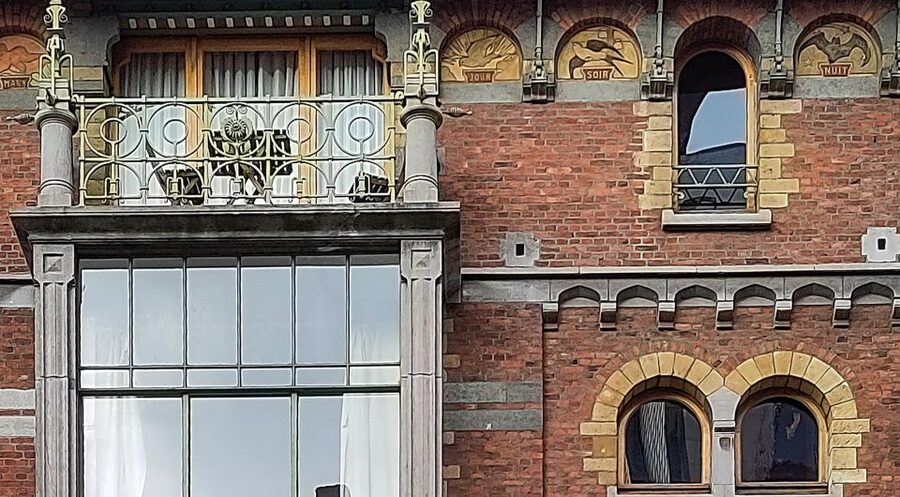
The tour route focuses on the outskirts of central Brussels and highlights the communes where Art Nouveau houses are especially stable, including Saint-Gilles and Ixelles.
This is where the walking becomes more than a museum loop. You’re moving through streets that feel lived-in, so the architecture has context. You can see how facades sit next to doorways, windows, and street layouts that weren’t built specifically for tourists.
You’ll admire some of the most beautiful streets of the Belgian capital along the way. The wording matters: you’re not being rushed from one “sight” to another. You’re given time to notice streetscapes, then connect them back to what the guide explained earlier.
This also means you’ll see variety. Art Nouveau isn’t a single uniform look. You get different interpretations, different ways of handling decorative surfaces, and different combinations of structure and ornament.
One practical benefit of focusing on streets in these communes: you can build your own follow-up plan. After the tour, you’ll know what to search for on your own, because the guide has given you a short list of visual cues.
If you care about authenticity, this kind of route is better than chasing only the most famous addresses. You still get the “wow” moments, but you also feel the rhythm of a city that grew around these buildings.
Timing, weather, and how to make the 150 minutes comfortable
The tour lasts 150 minutes, with about 3 kilometers of travel on foot. That’s enough time to learn and to walk without feeling like you’re sprinting. Still, it’s not a sit-down experience. You’ll be outside, stopping, looking, and listening.
Weather in Brussels can be unpredictable in fall. The tour specifically recommends bringing an umbrella and rain gear. I agree with that. Even a light drizzle makes it harder to read fine facade details, and an umbrella lets you keep moving without rushing into doorways.
The tour also includes audiovisual information, which is useful if conditions get uncomfortable. It gives the guide a way to keep sharing context without you staring at stone while your hands are freezing.
If you’re sensitive to walking, wear comfortable shoes. The route is short enough to manage, but the time includes stops for explanations. Plan on taking it easy between segments.
Also, because the guide leads in Spanish, you’ll get the most out of it if you can follow explanations at speaking speed. If you can’t, you’ll still benefit from seeing how the guide points at facades and uses visual cues. But your understanding will be faster with at least basic Spanish or a translation app.
Price and value, what $17 gets you in Brussels
The price is $17 per person, and for a 150-minute guided experience focused on a specific architectural subject, it’s a fair deal.
The value is not just the walking. It’s the combination of:
- a focused Art Nouveau theme, including technique definitions like sgraffito
- a historical anchor point tied to Victor Horta and Maison du Peuple remains
- an active street route across neighborhoods where Art Nouveau still shows up clearly
- audiovisual support that helps explain what you can’t easily see from far away
In other words, you’re paying for interpretation, not just access. A lot of architecture in Brussels is easy to photograph but hard to understand quickly. A guide helps you avoid that frustration.
This is also a good price point for first-time visitors to the Art Nouveau scene. You get a concentrated taste without committing to a full day of specialized tours. If you’re already planning a few sights in Brussels, this fits well as your “architecture with context” block.
If you’re on a tight budget, I’d still book it. For a little over an hour and a half, you walk away with better eyes. That makes the rest of Brussels more enjoyable on the days after.
Should you book this Art Nouveau Brussels tour?
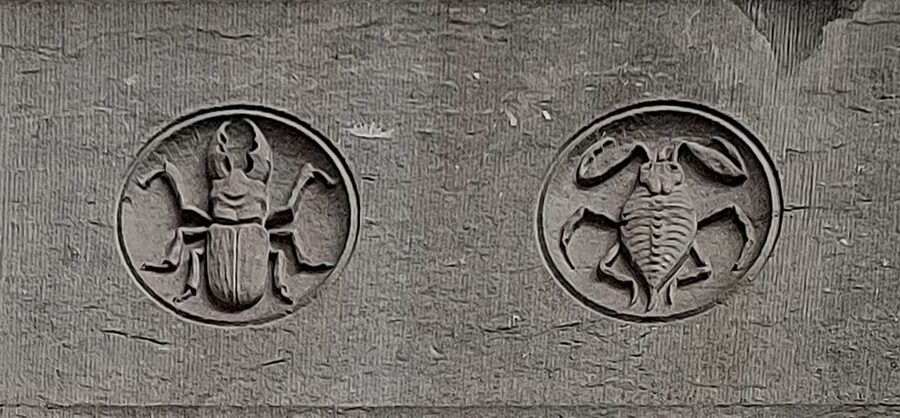
Book it if you want to understand Art Nouveau, not just see it. This tour gives you practical technique knowledge, like sgraffito vs frescoes, and then connects it to real streets in Saint-Gilles and Ixelles. You’ll also get a specific historical stop linked to Victor Horta and the Maison du Peuple remains.
Skip it only if Spanish is a hard barrier for you or if you dislike walking in the rain. Otherwise, it’s a strong way to turn Brussels into a “read the details” city for a couple hours.
FAQ
FAQ
Where is the meeting point for the tour?
You meet next to Horta Metro station (lines 3 and 4), on the Chaussée de Waterlo, at number 187. The guide will wear a Curiositas Mundus badge.
How long is the tour, and how much walking is involved?
The tour lasts 150 minutes and includes approximately three kilometers of travel.
What language is the live guide?
The live tour guide speaks Spanish.
Is the tour wheelchair accessible?
Yes, the tour is wheelchair accessible.
What should I bring for Brussels weather?
Bring an umbrella and rain gear, since rain is possible. It can help to also carry a raincoat or poncho.
How much does it cost, and can I cancel?
The price is $17 per person. You can cancel up to 24 hours in advance for a full refund.
Reviewed lately in Brussels
- Taxi Shuttle DE Brussels Airport < - > SPA (1 to 8 SEATS)★ 4.0 · 3 reviews
- WWII Battle of the Bulge Private Guided Day Tour from Brussels★ 5.0 · 3 reviews
- Pub Trail Brussels: an adventure full of surprises★ 3.5 · 3 reviews
- Brussels Exploration Game and City Tour on your Phone★ 4.0 · 3 reviews
- Private Day Trip from Brussels to Bruges★ 4.5 · 3 reviews
- Brussels : Must-See Attractions Walking Tour with a Guide★ 4.0 · 3 reviews
- Leuven: City Walk with Audio Guide in 7 Languages on your Phone★ 3.0 · 3 reviews
- Brussels: Museum Halle Gate Entry Ticket★ 4.1 · 3 reviews
Guided, compared.
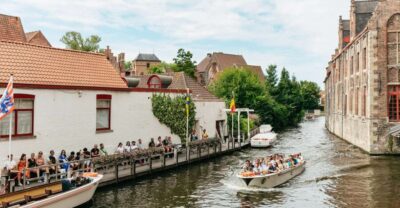
From Brussels: Guided Day Trip to Bruges and Ghent
Read our review →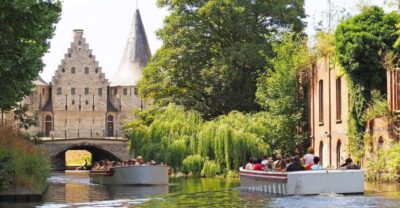
Ghent: 50-Minute Medieval Center Guided Boat Trip
Read our review →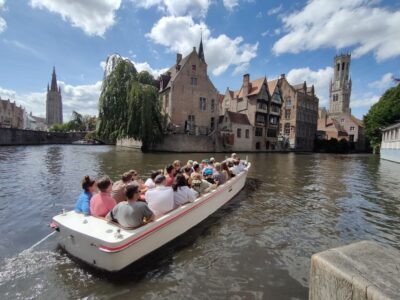
Bruges: Small Group Boat Cruise and Guided Walking Tour
Read our review →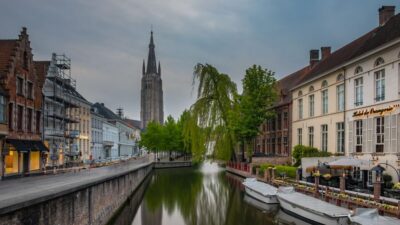
Bruges: Guided Tour & Boat Ride with Optional Beer Tasting
Read our review →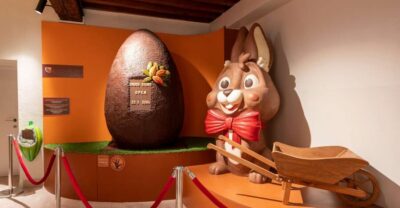
Bruges: Choco-Story Museum with Audio Guide and Tastings
Read our review →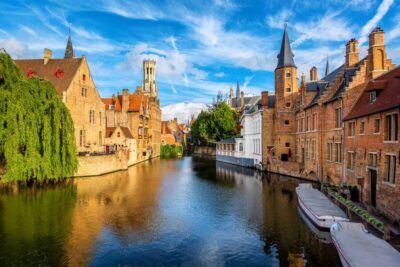
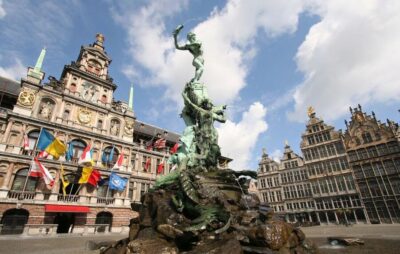
From Brussels: Full-Day Antwerp and Ghent Guided Tour
Read our review →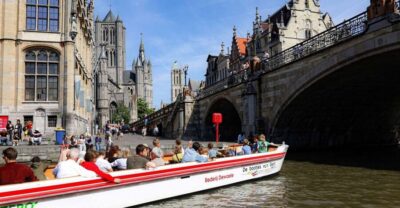
Ghent: 40 Minute Medieval Center Guided Boat Tour
Read our review →Browse the lists this tour appears in