
Reviewed · 1-HOUR EXPERIENCES
Explore Bruges in 60 minutes with a Local
Bruges can feel like a movie set if you wander without context. This fast local walk is interesting because it gives you a clear mental map in a short amount of time, then points you toward what to do next.
I like that you keep it small and personal, with a guide who can tailor the route to your pace and interests. I also like the smart stop choices, from the city’s civic center at Markt to the calm of the Begijnhof. One thing to consider: it is a walking tour, and it is not recommended if you have impaired mobility.
Key things that make this Bruges walk work
- Small group up to 8, so questions do not get lost in a crowd
- English-speaking local hosts, with stories that help landmarks make sense
- Focus on the “why” behind places like Burg, the canal at Dijver, and Rozenhoedkaai
- Ends at the Begijnhof Ten Wijngaerde, giving you a quiet finale
- Flexible timing based on weather and your pace, so you are not speed-walked
A 60-minute local walk gives Bruges a map you can keep
If Bruges is your first stop in Belgium, or if you only have one short window, a guide-led loop is a practical cheat code. You start in the thick of the old town, you get the main sights connected by a simple storyline, and you leave with a route you can repeat on your own.
This tour is designed for that first level of understanding. You are not trying to master every corner in an hour. Instead, you learn how Bruges got its power, how the city was organized, and which spots are iconic for good reasons. That means when you later return for waffles, canalside strolling, or photos, you know what you are looking at.
The small group size also matters. With a maximum of 8 people, you are more likely to ask your own questions and get real answers, not just headsets of prerecorded facts. And because the pace is adjustable, the walk feels like an intentional stroll rather than a checklist sprint.
A few more Bruges options to weigh up
- Bruges : Your private 1 hour photoshoot in the medieval city
★ 5.0 · 5 reviews - Bruges: Express Walk with a Local in 60 minutes
★ 5.0 · 4 reviews - Brussels: 1h-Bean-to-Bar Chocolate Making Workshop
★ 4.8 · 26 reviews
Start at Eiermarkt and end at Begijnhof Ten Wijngaerde
The walk begins at Eiermarkt 3A, 8000 Brugge, a convenient starting point in the historic center. You finish at Begijnhof Ten Wijngaerde, Begijnhof 30, 8000 Brugge. That matters because your day does not end in the loudest part of town.
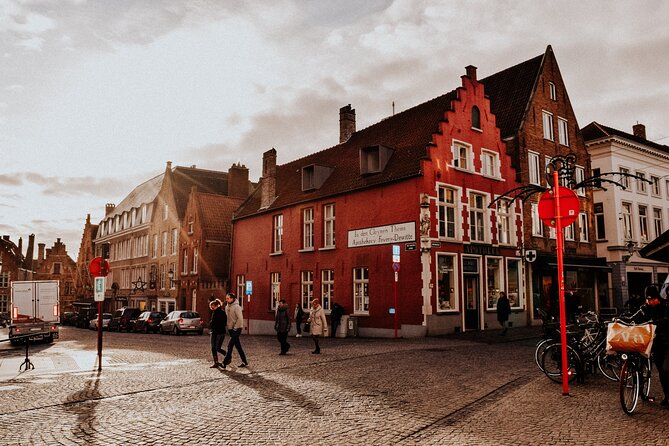
Ending at the Begijnhof is a nice trick. After you spend time on the main streets and photo points, you get a quieter, enclosed feeling. For many people, that is when Bruges really sticks. The shift from open squares to a courtyard-like calm helps your brain file the city away as more than just views.
Also, the tour is hosted by an independent local, not a big scripted operation. That is usually where you get the most useful moments: how to read the architecture, what to notice on a second pass, and what to skip when time is tight.
Markt: the city square where you learn how Bruges works
Your first major stop is Markt, Bruges’ central square. This is where you get a quick 101 that makes the rest of the city click. A local guide can explain how the civic and commercial life of Bruges shaped what you see around the square today.
Here is what I think makes Markt a smart opener. It is visually busy in a good way, and that is exactly where you need orientation. You can look up at facades, notice how streets funnel toward the center, and understand that Bruges is planned in layers. A short guided intro prevents you from feeling lost the moment you step out of the station or bus stop.
If you only do one thing in Bruges that is educational but not heavy, this is it. You will come away with a sense of direction and a short list of what to photograph next.
Burg and the civic buildings: understanding power, not just architecture
Next you head to Burg, the historic area that blends medieval and Renaissance influences. This is where the city’s government and public identity show up in stone and detail. The tour includes the chance to see Bruges City Hall area, and you also get pointers to major landmarks in the neighborhood, like the Gunpowder Tower.
Why does this part matter? Because Bruges does not feel like a random pile of pretty buildings. It feels intentional. Burg helps you understand that the city’s wealth and political importance were concentrated in a specific zone, and those choices are still visible on the street level.
The best guides make this feel like a story you can follow. One example from past guides is Patrick, who brings a mix of warmth and historical insight that makes the facts easier to remember. Another is Mario, who is especially strong at tying medieval significance to what you see, including how Flemish artists connect to the visual culture of the region.
If you are the type who likes to know why a place is famous, Burg is where you get that payoff quickly.
More days in Bruges:
- Bruges: Small Group Boat Cruise and Guided Walking Tour
★ 4.8 · 4,102 reviews - Bruges: Guided Tour & Boat Ride with Optional Beer Tasting
★ 4.4 · 3,894 reviews - Historical Walking Tour: Legends of Bruges
★ 5.0 · 2,541 reviews - Bruges: Choco-Story Museum with Audio Guide and Tastings
★ 4.2 · 1,825 reviews
Dijver canal stroll: how to spot Bruges charm beyond the postcard
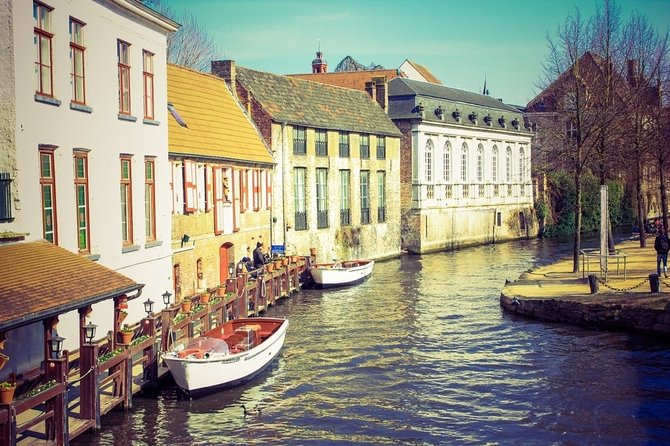
After the civic core, you move along Dijver, the canal route that defines the mood of Bruges. This is where the city shifts from formal buildings to water-level beauty, with serene canal views and small businesses nearby.
This stop is valuable because it teaches you how to look. Instead of just snapping photos, you learn what to pay attention to: the angles of views, how the canal corridor frames buildings, and why certain spots feel especially iconic at different times of day.
Dijver also helps you understand Bruges as a working city historically, not only a museum. Water mattered for trade and daily life, and the canal setting is the reason the city still feels so distinct.
Practical tip: if it is chilly or breezy, canals can feel colder than you expect. Wear layers. And if you see rain in the forecast, ask your guide how flexible the route can be, since stops can vary depending on weather conditions.
Rozenhoedkaai: the photo point that teaches you timing and angle
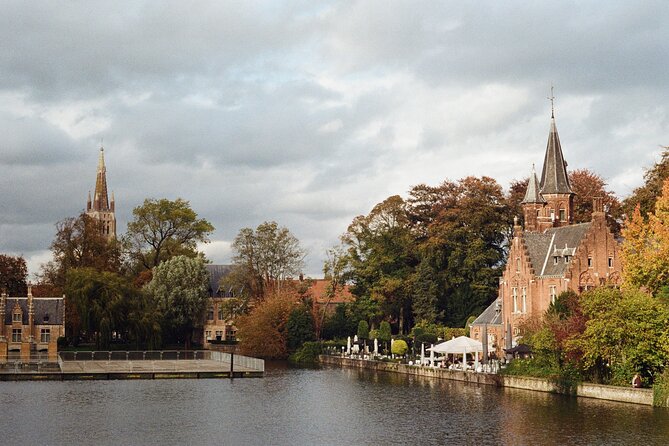
Then you reach Rozenhoedkaai, one of the most photographed places in Bruges. Yes, it is romantic, but the better reason to include it on a short tour is that it shows you the visual formula for Bruges.
You will get breathtaking views, and a good guide can coach you on angle and timing in plain terms. The aim is not to stand there hoping for the right shot. It is to understand why this spot looks the way it does, and how to reproduce the feeling from nearby streets after the tour ends.
This is also the kind of stop where a guide can add personality. For example, Guy has been noted for making the tour feel more like a conversation than a nonstop lecture, and that relaxed tone is a big part of why the Rozenhoedkaai moment lands well. When you are not being rushed, you take in the view instead of just collecting a photo.
If you have limited time, do not overthink this stop. Let it be the classic Bruges image, then move on with a cleaner sense of what you want to chase next.
Begijnhof Ten Wijngaerde: a quiet ending after the main sights
Your last stop is the Begijnhof Ten Wijngaerde, a historic complex built around a courtyard with traditional whitewashed houses. This is the calm part of the walk, the one that makes the city feel human-scale.
In an hour or so, you go from squares and civic power to canal beauty and then to a secluded domestic courtyard. That pacing matters. It is not random. It gives your brain a release valve before you head back out on your own.
If you love architecture, this is where you can shift from big landmark seeing to texture and atmosphere. You can slow down, look at the way spaces are enclosed, and appreciate why this kind of place is preserved.
Also, ending here is practical. You are near an area that naturally supports lingering, with the feeling of a short mental reset.
Group size, pace, and guide style: why your experience feels personal
This walk is limited to a small group up to 8 travellers, so you are not stuck behind a line. The highlights call out intimate Bruges time, and the structure supports it. The route adapts to your interests and walking pace, which is important when you are doing Bruges in a hurry.
Here is what that means for you on the ground:
- You can ask questions when something grabs you, like a building detail or a street name.
- You can move at a comfortable speed, especially if you stop to read or photo-shop a view.
- Your guide can adjust the order of emphasis depending on weather.
The reviews also point to a clear pattern in what works: guides like Patrick and Mario are praised for being warm, funny, and passionate about history. Guy is praised for a conversation style that feels less like a barrage of information. That combination is ideal for a short tour because it keeps your attention without turning it into a lecture.
If you want the maximum value from the hour, come with a few questions ready. Even simple ones like What should I see next? or Where is best for chocolate and waffles? help your guide give you actionable recommendations.
Value and price: is $94.12 worth it?
The price is $94.12 per person, for about 1 to 1.5 hours in English. That is not the cheapest way to see Bruges, but it can be good value when you consider what you are buying: orientation, local context, and a guided route that hits key landmarks efficiently.
Here is how I think about value in a city like Bruges:
- If you have never been, the guide compresses the learning curve fast. You spend less time figuring out what matters.
- If you do not have a lot of time, this structure prevents the common mistake of wandering for an hour and realizing you saw the wrong things.
- You also get personalized recommendations, so your remaining time becomes more efficient.
You should also consider what is not included. Entry tickets for public transportation, museums, and monuments are not included, and your own expenses are not included. If you plan to add museum stops or paid attractions, factor that into your total budget.
For many people, the best decision is to treat this as your opener. Once you understand the layout and landmark meaning, you can spend your own time on the parts you actually want, without paying a guide again for every stop.
Practical tips so your hour feels smooth
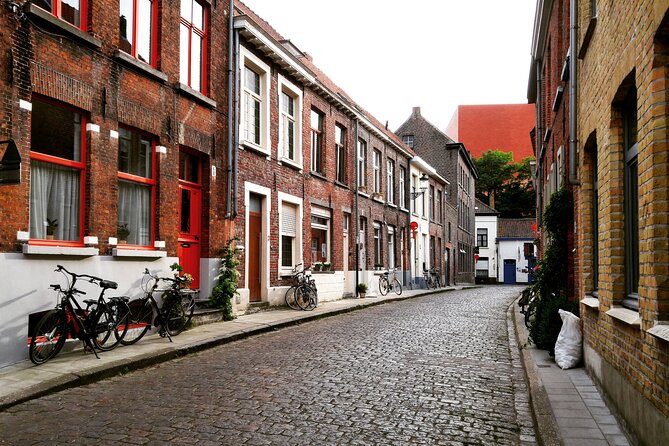
Bruges is walkable, but it is still old-town walking. Plan comfortable shoes. Cobblestones can make your feet angry if you are underprepared.
Here are a few other practical notes based on the tour details:
- You will receive confirmation at booking time.
- This tour uses a mobile ticket.
- Service animals are allowed.
- The route is near public transportation, which helps if you want to start or return using transit.
- Stops may vary with weather.
One more consideration: it is not recommended for people with impaired mobility. If that applies to you, you might want to look for a different format that reduces walking and uneven surfaces.
Should you book this Bruges local walk?
Book it if you want Bruges to make sense quickly. If you are short on time, new to the city, or you like getting context from someone who grew up with the place, this tour fits well. The small group size, English availability, and the way the walk ends at the Begijnhof Ten Wijngaerde make it a smart, efficient loop.
Skip it or choose another option if you dislike walking, need step-free accommodations, or you are the type who prefers to go completely independent with no structured stops. Also, if you already know Bruges well and only want museum entry, remember that entry tickets are not included.
If you are on the fence, a simple approach works: use this as your first hour plan. Then you can decide what you want more of, canals, civic squares, or quiet courtyards, without wasting your limited time.
FAQ
How long is the Bruges walking tour?
It runs about 1 hour to 1 hour 30 minutes.
What language is the tour offered in?
The tour is offered in English.
What group size should I expect?
The tour has a maximum of 8 travellers.
Where does the tour start and end?
It starts at Eiermarkt 3A, 8000 Brugge, Belgium, and ends at Begijnhof Ten Wijngaerde, Begijnhof 30, 8000 Brugge, Belgium.
What is included, and what is not?
Included are a knowledgeable local, a small group experience, and personalized recommendations. Not included are personal expenses and entry tickets for public transportation, museums, and monuments.
Is there a refund if my plans change?
Yes, you can cancel for a full refund if you cancel up to 24 hours in advance. If you cancel less than 24 hours before the start time, the amount paid is not refunded.
Reviewed lately in Bruges
- Belgium’s Gems: Bruges & Ghent Full Day Shore Trip from Zeebrugge★ 4.5 · 3 reviews
- Private 3-hour walking tour of Bruges with official tour guide★ 4.0 · 3 reviews
- Bruges: Ticket Volkskundemuseum (Folk Museum)★ 5.0 · 3 reviews
- Explore the Instaworthy Spots of Bruges with a Local★ 5.0 · 3 reviews
- Bruges Photo Session By a Pro★ 5.0 · 3 reviews
- Bruges: Private custom tour with a local guide★ 4.9 · 3 reviews
- Self-Guided Secrets Tour – Explore Bruges & Miss nothing★ 5.0 · 4 reviews
- Family Friendly Guided Bike Tour from Bruges to Flatlands★ 5.0 · 4 reviews
1-Hour Experiences, compared.

Brussels: 1h-Bean-to-Bar Chocolate Making Workshop
Read our review →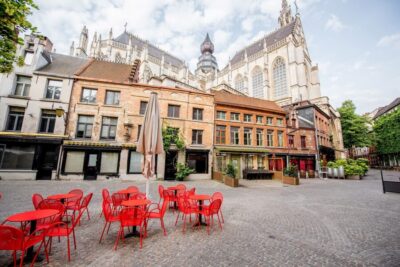
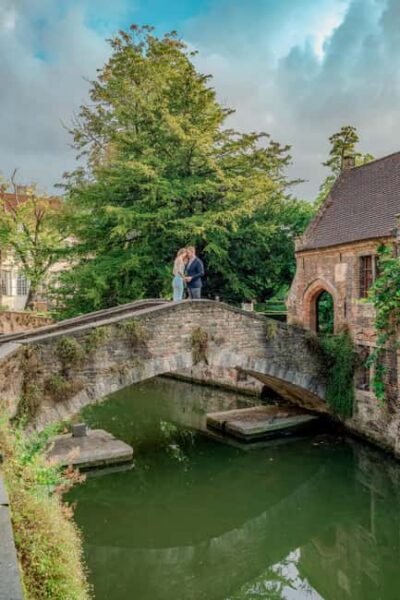
Bruges : Your private 1 hour photoshoot in the medieval city
Read our review →
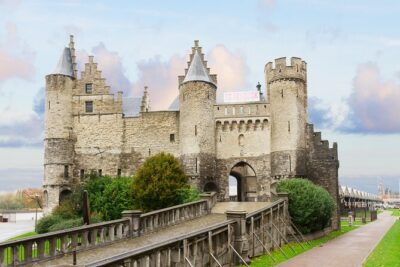
Brussels: Express Walk with a Local in 60 minutes
Read our review →Browse the lists this tour appears in