
Reviewed · DAY TRIPS IN BRUSSELS
Bruges and Ghent Day Trip from Brussels
Bruges and Ghent in a single day is interesting because it pairs two UNESCO medieval cities with one transport plan. You get a guided walk where the guide points out the details you’d otherwise zip past, then you get time to wander for chocolate, beer, and photos.
I love the practical routing: you start in Brussels, ride with A/C, then come back to the same meeting point. I also like the mix of guided stops and free time, which keeps the day from feeling like one long lecture.
One drawback to think about: this is a long day with a lot of walking, and the bus may park a bit away from the exact tour spot. If you are not into cobblestones or you need a lot of downtime, this may feel tight.
Key things that make this day trip work
- Two cities, one itinerary: Bruges first, Ghent second, with coordinated transport back to Brussels.
- Guided walks with story-driven stops: cathedrals, guild halls, river views, squares, and legends.
- Photo-friendly moments: Boniface Bridge, Rozenhoedkaai, and Saint Michael’s Bridge are built into the route.
- Headphones might matter: radio-guide rules can kick in, and you may need a 3.5 mm wired set or buy one for €1.
- Enough freedom to shop and eat: about 1.5 hours in Bruges and about 1 hour in Ghent, depending on the day.
- Small-ish max group: maximum 45 travelers, and smaller groups usually move through streets easier.
The pacing: how the day fits 2 UNESCO cities
This is a roughly 10-hour day trip starting at 8:30 am from Carrefour de l’Europe (Brussels 1000). The big picture is simple: you ride to Bruges, walk and sightsee with a guide, get free time, then transfer to Ghent for another guided walk and free time.
The tour is designed around “short guided stops, then your turn.” In Bruges, you get a longer block of independent exploring, about 1.5 hours. In Ghent, free time is about 1 hour. That’s enough for a snack, shopping, and a proper wander if you keep moving. If you want a slow sit-down lunch, you will feel the clock.
Also, build in the reality of timing. One review complaint was that the bus parked about 15 minutes away from intended spots in both cities. So yes, the schedule is planned, but you should expect some walking between “where the bus stops” and “where you gather.”
More Day Trips in Brussels
- From Brussels: Guided Day Trip to Bruges and Ghent
★ 4.6 · 8,353 reviews - Luxembourg and Dinant Day Trip from Brussels
★ 4.0 · 1,474 reviews - From Brussels: Bruges Day Trip with Boat Tour Option (ENG)
★ 4.6 · 1,352 reviews
Brussels to Bruges: the bus ride and first quick checks
Your day begins at Carrefour de l’Europe, and the bus heads toward Bruges with a guide guiding the day’s flow. The first listed Bruges stop is Bargeplein (Katelijnparking). You get about 10 minutes here, including a bathroom break, and the guide tells you when to be back at the bus.
This first stop matters more than it sounds. If you are prone to getting separated, use this moment to note landmarks and confirm the exact reboarding time. Your “buffer” for the rest of the day is limited, so it helps to start organized.
Bruges walk: Minnewater, Begijnhof, and the postcard corners
Bruges is where this trip shines if you want concentrated medieval scenes without doing a train timetable. The guided route hits a thoughtful spread of places, from quiet courtyards to lively squares to photo spots.
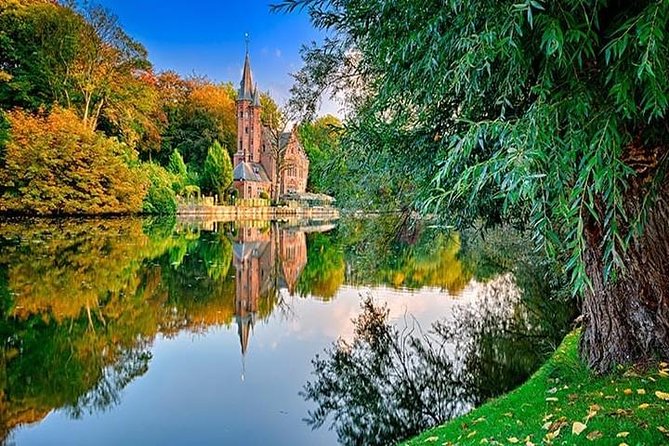
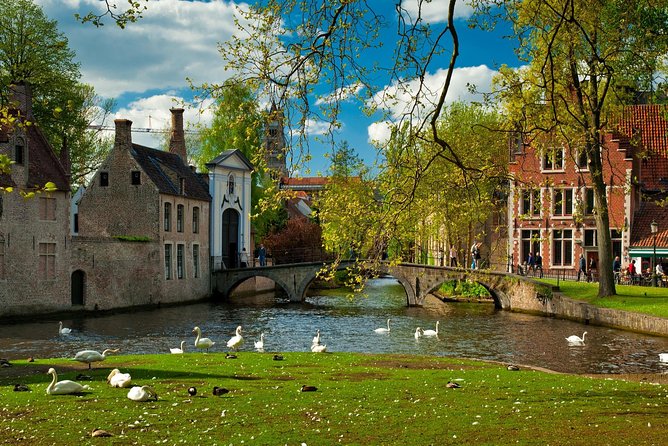
Minnewater (Lake of Love)
You start with Minnewater, often called the Lake of Love. Expect a scenic pause where the guide shares the story tied to Bruges and why this lake became part of the city’s romance narrative. The big plus here is atmosphere. Even a short stop feels good if the weather is cooperating.
A few more Brussels options to weigh up
- From Brussels: Bruges Day Trip with Boat Tour Option (ES)
★ 4.7 · 1,171 reviews - Bruges Day Trip from Brussels
★ 4.5 · 619 reviews - Amsterdam Day Trip from Brussels With Cheese, Clogs and Windmills
★ 3.5 · 521 reviews - From Brussels: Bruges Full-Day Trip by Train
★ 4.5 · 232 reviews
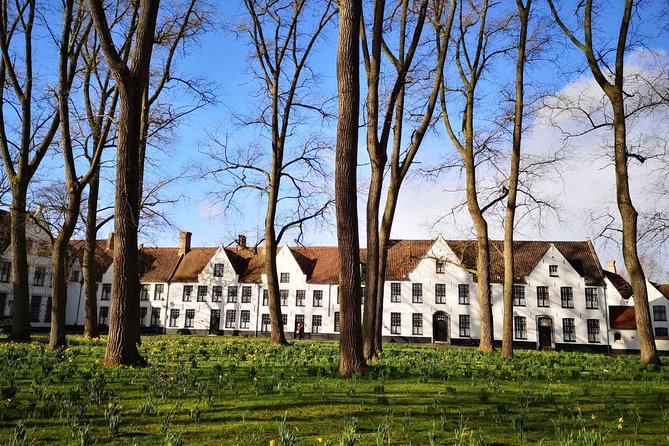
Begijnhof (women’s community)
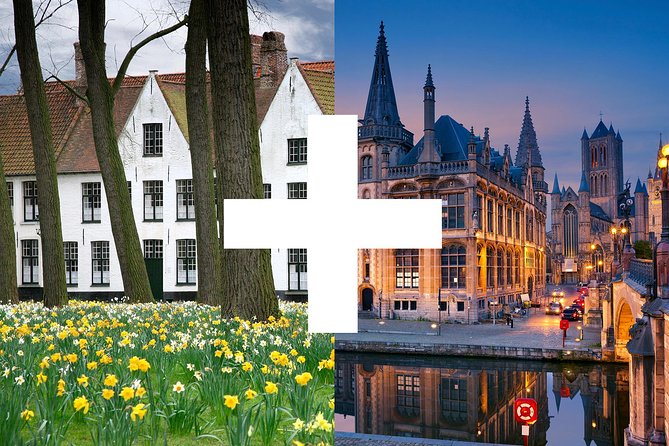
Next is the Begijnhof, founded in 1245. This is one of those stops that feels calmer than the main streets. The guide explains how this community of women preserved a different side of daily life in medieval Bruges. You get a short guided window, so don’t treat it like a museum visit. Instead, treat it like a “slow down and notice” moment.
Chocolalino (artisan chocolate tasting)
Then comes the chocolate stop at Chocolalino, one of the certified artisan shops. You get a quick tasting moment and guidance on how to tell handmade chocolate from industrial styles. If you are picky about chocolate, this is a practical stop, because it gives you criteria you can use later in town.
Walplein and Stoofstraat: beer and old houses
Two small-but-fun stops follow:
- Walplein, where the guide talks beer history.
- Stoofstraat, where you learn how to spot clues of original medieval houses.
These are short stops, but they give you a lens for reading the city. You stop seeing buildings as random backdrops and start seeing them as old structures with survival stories.
The bridges and Saint John’s Hospital area
You also get built-in photo time from a little bridge, then you head toward Saint John’s Hospital (Old St. John’s Hospital). The guide explains how the medieval health system worked. Right near there is Onze-Lieve-Vrouwekerk (Church of Our Lady), where the guide mentions curiosities about the Madonna and Child sculpture attributed to Michelangelo inside the church.
This section is a good example of what the best guides do on this tour. Guides like Antonio and Angie were praised for mixing history with fun facts and staying organized even when weather or crowds get messy. If your guide keeps things lively and clear, this area can feel more meaningful than the “look, then move on” rhythm.
Gruuthusemuseum, Boniface Bridge, Rozenhoedkaai, and tanners
Next up:
- Gruuthusemuseum exterior area, focused on the prominent Gruuthuse family (XVII to XVIII centuries).
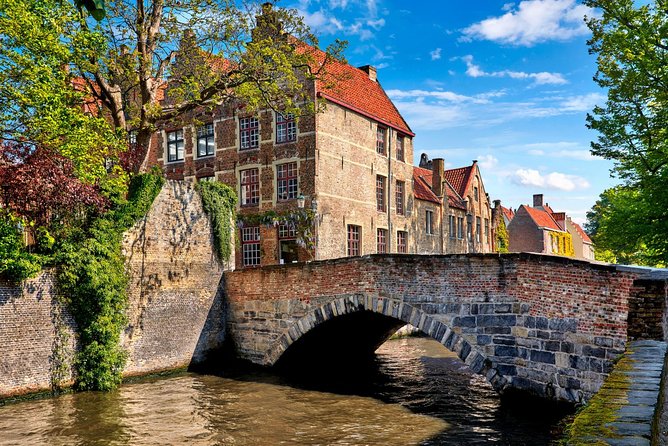
- Boniface Bridge, with a legend plus time for photos.
- Quai du Rosaire / Rozenhoedkaai, the most photographed spot, tied to the story of the pier of the roses.
- Huidenvettersplein (Tanners square), where you learn how tanners worked in medieval Bruges.
The reason I like this clustering is simple: it takes you through Bruges like a movie sequence. You walk from power and wealth, to love and legend, to work and industry. That mix keeps the day from turning into “just pretty streets.”
Burg Square and Grote Markt: the big finale
The guided Bruges loop ends at:
- Burg Square, with Gothic Town Hall, the Old Court House, and the Basilica of the Holy Blood.
- The Markt / Grote Markt, where the guide ties together what surrounds the square and offers practical tips for where to eat and where to shop.
This final guided segment is your setup for free time. I’d treat it as your cheat sheet. If you want a chocolate purchase plan, or you want to pick a café without guessing, Grote Markt is where you get the direction.
Bruges free time: use it for chocolate, lunch, or harbor wandering
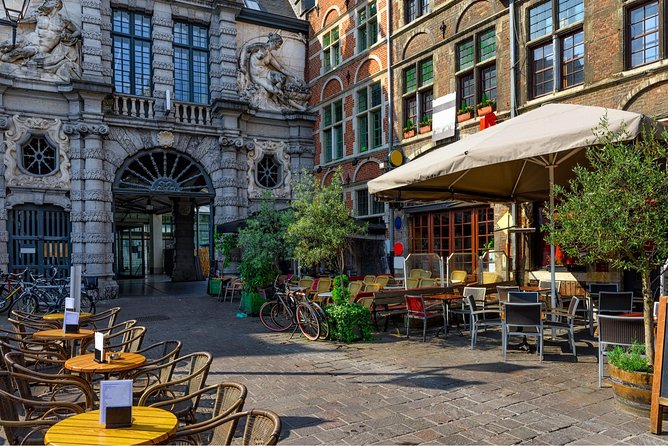
After the guided walk, you get about 1.5 hours in Bruges (timing depends on traffic and group rhythm). This is the make-or-break part of the day.
If you want a sit-down lunch, you will likely need to move smart. Bruges is easy to get distracted in. One common complaint was that the free time can feel tight for a full lunch plus deeper chocolate shopping and exploring the later parts of town. So here’s my practical approach:
- Pick one “anchor” goal first (lunch or major chocolate shop).
- Do photo stops as you walk, not as separate missions.
- If crowds are heavy, go a block or two off the main lanes.
Your guide will also remind you when and where to return to the bus at Bargeplein (Katelijnparking).
Transfer to Ghent: the move you should plan for
Between cities, you’re back on the bus. Expect the day to feel longer once you include this transfer. Ghent is compact compared to Bruges, but the timing is still tight, so it helps to treat the transfer as “reset time,” not time to drift.
Once you arrive in Ghent, you start walking to the center for the guided tour.
Ghent guided walk: town hall, Belfry, and St. Bavo’s inside access
Ghent feels different from Bruges. The streets are lively, but the city structure reads more like a working medieval town.
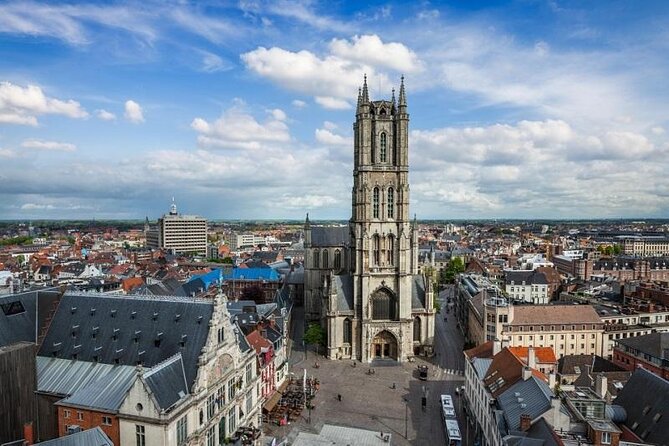
Ghent Town Hall and Het Belfort
You begin in front of the Town Hall (Stadhuis) for an explanation of its architectural styles. Then you move to Het Belfort van Gent, with its emblematic tower and the story tied to the dragon.
These stops give context. You’re not just seeing towers. You learn what they meant to civic life.
Saint Bavo’s Cathedral: the key interior highlight
Next is St. Bavo’s Cathedral. The tour includes time to discover the outside and inside of the cathedral, where the famous painting by the Van Eyck brothers, The Adoration of the Mystic Lamb, is kept.
This is the stop that turns a good “city tour” into a memorable day. If your timing allows, don’t rush your interior look. The cathedral is where you actually feel the weight of medieval art and why Ghent matters.
Streetscapes: St. Nicholas Church, guild halls, and Korenmarkt
You then pass by St. Nicholas Church and head to the Masons’ Guild Hall exterior and the Korenmarkt area tied to the former post office history. Again, these are short, guided “spot the clue” stops.
Saint Michael’s Bridge and riverfront scenes
Then comes a big photo section:
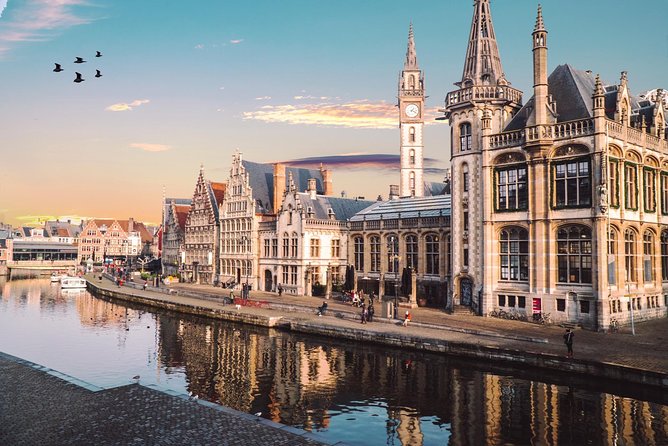
- Saint Michael’s Bridge for photos and the story of the tower.
- Graslei and Korenlei along the Lys riverbank, with views over classic riverfront buildings (including a mention of the Masons’ Guild House and the Marriot Hotel area).
If you love river scenes, this portion delivers. And if you like getting photos without being in a separate line or paying for yet another activity, this is efficient.
OOOST, Kleine Vismarkt, and Sint-Veerleplein
The walk continues through:
- OOOST, the Great Butchers’ area dating back to the 15th century, originally a covered market.
- Kleine Vismarkt, where you get a brief stop at a traditional market stall and hear about cuberdon candy.
- Sint-Veerleplein Square (St. Veerleplein), the final guided stop, with tips for where to drink Belgian beer and where to find souvenir shops, plus reminders about the bus pickup time.
Guides like Blanca and JC (Harris) were specifically praised for being organized and giving strong recommendations for how to spend the free hours. So if you want a better Ghent experience, listen closely during Sint-Veerleplein. That’s your map for how to use your last hour.
Ghent free time: how to avoid the last-hour scramble
You get about 1 hour of free time in Ghent. That hour should be treated as a sprint, not a spa day.
If you want chocolate, you already covered the big Bruges chocolate moments. In Ghent, use the hour for:
- one riverfront loop for photos (you have the best spots already guided)
- one café or beer stop
- one souvenir round (but keep it quick)
One logistics issue worth planning for: multiple reviews warned that finding the correct reboarding point can be confusing. I’d take a photo of your meeting spot marker, and I’d set a timer for the pickup time while you’re still close to the center.
Price and logistics: is this good value?
At $56.72 per person for about 10 hours, this is priced like a convenience package. You’re paying for:
- an English guide
- guided walking time in both cities
- A/C round-trip transport from central Brussels
- structured stops that would take planning on your own
Is it cheaper than DIY? Often, no. But DIY can eat your day too: trains, timing, and working out where to start. For people who want two medieval cities with minimal navigation, the value is solid.
The flip side is what some people complain about: a packed schedule can feel like “walk for a few minutes, stop, listen, repeat.” If you crave deep museum time or long lunches, this tour may feel like it moves too fast.
What can go wrong, and how you can protect your day
This tour is usually smooth, but here are the practical risks to plan for.
Headphones and radio guides
Belgian regulations sometimes require radio-guides. You can use your own 3.5 mm wired (not wireless) jack, or buy disposable headphones for €1. If the audio system is noisy or static, you might catch less of the narration in crowded streets. Bring your own wired headphones if you can.
Bus parking distance
Even with good planning, the bus may park away from where you gather in each city. That means extra walking both directions. Comfortable shoes are non-negotiable.
Group flow in crowds
Bruges and Ghent can be packed, especially in peak seasons or holidays. If you lose sight of the group, you may spend time catching up. On a crowded street, follow your guide early, and don’t wander too far during the guided transition periods.
Free time can feel short
The guided parts are busy, and the free time blocks are limited. If you want a long meal, decide what you care about most and build around it.
Who should book this Bruges and Ghent day trip?
Book it if:
- you want a guided overview of both cities in one day
- you enjoy walking tours with story context
- you like efficient photo stops at iconic bridges and riverfront viewpoints
- you would rather pay for transport and structure than plan it yourself
Skip it or consider a different plan if:
- you hate cobblestones or you need lots of rest breaks
- you want hours of museum time and a slow lunch with no clock pressure
- you get frustrated easily by group reboarding points and tight timelines
Should you book this tour?
Yes, I’d book it if your goal is a high-value overview: Bruges highlights plus Ghent essentials, with an organized flow and A/C transport. The best part is that the day gives you context, then gives you enough freedom to enjoy the cities on your own.
I’d only hesitate if you know you need long free time for meals and leisurely exploring. In that case, consider staying overnight in one city, or do a smaller tour that gives more unhurried time.
FAQ
What time does the tour start?
It starts at 8:30 am.
Where do I meet the group?
The meeting point is Carrefour de l’Europe, 1000 Bruxelles, Belgium.
How long is the Bruges and Ghent day trip?
It runs about 10 hours (approximately).
Is the tour in English?
Yes, it is offered in English.
Are tickets to attractions included?
The stops listed on the route are marked as admission ticket free, and the tour includes guided sightseeing such as inside St. Bavo’s Cathedral.
How much free time do I get?
You get about 1.5 hours free time in Bruges and about 1 hour free time in Ghent (timing can vary with traffic and the group).
Is food included?
No meals are included. Your guide will share suggestions for food spots.
Do I need headphones?
You may need radio-guides on some occasions. Headphones are not included, but you can use your own 3.5 mm wired headphones or buy disposable ones for €1.
What is the maximum group size?
The tour has a maximum of 45 travelers.
What if the weather is bad?
It operates in all weather conditions. However, it may be canceled due to poor weather, in which case you get offered a different date or a full refund.
Reviewed lately in Brussels
- Taxi Shuttle DE Brussels Airport < - > SPA (1 to 8 SEATS)★ 4.0 · 3 reviews
- WWII Battle of the Bulge Private Guided Day Tour from Brussels★ 5.0 · 3 reviews
- Pub Trail Brussels: an adventure full of surprises★ 3.5 · 3 reviews
- Brussels Exploration Game and City Tour on your Phone★ 4.0 · 3 reviews
- Private Day Trip from Brussels to Bruges★ 4.5 · 3 reviews
- Brussels : Must-See Attractions Walking Tour with a Guide★ 4.0 · 3 reviews
- Leuven: City Walk with Audio Guide in 7 Languages on your Phone★ 3.0 · 3 reviews
- Brussels: Museum Halle Gate Entry Ticket★ 4.1 · 3 reviews
Day Trips in Brussels, compared.
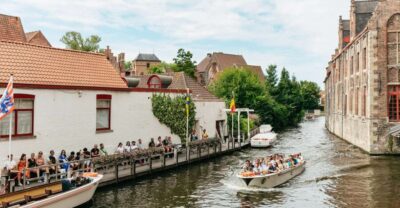
From Brussels: Guided Day Trip to Bruges and Ghent
Read our review →
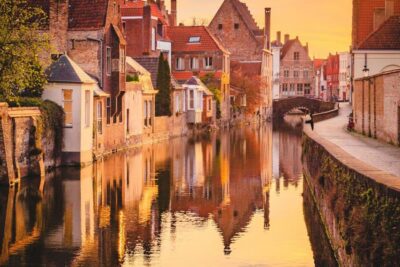
From Brussels: Bruges Day Trip with Boat Tour Option (ENG)
Read our review →
From Brussels: Bruges Day Trip with Boat Tour Option (ES)
Read our review →
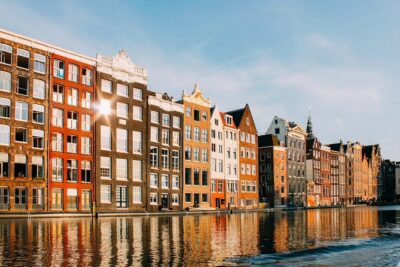
Amsterdam Day Trip from Brussels With Cheese, Clogs and Windmills
Read our review →
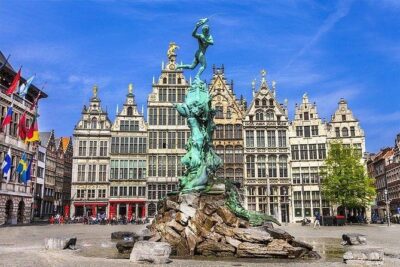
Antwerp and Ghent Day Trip from Brussels With Atomium Photo Stop
Read our review →Browse the lists this tour appears in