
Reviewed · ART NOUVEAU TOURS
Brussels 3-Hour Guided Art Nouveau Tour
Brussels Art Nouveau is not just pretty facades. This kind of tour is interesting because it explains how the style was built, literally, by combining materials like iron, glass, wood, and stone into totally different forms. You’ll also cover key architects, especially Victor Horta, and see why Brussels became a major hub for the movement.
What I like most is the structure of the walk. It starts in the historic core at the Grand-Place, then moves to the Bailli district where you can keep comparing buildings in a compact area.
One drawback to plan for: this is primarily an outside-looking experience. You’ll see many notable houses from the street, but you should expect limited or no interior access, with explanations supported by photos rather than going inside.
Key Points I’d Put on Your Must-Know List
- Grand-Place start at 10:00 with a guide holding a white umbrella, so it’s easy to find the group fast
- Bailli district focus on the neighborhood with a high concentration of Art Nouveau buildings
- Victor Horta Museum finish right where you can make your next move
- Material-driven storytelling about how iron, glass, wood, and stone were used together
- Stops include major names like Victor Horta and Paul Hankar, with dates that show the style evolving
- Photos help with interiors since the tour is built around what you can observe outdoors
Walking the Bailli District Like a Design Detective
If you’re the kind of person who likes to spot patterns instead of just taking photos, you’ll enjoy this tour. The guide’s job is to teach you how to see Art Nouveau as a system, not as random decoration.
I love that the route is organized around real buildings with real dates and architects. Instead of a vague tour of pretty streets, you get names like Victor Horta, Paul Hankar, and Ocatave Van Rysselberghe, and you can watch how ideas shift across time.
I also like that the tour explains how the style was made. When you hear about the combination of iron, glass, wood, and stone, the details you’d otherwise skip start to make sense.
Just keep your expectations realistic. This is a guided walk with a tram segment, and you’ll do a fair amount of moving on foot, plus the group format may mean some information is repeated when multiple languages are used.
More Art Nouveau in Brussels:
- Brussels: Art Nouveau Pass – Entry to Three Locations
★ 4.0 · 108 reviews - Brussels: 3h Art Nouveau Private Tour with a Local Guide
★ 4.9 · 20 reviews - Brussels: 2-hours “Art Nouveau” Walking Tour
★ 4.5 · 7 reviews
Where the Tour Starts at the Grand-Place and How the Morning Flows
The meeting point is the Grand-Place in Brussels. You’ll find the guide holding a white umbrella, and the tour begins at 10:00.
From there, the plan is straightforward. You start in the city center, then take a tram toward the Bailli district, the part of Brussels often described as a village-within-the-city for its large density of Art Nouveau buildings.
The total time is 3 hours, and the pacing is built for seeing multiple stops without turning it into a marathon. You’ll want comfortable shoes, because the tour includes plenty of walking.
The Art Nouveau Stops: What You’ll See and Why Each One Matters
This is not a random “greatest hits” list. Each stop adds a layer, either by pointing you to a major architect or by showing you a different phase in the style.
Also, the tour ends right at the edge of a key destination. It finishes in front of the Victor Horta Museum, which is handy because it gives you a clear place to continue if you want more context.
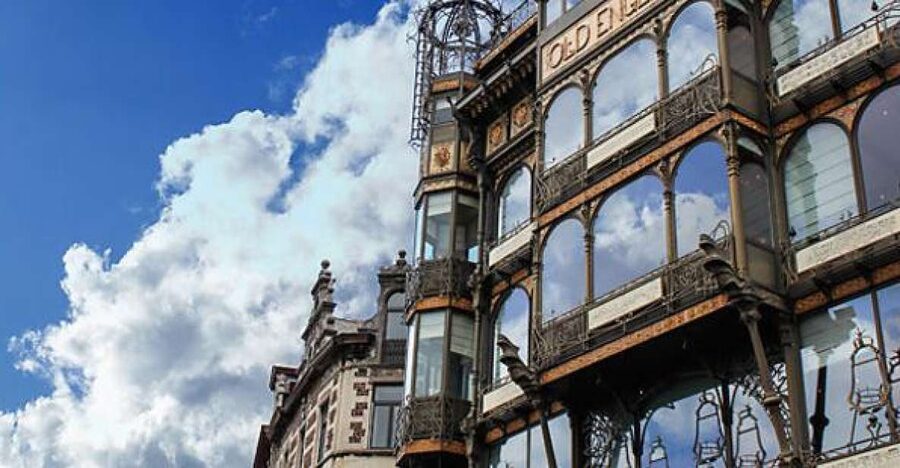
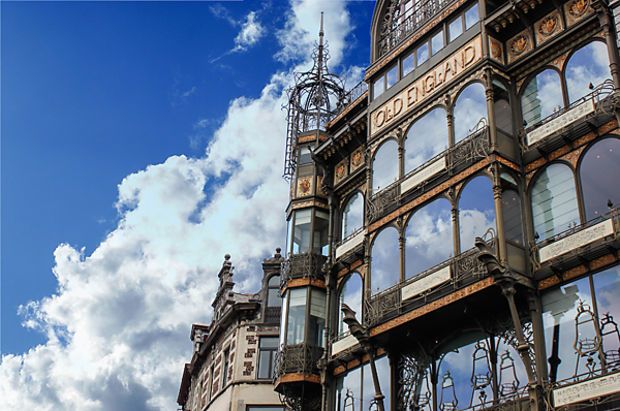
Old England House, now the Music Instrument Museum
You begin with the Old England House (Music Instrument Museum). Even without stepping inside, this kind of stop helps you understand how Art Nouveau connects to real city life, not just private houses.
For your eyes, the value here is comparison. It sets a baseline before you move into the more intensely Art Nouveau-focused home and hotel projects.
A few more Brussels options to weigh up
- Brussels: Private 3-Hour Sightseeing Walking Tour
★ 4.6 · 112 reviews - Beer Tasting and Scavenger Hunt in Brussels – About 3 Hours
★ 4.5 · 35 reviews - 3-Hour Antwerp Bike Tour
★ 5.0 · 113 reviews - Antwerp: Private 3-Hour Historical Sightseeing Walking Tour
★ 4.8 · 70 reviews
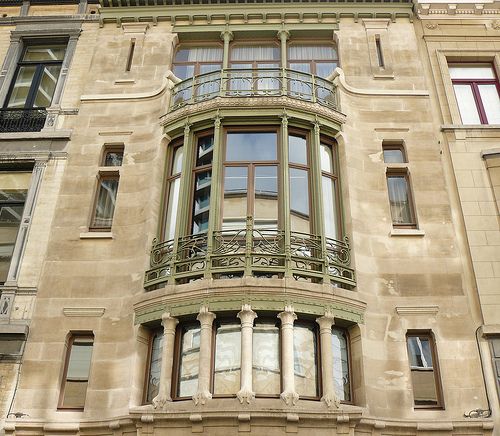
Hotel Tassel, Victor Horta (1893-1894)
Next up is Hotel Tassel, built by Victor Horta in 1893-1894. Horta matters because he’s one of the central names linked to the movement’s rise in Brussels.
What you’re learning on this stop is both practical and visual. The guide’s material-first approach helps you connect the design language to the physical elements that make it possible.
Van Rysselberghe House, Octave Van Rysselberghe (1912)
Then you shift forward to Van Rysselberghe House, built by Octave Van Rysselberghe in 1912. That date jump is useful because it forces you to notice how the style persists and changes rather than thinking of Art Nouveau as one single moment.
If you’re trying to understand the movement, this stop gives you a “later view” while still staying in the same neighborhood context.
Hotel Otlet, Octave Van Rysselberghe and Henry van de Velde (1894-1898)
Hotel Otlet, built by Octave Van Rysselberghe and Henry van de Velde from 1894-1898, adds another important angle. You’re not only looking at one architect, you’re seeing a collaboration in the context of a shared design language.
It also helps to hear the history of the style during the walk, since the guide can tie these different projects to what was happening in society and technology at the time, not just architecture circles.
Hotel Goblet d’Alviella, Octave Van Rysselberghe (1882)
One of the more surprising stops is Hotel Goblet d’Alviella, built by Octave Van Rysselberghe in 1882. The early date matters because it makes you rethink the timeline. Art Nouveau in Brussels didn’t appear out of nowhere.
This stop is a good moment to pay attention to the guide’s explanation of materials and form. When you hear the “iron, glass, wood, stone” idea out loud, it becomes easier to see it as a consistent design approach rather than a one-off look.
Hotel Ciamberlani, Paul Hankar (1897)
You then reach Hotel Ciamberlani, built by Paul Hankar in 1897. Hankar’s work helps you see how different architects expressed the style while still using the same general toolkit of materials.
If you enjoy learning through contrast, you’ll likely appreciate how the guide talks about the differences building to building, not just listing facts.
The painter René Janssens house, Paul Hankar (1898)
After that, there’s the house of painter René Janssens, also built by Paul Hankar in 1898. This stop makes the tour feel more personal, because it links Art Nouveau to real people with real roles, not just famous architect branding.
It’s also one of the better points to ask questions. Some guides use interaction as part of the method, and you can often get a more meaningful answer when you’re standing in front of the building being discussed.
Architect Armand Van Waesberghe
You’ll also see Architect Armand Van Waesberghe as a named stop. Even though the provided details don’t include dates here, the purpose is clear: keep your focus on the creators and the creative network behind the style.
The Beukman house, Albert Roosenboom (1900)
Next is the Beukman house, built by Albert Roosenboom in 1900. Again, the year helps you track change without leaving the immediate area.
This is a good moment to test what you’ve learned. After a few stops, you should start noticing how the guide’s material theme gives you a way to “read” facades.
Paul Hankar’s private home
You finish the street sequence with the private home of architect Paul Hankar. Ending on Hankar’s own home ties the storytelling together, because it connects the architect’s public work with personal use.
Expect the guide to recap themes as you get closer to the finish. This is where the “history plus design” approach usually clicks.
Ending at the Victor Horta Museum, and What to Do Next
The tour ends in front of the Victor Horta Museum. Since museum admission is not included, this stop is most useful as a handoff to your next plan.
A practical tip from real experience: if you want to visit right after the tour, pre-order tickets ahead of time. The most common frustration is realizing you’re right there, but you still need tickets prepared for entry.
Even if you don’t go in immediately, ending at a known location helps. It reduces decision fatigue and keeps your day efficient, especially if you want to keep exploring Art Nouveau around the city afterward.
Price and Value: What $35 Gets You in 3 Hours
At $35 per person for a 3-hour guided tour, this isn’t a low-cost “just walk and talk” situation. You’re paying for two things: structure, and a guide who can connect buildings to design ideas.
Here’s how that value usually shows up in real life:
- You get a curated list of major buildings, not a random route
- You learn how the style was shaped by materials and design choices
- You leave with a better eye for details you’d miss on your own
The biggest value driver is the storytelling focus. Several guides described in the experience write-ups put real effort into explaining context, not only architecture names. One guide even offered links between Art Nouveau and political parties of the time, plus personal research insights, which can make the style feel more grounded in the era.
On the flip side, the price makes most sense if you’re genuinely interested in the topic. If you only want a quick photo walk with minimal explanations, you might feel the time is better spent exploring on your own.
Guide Quality: What to Look For on the Day
The tour runs with live guides in Spanish, English, or French. You can also find comfort in the fact that it’s wheelchair accessible, so it’s designed with mobility in mind.
Many people highlight the guide style. Guides like Maria are described as passionate, with a strong grasp of Art Nouveau, and they often add personal research ideas and connections. Some guides also share visuals, including photos of interiors, because the tour itself is built around what you can observe from outside.
You may also hear more humor and interaction than you expect from an architecture walk. If your group allows questions, a good guide can turn your curiosity into better understanding on the spot.
Group size can affect pacing. If the group is large or bilingual, the tour dialogue may run longer because it gets repeated. That’s not a dealbreaker, but it’s a factor if you’re on a tight schedule after 13:00.
Who This Brussels Art Nouveau Tour Fits Best
I think this tour suits you best if you want a guide to teach your eye how to read Art Nouveau. The material-focused approach helps you go beyond spotting attractive buildings and understand why those buildings look the way they do.
It’s also a strong pick if you like famous names and firm timelines. Seeing Hotel Tassel (1893-1894) next to later work like Van Rysselberghe House (1912) gives you a learning arc in just a few hours.
If you care deeply about interior access, adjust your expectations. The experience is built around exterior viewing, with interior discussion supported by pictures rather than a full walkthrough of each site. It can still be enjoyable, but it’s not the kind of tour where you expect rooms and staircases up close.
Finally, it’s a good choice for first-timers in Brussels who want a dense, design-rich sample of the city without getting lost.
Should You Book This 3-Hour Art Nouveau Tour?
Yes, book it if you want a guided way to understand Art Nouveau in Brussels, with a practical route that takes you through the Bailli district and ends by the Victor Horta Museum. The price is fair when you take advantage of the guide’s explanation, especially the focus on how iron, glass, wood, and stone shape the look and feel of the architecture.
I would hesitate only if you’re mainly after interior visits. Also, if you dislike walking or you’re very schedule-tight, note that this tour includes a tram ride plus a lot of foot time, and bilingual logistics can add length for some groups.
If you do book, wear comfy shoes, bring your curiosity, and if you want to enter the Horta museum the same day, get your tickets ready ahead of time.
FAQ
What time does the Art Nouveau tour start?
It starts at 10:00. The meeting point is the Grand-Place in Brussels.
Where do we meet the guide?
Meet at the Grand-Place. You’ll find the guide holding a white umbrella.
How long is the tour?
The tour lasts 3 hours.
Is the Victor Horta Museum included?
Museum admission is not included. The tour ends in front of the Victor Horta Museum.
What languages is the tour offered in?
The live guide offers Spanish, English, and French.
Is the tour wheelchair accessible?
Yes, the tour is wheelchair accessible. Comfortable shoes are recommended.
Reviewed lately in Brussels
- Taxi Shuttle DE Brussels Airport < - > SPA (1 to 8 SEATS)★ 4.0 · 3 reviews
- WWII Battle of the Bulge Private Guided Day Tour from Brussels★ 5.0 · 3 reviews
- Pub Trail Brussels: an adventure full of surprises★ 3.5 · 3 reviews
- Brussels Exploration Game and City Tour on your Phone★ 4.0 · 3 reviews
- Private Day Trip from Brussels to Bruges★ 4.5 · 3 reviews
- Brussels : Must-See Attractions Walking Tour with a Guide★ 4.0 · 3 reviews
- Leuven: City Walk with Audio Guide in 7 Languages on your Phone★ 3.0 · 3 reviews
- Brussels: Museum Halle Gate Entry Ticket★ 4.1 · 3 reviews
Art Nouveau Tours, compared.
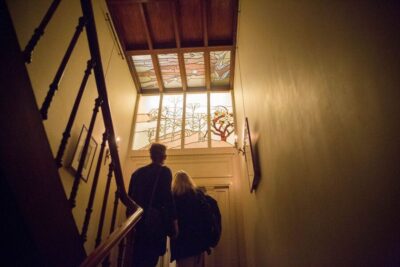
Brussels: Art Nouveau Pass – Entry to Three Locations
Read our review →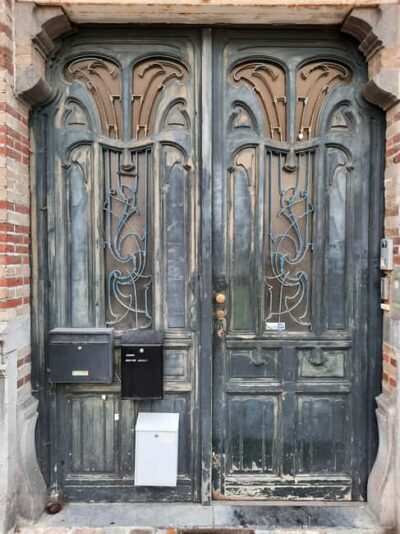
Brussels: 3h Art Nouveau Private Tour with a Local Guide
Read our review →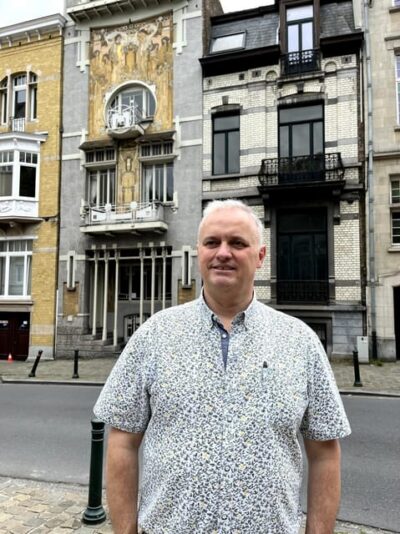
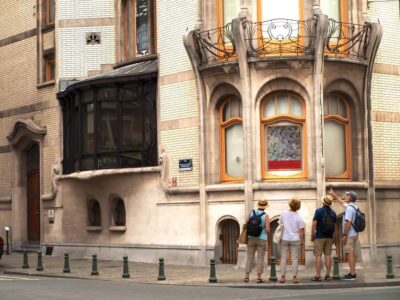
Brussels: Art Nouveau Private Walking Tour with Horta Museum
Read our review →Browse the lists this tour appears in