
Reviewed · DARK SIDE WALKING TOURS
Evening Tour of the Dark Side of Gent
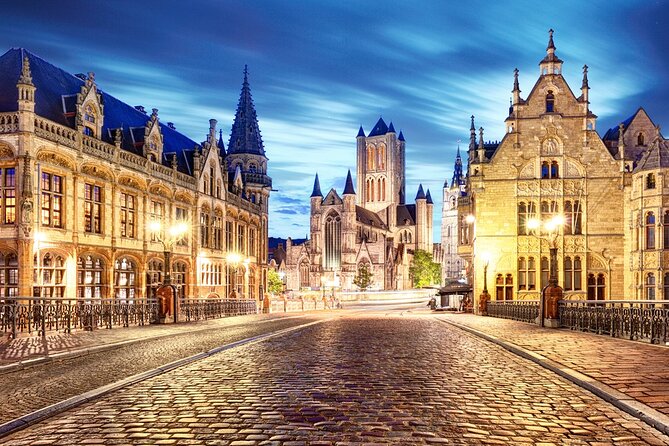
This evening tour of the Dark Side of Ghent is interesting because it shows a different face of one of Belgium’s prettiest cities. You’ll start with river and skyline views, then shift into grim tales, myths, and courtroom-level drama. I especially like the funny, animated storytelling and the way it points out photo-worthy corners you would easily miss on your own.
I do think there’s one consideration before you book. This is a walking tour built around gruesome medieval themes, so it is not the mellowest bedtime story vibe. Plan on dark subject matter and expect some graphic descriptions in the mix, even while the guide keeps it light on the feet.
Key highlights you should know
- A night walk built for the “see it at dusk” crowd with lots of stops for photos
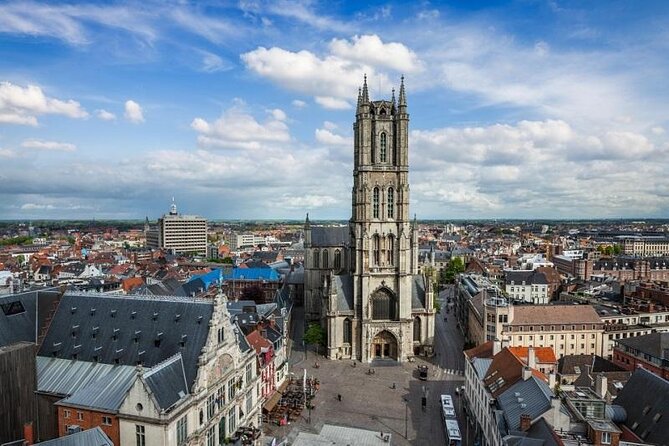
- St Michael’s Bridge as the skyline warm up, including the three tower views
- Harbour history at Graslei and Korenlei tied to Ghent’s medieval power and trade
- Charles V sculpture moments at Keizer Karel V, explained by your guide
- An end in Patershol (Monk’s hole), perfect for an easy post-tour wander into bars and restaurants
Why this Dark Side evening works in Ghent
Ghent at night has that perfect mix of old stone and softer light. This tour leans hard into that mood, but it is not just a spooky stroll. The route follows where Ghent made its money, built its defenses, and handled its big political and religious fights.
What makes it work for me is the balance. You get city orientation early, so the stories land better. Then the guide turns key locations into scenes, from tower legends to bridge drama and prison-era anxieties.
And for the price, it is hard to ignore the value. At about $3.62 per person for roughly 1 hour 45 minutes, you are paying for a guided lens on the city, not a museum ticket.
More Dark Side Walking Tours in Ghent:
- Private Tour: The Dark Side of Gent
★ 5.0 · 73 reviews - Ghent: The Dark Side of Ghent Private Walking Tour
★ 4.9 · 19 reviews - Evening Tour: The Dark Side of Bruges
★ 5.0 · 956 reviews
Getting there, the walking style, and what to expect
You meet at Hostel Uppelink, Sint-Michielsplein 21, 9000 Ghent, and the tour finishes in Patershol in the city center. That end point is handy because you will not be stuck with a complicated transit plan afterward. You can keep exploring right away, especially around the cozy bars and restaurants in Patershol.
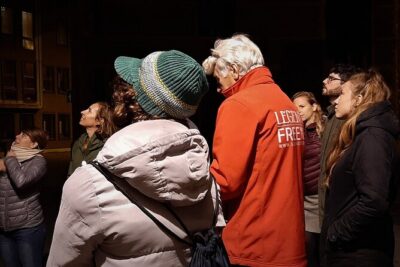
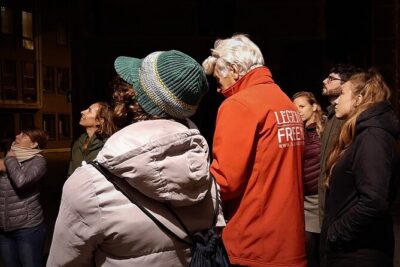
The group stays fairly contained, with a maximum of 35 travelers. That matters because you can actually hear the guide, ask questions, and follow the story beats without feeling like you are in a huge crowd stampede.
This is an English-language walking tour, and you get a mobile ticket. That means no printed paperwork chaos. Confirmation is sent at booking, and the tour is marked as near public transportation.
As for the pace, the route is described as accessible for most people, and it is mostly level. Still, it is about 1h45 of walking, so comfortable shoes are a smart idea.
Stop 1: St Michael’s Bridge and the medieval skyline setup
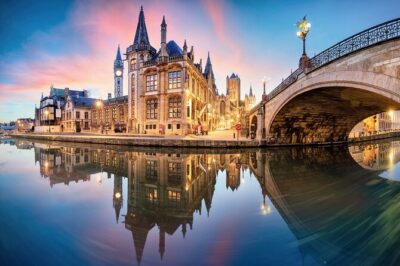
You kick off at St Michael’s Bridge, which is a clever starting point. It is close to the areas that define Ghent’s “look” and it gives you an immediate sense of the city’s layout along the water.
The guide starts with Ghent’s history and its role as a medieval trading hub. That sounds broad, but it becomes important because later stops depend on that context. When you understand that Ghent’s power came from commerce, the legends about crime, punishment, and religious control make more sense.
You also get an introduction to the three towers in the Ghent skyline, and the bridge is where they are described as being best visible. Even if you just want photos, this first stop gives you a clean view and a reason to look closely at the skyline rather than just glancing at it.
Stop 2: Graslei and Korenlei, where the harbour stories hit hardest
From the bridge, you move into Graslei and Korenlei, the heart of Ghent’s medieval harbour area. This is where the tour shifts from “what the city was” to “how it worked.”
The focus here is trading and the economic powerhouse angle. You get stories tied to lucrative commerce, and you start seeing these famous quay views as more than pretty backdrops. The harbour is tied to who gained power, who controlled shipping, and who had something to lose.
A short stop like this can feel quick, but it is a good kind of quick. You get a clear narrative point, then you move on before the tour loses energy.
A few more Ghent options to weigh up
- Sunset cruise
★ 5.0 · 19 reviews - Evening Tour: The Dark Side of Brussels
★ 4.5 · 435 reviews - Evening Walking Tour: The Dark Side of Antwerp
★ 5.0 · 193 reviews - Bruges at Night: Murder, Mystery & Dark Stories Small Group Walk
★ 5.0 · 137 reviews
Stop 3: Appelbrugparkje and the Butchers’ Hall legend
Next comes Appelbrugparkje, a bridge spot overlooking the giant Butchers’ Hall. The setting is instantly cinematic at night, and the guide uses that to tell a legend that includes an execution story about a father and son and a miraculous event that saved them.
This is one of those stops where the location matters as much as the plot. You are not hearing a random spooky tale, you are hearing it with the right city anchor. It turns a landmark you might otherwise pass into a “why does this building matter?” moment.
The drawback is what you already likely guessed from the tour name. The story material sits in the darker end of medieval life, so if you prefer light and cheerful night walking, this is not the best match.
Stop 4: Castle of the Counts and Viking-era anxiety
Then you head to the Castle of the Counts. Built by Count Baldwin in the 9th century, it was designed to protect the inhabitants from Viking raids.
This stop adds a layer beyond trade and punishment. It shows you how fear shaped planning. The city did not just grow because it had money. It also formed around the need to defend people and property.
You also learn how the fortification connects to the city’s development. It is basically the tour’s thesis in stone: security comes first, and then settlement follows.
Stop 5: Rabot Sluice, the defense wall you can still see
At Rabot Sluice, the guide points out the only remaining tower of a 14 km long defense wall built around Ghent in the Middle Ages.
That is a striking detail, even if you are not a “walls and fortifications” person. It gives you a scale for what Ghent went through to protect itself, and it also gives the tour a physical rhythm. You are constantly switching between viewpoints, bridges, and defensive structures, so you never feel stuck staring at one thing.
A good benefit of this stop is that it makes Ghent feel like a real medieval system. You can picture how the city guarded itself, how water and passage mattered, and why certain areas got attention.
Stop 6: Keizer Karel V and Charles V’s sculpture scenes
Next, you reach Keizer Karel V, described around the Bridge of Imperial Delights. Here the guide explains four sculptures flanking the bridge, tied to legendary scenes from the life of Charles V.
This stop is one reason the tour earns strong recommendations for people who want more than generic city facts. Sculptures are easy to ignore if you are just walking. With a guide, they become a story system, and you start noticing details you would miss.
If you enjoy art that doubles as narrative, this is a highlight. It also works well for night photography, because bridges create natural “frames” for the sculptures and you get a sense of depth in the scene.
The Religious Wars and Calvinist rule, told after the imperial stop
Later on, the tour shifts into the troublesome history of the Religious Wars and how Calvinist rule affected the city’s history.
The important thing here is not memorizing dates. It is understanding that Ghent’s medieval storyline does not end at trade routes and tower legends. Power changed hands, religion became a political force, and those shifts left marks on the city.
Even with a short time at each stop, the tour uses the sequence well. You go from defenses, to imperial imagery, to religious conflict. It feels like one long chain of who held control and how that control shaped everyday life.
Stop 7: Patershol, Monk’s hole, and the industrial revival
Finally, you wrap up in Patershol, a picturesque medieval quarter also known as Monk’s hole. The guide brings it home with stories about the social impact of the Industrial Revolution and how it helped revive the city’s economy.
This is a smart ending. It stops the tour from feeling like a one-note march through grim medieval moments. You finish with a quarter that still looks medieval, but the explanation connects it to more modern economic change.
And since the tour ends here, you can keep the story mood going while eating or grabbing a drink. The location is built for easy post-walk wandering.
The guides and the comedy-to-darkness balance
A big reason this tour gets such high marks is the storytelling style. Many standout mentions in the guide names include Kenny, Isabel, Ben, and Julian.
Kenny is frequently praised for being funny and animated, with a knack for weaving history with legends and myths. Isabel is noted for enthusiasm and lots of knowledge delivered in a way that keeps people engaged. Ben and Julian also get strong comments for being entertaining and helpful during the walk.
What I like about this kind of guide is that the tour does not treat you like a passive audience. You are walking, looking, and hearing stories tied to what you can see. That makes the whole route feel less like trivia and more like a guided night out.
Price and value: why it is such a bargain for what you get
At $3.62 per person, this is one of those Ghent activities that feels almost too good on paper. You get an English-speaking guide, a tour lasting around 1h45, multiple story stops, and no need to buy extra admissions for the points where it is listed as free.
The “value” part is how much city comprehension you build. You walk through the areas tied to trade, defense, imperial symbolism, and religious conflict. That gives you a mental map that helps when you explore on your own the next day.
One trade-off to consider is that it is not a sit-down museum experience. If you hate walking at night, or if you want only cheerful sights, the dark storytelling theme might feel like a mismatch for your travel mood.
Who should book this Dark Side tour
Book it if you want:
- A night walking tour that gives you a clear sense of Ghent’s medieval systems
- Stories that mix history and legend, including grim and gory details
- A guide-led route that shows you spots you might miss when self-guiding
Avoid it if:
- You are sensitive to violence-related medieval stories
- You want a quiet, low-content tour for an easy stroll
It is also a decent choice for families, as it has been described as fun for kids in the group. Still, I would treat it as “family-friendly with adult-themed stories,” not a kid-only fairy tale situation.
Should you book this tour, or choose something lighter?
If your idea of a great evening in Ghent includes river views, bridges, and a guide who keeps the pace lively, I would say yes. The mix of skyline orientation, harbour context, and Charles V sculpture storytelling makes the route feel purposeful, not random.
But if you are not in the mood for medieval murder, torture, execution legends, and religious conflict, skip it and look for a gentler walking option. This tour commits to its theme, and it does not hide from the dark details.
Overall, for the low price and the strong guide reputation, it is one of the best ways to understand Ghent after sunset while getting plenty of stop-and-look moments.
FAQ
How long is the Dark Side of Ghent evening tour?
It runs for about 1 hour 45 minutes.
What does the tour cost?
The listed price is $3.62 per person.
Where do I meet, and where does the tour end?
You meet at Hostel Uppelink on Sint-Michielsplein 21, 9000 Ghent. The tour ends in the Patershol area of central Ghent.
Is the tour offered in English?
Yes. It is offered in English.
Will I get a mobile ticket?
Yes. The tour includes a mobile ticket.
How many people is the tour limited to?
The maximum group size is 35 travelers.
Is the tour suitable for most travelers?
The activity states that most travelers can participate.
Are service animals allowed?
Yes, service animals are allowed.
Can I cancel for a full refund?
Yes, you can cancel up to 24 hours in advance for a full refund.
What happens if the tour is canceled due to weather or low demand?
If it is canceled due to poor weather, you will be offered a different date or a full refund. If it is canceled because the minimum number of travelers is not met, you will be offered a different date or a full refund.
Reviewed lately in Ghent
- Ghent Running and Sightseeing Tour★ 5.0 · 3 reviews
- Children’s escape game in the city of Ghent Marsupilami★ 5.0 · 3 reviews
- Ghent Walking Tour – City Highlights and Beyond Tradition★ 4.5 · 3 reviews
- Ghent Scavenger Hunt and Highlights Self Guided Audio Tour★ 3.5 · 3 reviews
- Discover Ghent while playing! Escape game – The alchemist★ 4.0 · 4 reviews
- e-Scavenger hunt Mons: Explore the city at your own pace★ 5.0 · 4 reviews
- Discover Ghent while playing! Escape game – The Walter case★ 4.5 · 4 reviews
- Discover Mons while playing! Escape game – The alchemist★ 4.0 · 5 reviews
Dark Side Walking Tours, compared.
Bruges: 1.5-Hour Dark Side of Bruges Private Tour
Read our review →
Browse the lists this tour appears in