
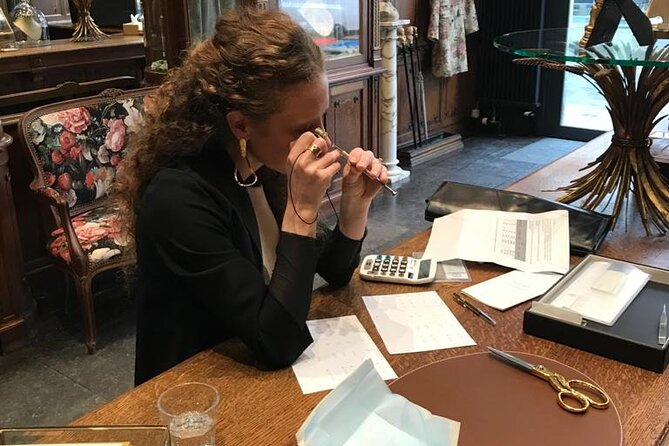
Reviewed · ANTWERP DIAMONDS
Private Antwerp’s Diamonds and Jewellery Old City Center Historic Tour
Antwerp’s diamond and jewellery story feels personal in a way most city tours don’t manage. This is a private 2-hour old-town walk that links the big trading names to the small workshops still making pieces today.
I especially like the atelier visits to real makers, like Pascale Masselis and the goldsmith spaces on Wijngaardstraat. I also like that you get the street-level context, starting at DIVA and moving through the locations tied to Antwerp’s early diamond trade.
One drawback to plan for: this is not a live diamond-cutting show. You’ll learn about cutting history and where workshops used to be, but the focus stays on the city’s craft culture and designers.
Quick hits you should know
- Private guide, up to 15 people, so it feels tailored and not like a cattle-walk
- Designer atelier time, including Pascale Masselis and other independent jewellers
- Street history with real trade details, from diamond fairs to money exchange
- Saint Paul’s Church stop, including a mention of a treasury with over 3000 diamonds
- Free entry at most stops, with DIVA admission not included
- English tour, with a mobile ticket for easy day-of use
Antwerp’s Diamond and Jewellery Story Starts in the Streets, Not a Classroom
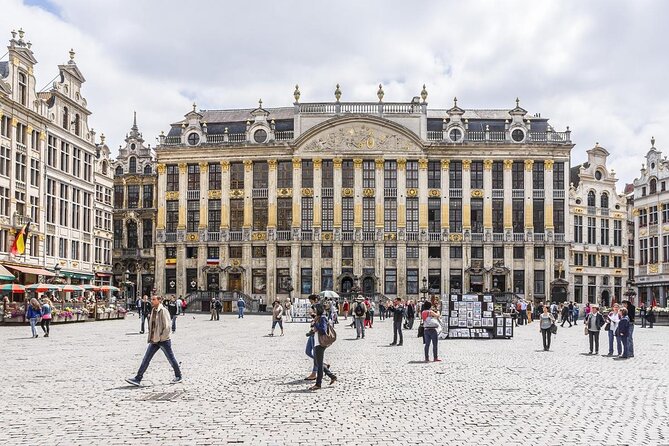
Antwerp’s sparkle isn’t just for display. It grew because the city was a meeting point for traders, craftspeople, and money. On this kind of tour, you learn that the diamond trade is also a story about logistics, risk, and craft skills moving through specific blocks of the old center.
What makes this experience work is the mix of small makers and the broader trade story. You’re not only looking at shop windows. You’re walking the same kind of lanes where jewellery stores sat close to the working spaces above, and where foreign merchants showed up when business was at its peak.
You’ll also get a sense of how the industry has changed over time. One theme that comes up again and again in Antwerp’s diamond world is that not all cutting stays local. Some cutting shifted elsewhere because it was cheaper, and international competition, including from Russia and other countries, has shaped what happens in Antwerp today. That context makes the atelier stops feel more grounded.
More City Tours in Antwerp
- Antwerp: City Highlights Walking Tour
★ 4.7 · 816 reviews - Antwerp: City Highlights Guided Bike Tour
★ 4.7 · 529 reviews - Antwerp: Historical Walking Tour in the Old City
★ 4.8 · 373 reviews
Meeting at DIVA, Then a 2-Hour Plan That Actually Fits the Old Center
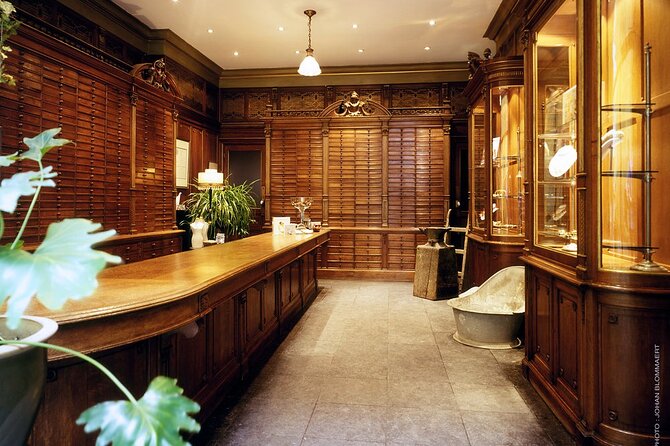
The tour begins in front of DIVA, the Antwerps diamond, jewellery and silversmithing museum, at Suikerrui 17/19. Your guide starts with an introduction that gives you the backbone of the story, before you start walking.
Why this matters: if you jump straight into streets like Grote Markt or Saint Paul’s Church without context, Antwerp can feel like a collection of pretty facades. With the DIVA intro first, you start noticing patterns, like how certain streets connect to specific trades.
After that setup, you’ll move through the old center at a pace that suits a 2-hour format. Stops are short, often around 10 to 20 minutes, which keeps you from getting exhausted before you reach the atelier visits.
Practical tip: DIVA admission is not included, but you’re strongly encouraged to visit the museum after the walk if you want more depth. If you only have time for one museum stop, DIVA is a good choice because it connects the dots between Antwerp’s crafts, trade, and materials. If it happens to be closed on your day, you’ll still get plenty from the street-side history, but you’ll miss the exhibits.
Grote Markt and Wisselstraat, Where Trade Kept Moving
Grote Markt is the next stop, a quick 10 minutes, and it’s the kind of place that makes sense the moment you hear why it mattered. Antwerp’s early identity as a diamond capital connects to the fairs that pulled foreign merchants into town. This is where you start understanding why diamonds were never only about luxury. They were about fast deals, reputation, and buyers who came to the city at specific moments.
Then you head to Wisselstraat, another roughly 10-minute stop. Wissel means exchange, and this street name points right at the practical side of trading. Foreign buyers exchanged money here, which tells you something important about how the industry worked on the ground. It also connects to a linguistic surprise you might not expect on a jewellery tour: not all stories of trade are shiny. The area is tied to the origin of the word bankrupt, linked to the financial risks of the business.
This stop is short, but it helps you interpret what you see later. When you reach working streets and churches, you’ll understand why craft communities cared about access to customers, money handling, and the systems that made trade possible.
Saint Paul’s Church and the Diamond-Cutter Streets in Real Life
Next comes Saint Paul’s Church, about 15 minutes. This stop gives you the blend of faith, craft, and industry that Antwerp does so well. The church is associated with silversmithing and jewellery, and it’s mentioned for having a treasury with over 3000 diamonds.
Even if you’re not a church person, this is a good use of time because it places diamonds in the context of city life. It’s not only workshops and shopfronts. It’s also civic institutions where wealth and craft show up.
After that, the tour moves through a couple of streets where you can feel the shift from historic function to today’s look. Zwartzustersstraat is around 10 minutes. You might not guess it from the current streetscape, but it used to be a shopping lane with jewellery shops on the ground floors and diamond cutters’ ateliers above. Walking it helps you imagine the vertical setup, where work and retail stayed close.
Then Zirkstraat is another 10 minutes. This is tied to the first diamond cutter living there in the 15th century. It’s one of those stops where the street name and the timeline do the work for you. You start connecting Antwerp’s diamond craft to specific addresses and early generations, not vague eras.
If you love details, this is where your guide earns their keep. The best moments here come from the way the guide explains how jewellery making, cutting, and trading fit together as one ecosystem.
More Historical Tours in Antwerp
- Historical Walking Tour: Legends of Antwerp
★ 5.0 · 1,837 reviews - Private tour: Highlights & History of Antwerp
★ 5.0 · 299 reviews - Historical Walking Tour in Antwerp Old City
★ 5.0 · 277 reviews - Private Historical Tour: Legends of Antwerp
★ 5.0 · 125 reviews
Pascale Masselis Atelier Visit, Then the Designer Wave on Wijngaardstraat
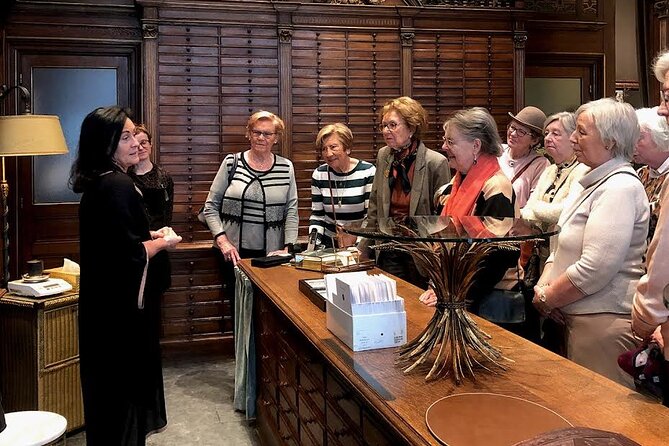
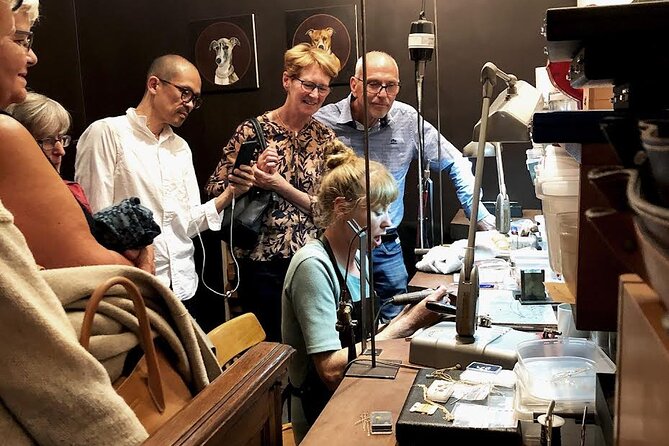
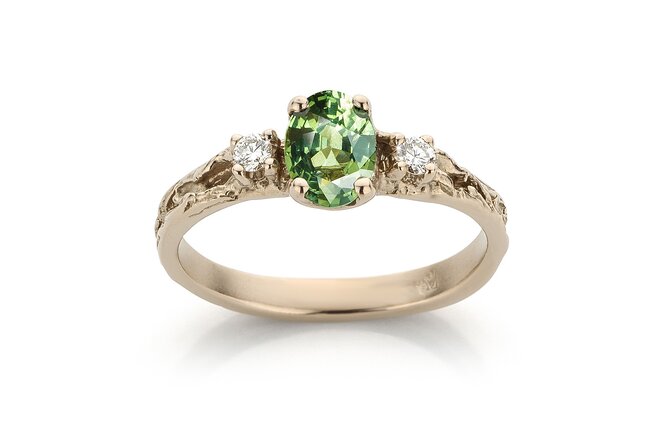
Pascale Masselis is one of the most rewarding parts of the walk, with about 15 minutes at her atelier. She graduated from the Royal Academy of Antwerp in 1983, and her work is built around 18 carat gold. The big idea is that every piece is unique and handcrafted in her own atelier, and she can even make custom pieces to order.
This stop is especially good if you like hearing how designers handle materials and tradition. Masselis also takes old, out-of-date jewellery and transforms it into modern treasures. Even if you are not shopping, it’s a great example of how Antwerp’s jewellery scene can feel both artistic and practical, focused on longevity instead of one-time purchase.
From there, you move into Wijngaardstraat, where the tour lingers about 20 minutes at the cluster of makers. This is where Antwerp’s contemporary jewellery personality becomes clear fast because each shop has a different tone and technique.
You’ll meet (or at least hear about) several independent names, including:
- Gerda De Vrij, who studied in Pforzheim under Klaus Ullrich, a pioneer for modern jewellery, then settled in Antwerp with her then-husband Emile Henry. Their two daughters joined later, keeping the brand going into the next generation.
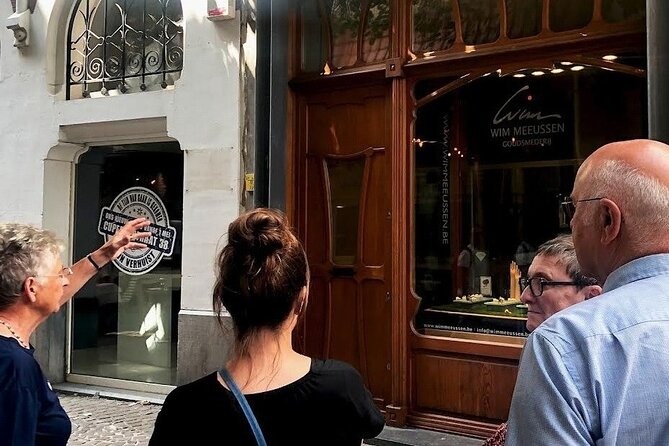
- Wim Meeussen, known for a distinctive collection of jewellery and wedding rings, with a second location dedicated to silver jewellery so his signature style is available at different price points.
- Hanne Schoofs, who keeps seeking new techniques, so you can expect the collection to keep changing.
- Eva Crauwels, an independent goldsmith with more than 15 years of experience, working in a retro-romantic style with a feminine feel.
A smart expectation here: you’re not just looking at products. You’re learning how design education, materials, and family or business structure affect what ends up on a counter.
The last stop is another 20 minutes on Wijngaardstraat, at Rembrandt Jodan. This space is described as an art gallery, atelier, and jewellery shop in one. If you like seeing how jewellery sits beside other art forms, this ending works well because it feels more like a studio visit than a showroom stop.
Price, Group Size, and Value for a Private Antwerp Walk
The price is $234.93 per group, and the group size can be up to 15 people. That pricing structure matters because you’re paying for a private guide for your group, not for a long chain of separate tickets and admissions.
For a short 2-hour experience, the real value is in what you avoid:
- You avoid awkward guesswork about which streets matter and why.
- You avoid jumping into shops cold, without a sense of the craft context.
- You avoid spending your time scanning storefronts with no thread tying it together.
Also, this kind of tour tends to get booked ahead. If you want a specific date, plan sooner than later. A mobile ticket helps on the day, and the tour is in English.
What you might spend on top of the tour: DIVA museum admission is not included. Everything else on the walk is listed as free entry at the stops. If you’re already the type who likes museums, your best value move is to do DIVA before or after, depending on opening hours.
Who Should Book This Tour, and Who Might Prefer Something Else
I think this tour is a great match if you fall into one of these groups:
- You want the Antwerp diamond story but you also care about craft details.
- You like independent designers and don’t want only big-name landmarks.
- You’re travelling with teens or older kids who can handle a walking format plus short atelier explanations, which is exactly the kind of audience the guides seem to do well with.
It might be less ideal if your main goal is to watch a diamond cutter in action. This experience focuses on city context and jewellery makers, and the cutting side is mostly explained through history and where the ateliers used to be. Plan for learning, not for a demonstration with machines running.
Also, it’s an outdoor walking tour in the old center, so you need to be comfortable walking between stops for about two hours.
Should You Book This Private Antwerp Diamonds and Jewellery Tour?
If you want a guided walk that turns Antwerp’s jewellery district into a story you can actually follow, this is a strong booking. You get designer atelier visits, plus practical trade context starting at DIVA and continuing through streets tied to exchange, cutting history, and jewellery making. It’s also good value for groups because the price is per group up to 15.
I’d book it if you enjoy craft and you want a guide who can point out the “why” behind each street. I’d think twice only if your top priority is a hands-on diamond cutting performance, because this one is built for understanding and seeing the people and places behind the jewellery.
FAQ

How long is the Private Antwerp’s Diamonds and Jewellery Old City Center Historic Tour?
It lasts about 2 hours.
What is the price and group size for this tour?
The price is $234.93 per group, with a maximum group size of up to 15 people.
What language is the tour offered in, and do I receive a mobile ticket?
The tour is offered in English, and you get a mobile ticket.
Where do we meet, and where does the tour end?
You start at DIVA, museum voor diamant, juwelen en zilver, Suikerrui 17/19, 2000 Antwerpen, Belgium. The tour ends at Rembrandt Jodan, Wijngaardstraat 18, 2000 Antwerpen, Belgium.
Is admission included for DIVA, and are the other stops free?
DIVA admission is not included. The other listed stops have admission listed as free.
Is the tour private, or will I share it with other people?
It is private. Only your group participates.
What happens if the weather is bad or I need to cancel?
The experience requires good weather. If it is canceled due to poor weather, you will be offered a different date or a full refund. You can cancel for free up to 24 hours in advance for a full refund.
More of Antwerp's Diamond District
- Antwerp: Diamond & Jewish Quarter Walking Tour
★ 4.6 · 32 reviews - Antwerp: Diamond & Jewish Quarter Walking Tour
★ 4.5 · 5 reviews - From Brussels: Private Tour to Antwerp – Diamond & Art City
★ 4.3 · 4 reviews - Ticket to Diamond Museum in Bruges
★ 4.5 · 14 reviews
Reviewed lately in Antwerp
- Surprise tour of Antwerp guided by a Local★ 5.0 · 3 reviews
- Historical Old Harbour Boat Tour in Antwerp★ 5.0 · 3 reviews
- Discover Antwerp while playing! Escape game – The alchemist★ 4.5 · 4 reviews
- Antwerp: Private custom tour with a local guide★ 4.5 · 6 reviews
- Discover the secrets of Antwerp while playing! Escape game★ 4.5 · 6 reviews
- Antwerp Historical Walking Tour: by MG City Tours★ 5.0 · 6 reviews
- Antwerp: Food Walking Tour with 5 Tastings★ 4.5 · 7 reviews
- Antwerp: Pub Crawl in the Historical City★ 4.9 · 10 reviews
Antwerp Diamonds, compared.

Bruges: Diamond Museum Ticket with Polishing Demonstration
Read our review →
From Brussels: Private Tour to Antwerp – Diamond & Art City
Read our review →Browse the lists this tour appears in