
Reviewed · SELF-GUIDED TOURS
A Self-Guided Tour of Brussels: From Medieval to Modern Times
This self-guided Brussels tour is interesting because it turns a simple walk into a story you control. You follow an audio path created by Isaac, and the city shifts from medieval power centers to modern landmarks as you go. I especially like that it gives you royal-and-civic context while you’re standing in the exact spots.
Two things I really like: the mix of famous sights and hands-on stops you can actually spot on the street. You’ll get Grand Place UNESCO wow-factor without needing to book anything first, and you also hear the bells around Mont des Arts and Kunstberg style viewpoints.
One possible drawback to plan for: this route includes steps and some uphill walking, so it can feel like a climb even though it is only 1 hour 30 minutes to 2 hours.
Key highlights you should notice
- Royal Palace area lineage talk: you start by connecting Belgian royal roots to the former residence zone
- Grand Place architecture focus: you see guild houses and palaces as more than pretty buildings
- Tintin Comic mural moment: street art as part of Brussels culture, not an afterthought
- Music museum stop with context: you’re guided through how instruments evolved across time
- Two big viewpoint payoffs: Palais du Justice plus a second panorama stop near the end
- Bells and gardens break up the pace: Mont des Arts and nearby carillon style stops help you reset
Royal-to-modern Brussels with Isaac’s walking story
I like self-guided tours when they do one thing well: help me see what I’d otherwise miss. This one does that by giving you short, timed explanations as you move through Brussels, instead of dumping a history lecture on you all at once. The route is designed to connect royal power, civic institutions, street culture, and modern landmarks into one continuous spine.
What makes it feel worth $9.99 is the value per stop. You’re not just being told what you see, you’re also getting what to look for in the details: symbols, names, and why certain places matter. You also get lifetime access in English, plus offline audio, maps, and geodata in the VoiceMap app, so you can use it without burning phone data.
And because it’s private, it is basically just you and your group. That matters if you like to pause for photos, look at facades longer than planned, or skip a stop if your feet are protesting.
More Self-Guided Tours in Brussels
- Chocolate Workshop and Self-Guided Museum Visit at Choco-Story in Brussels
★ 4.5 · 72 reviews - Brussels Highlights Self guided scavenger hunt and Walking Tour
★ 4.0 · 14 reviews - Brussels Old Town & Beer Secrets: Self-Guided Puzzle Walk
★ 4.5 · 11 reviews
How to start at Pl. des Palais and make the app behave
The tour starts at Pl. des Palais 1, 1000 Bruxelles and ends at Lookout des Marolles, Rue des Minimes 66, 1000 Bruxelles. After you book, you get instructions and a unique code to download the tour into the app.
The mechanics are simple: the app shows directions to the starting point, you tap start when you’re there, and then you follow the audio stop to stop. You also get offline access to audio, maps, and geodata, which is exactly what you want in a city where signal can be unpredictable around older streets.
If the audio ever starts repeating or jumping, don’t just fight with it for an hour. VoiceMap support can help by phone or email, so reach out if the narration gets stuck. In practice, I recommend you keep your phone charged and pause for a few seconds if the audio seems out of sync, then tap start again for that stop.
Also, this tour is available all day in the app window, since it lists 12:00 AM to 11:59 PM daily for the stated dates. So you can choose a time that fits your energy level, daylight for photos, and any museum hours you might want to add on your own.
Royal Palace area: where Brussels explains the monarchy in plain sight
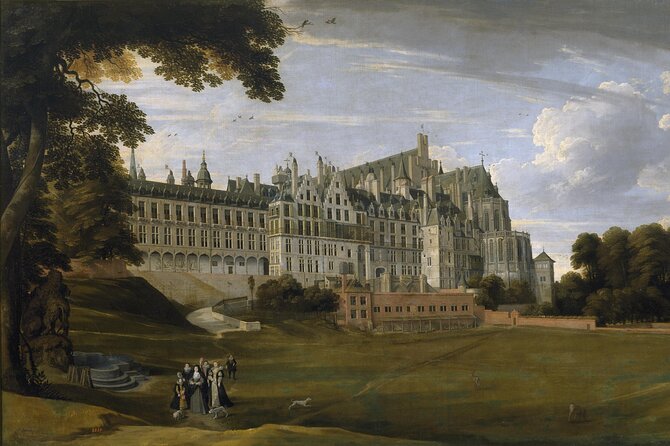
You begin near the Royal Palace of Brussels and the app quickly sets the tone with the Belgian royal family lineage. Even if you are not a monarchy person, I like this start because it tells you who held power and where that power used to live.
Then you move into the Royal Square and the audio brings in Godfrey of Bouillon. That name is one of those Brussels anchors that shows up across the city, and it helps you connect medieval leadership to later political identity.
This section also trains your eye for what Brussels does best: mixing political meaning with street-level visuals. Look for statues, inscriptions, and the way large squares are shaped to impress. The audio is there to tell you what those choices were trying to communicate.
If you are short on time, this first leg is still worth doing in order. Changing the direction on your own might fix the uphill feel later, but it also breaks the intended pacing of the story.
From UNESCO Grand Place to guild houses that actually tell a story
Next up is the UNESCO-listed Grand Place, and it is hard to overstate how well this tour uses it. The square is famous for a reason, but the guide audio nudges you to read it like a document.
You’ll get prompted to look at the ornate guild houses and palaces that ring the square. Instead of treating them as postcard backdrops, the audio focuses on what these buildings represent and why they were built to face one another across an open civic space.
This stop is where you slow down naturally. I recommend you take a minute to stand centered, then turn slowly through your camera view as the audio guides you. You’ll find you start noticing repeating design motifs and the different personalities of the facades.
There is also a strong culture angle here. When the tour later mentions comic culture and theatre, it makes more sense because Grand Place shows you how tradition and identity were expressed in stone long before modern branding.
Something different while you are in Brussels:
- Brussels: Atomium Entry Ticket with Design Museum Ticket
★ 4.4 · 9,254 reviews - From Brussels: Guided Day Trip to Bruges and Ghent
★ 4.6 · 8,353 reviews - From Brussels: Bruges & Ghent Day Tour – 2 Fairytale Cities
★ 4.7 · 8,242 reviews - Choco-Story Brussels: Chocolate Museum Entrance with Tasting
★ 4.3 · 4,883 reviews
Tintin mural, Toone puppets, and the musical brain behind Brussels
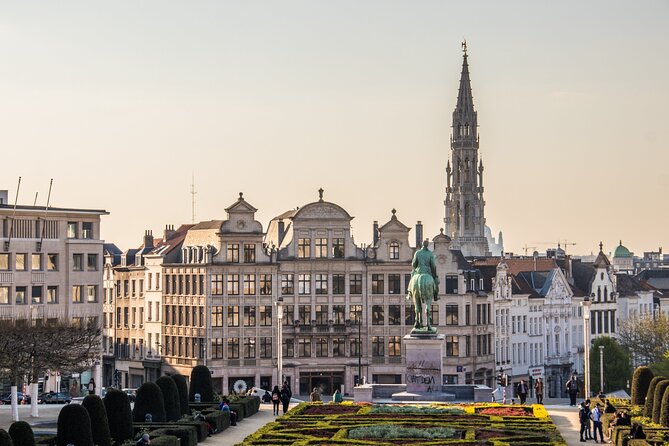
Brussels has a sense of humor, and the tour leans into it early with the Tintin Comic Mural. This is one of those stops that can feel optional if you are chasing only big-ticket landmarks, but it is a good reminder that Belgium’s creative identity is everywhere.
Then you transition into performance and sound with Toone, a traditional puppet theatre. The audio frames it as cultural folklore, which helps you treat it as more than a quirky storefront.
The most thoughtful pause for me comes at the Musical Instruments Museum. You’re guided with stories about how music changed over time while you’re in the museum area. Since tickets are not included, you have two choices: let the audio do the work and stay outside, or pay for the museum if you want the full collection experience.
If you do go inside, plan extra time because museums always expand the day. If you skip the entry, the stop still works because the audio gives you a mental map for the kinds of instruments and eras you’ll see.
Mont des Arts, carillons, and a break from street-level noise
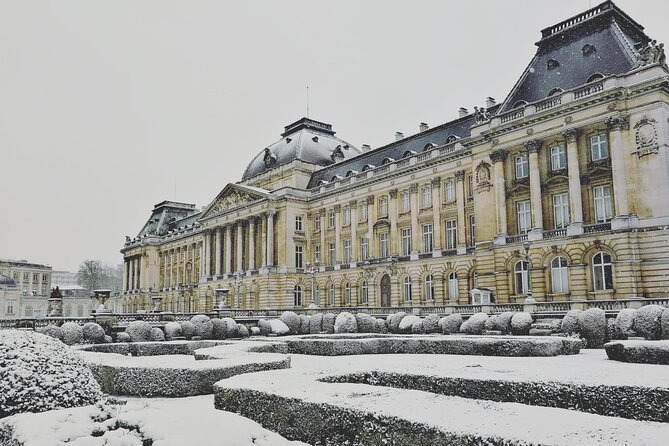
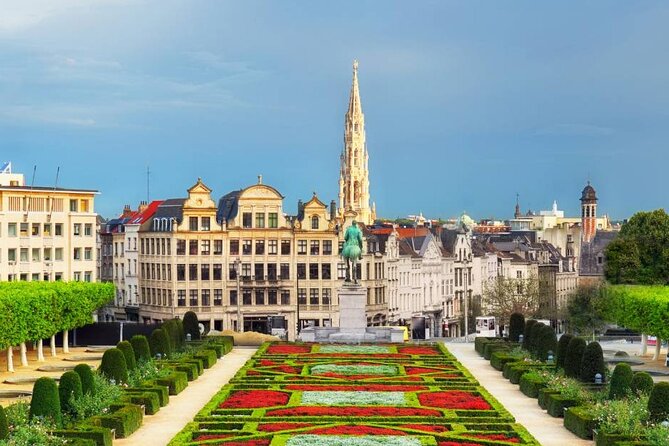
Halfway through, you get a welcome change of pace around Mont des Arts Garden. This is where the tour gives your legs a moment and your eyes a cleaner view line. Even if you are moving fast, a garden stop helps you reset your attention before the next set of churches and city corners.
Nearby, the audio connects to the Le Carillon du Mont des Arts and also the Klokkenspel van de Kunstberg bells. Bells can sound romantic and vague when you just hear them passing in the street, but the tour helps you identify what you’re hearing and why it matters here.
I also like this area because it creates a smoother rhythm. Instead of nonstop “look at that, walk to the next,” you get a scenic breather that makes the later viewpoints feel like rewards rather than chores.
Mary Magdalene Chapel and religious architecture you can actually spot
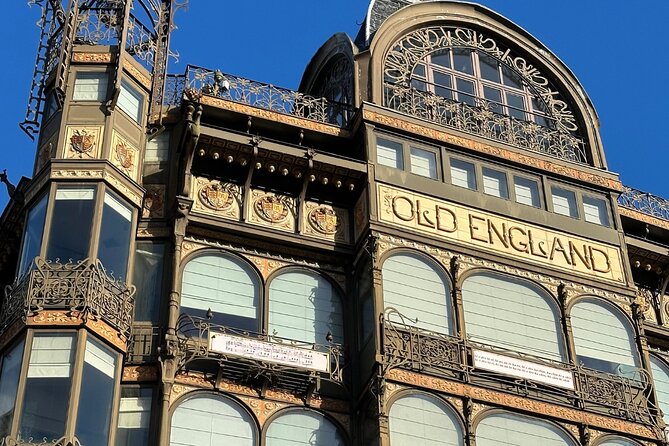
The tour includes the Mary Magdalene Chapel, and it uses the stop to explain Brussels’ religious heritage in a concrete way. This is not just about a building existing. The audio pushes you to look at the architecture and think about what religious sites meant in city life.
Then later, you revisit religious layers again around Saint Catherine with both the Church of Saint Catherine and the Ancien Clocher Sainte Catherine remnants. If you like tracing what old Brussels was when parts have survived only as fragments, this pairing is a strong way to understand the city’s change over time.
A practical tip: churches often have different lighting and acoustics than the street. If you want photos, wait for a quieter moment, and don’t block doorways or entrances while the audio is playing.
Grasmarkt and old harbor traces, plus medieval walls in the open
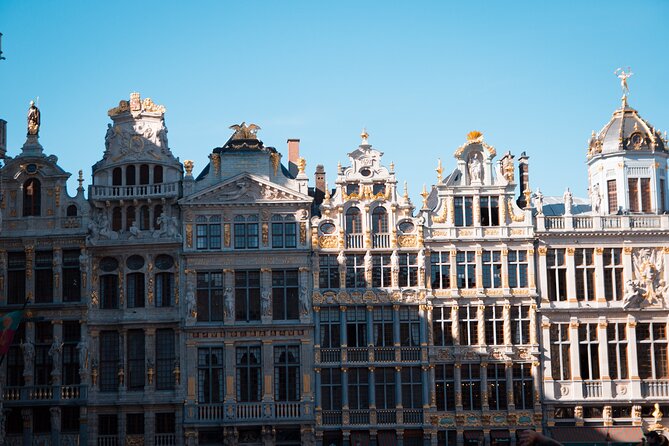
At Agoraplein – Grasmarkt, the audio points out remnants of Brussels’ former harbour and traces of the city’s medieval walls. I like this stop because it shifts you from purely royal and religious landmarks into the practical geometry of how a city moved goods and people.
Even if you do not see huge wall segments right away, the tour gives you the context that makes small cues matter. You start noticing layout and street alignment as clues, not random turns between major landmarks.
This stop also helps you understand why Brussels developed where it did. Once you have the harbour and medieval walls idea in your head, later civic and financial places feel less random.
Galerie de la Reine, De Brouckèreplein, and where Brussels shops like an old pro
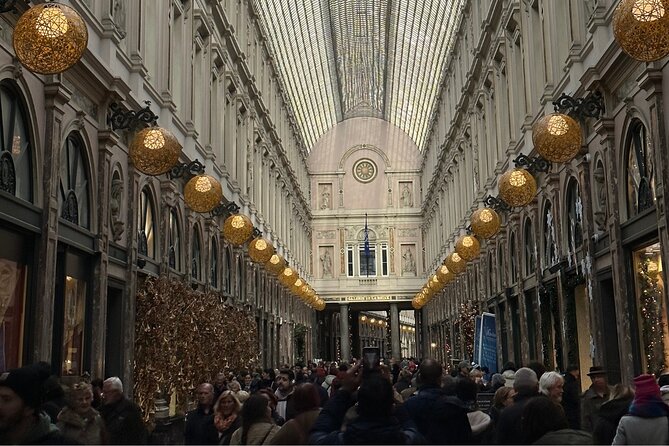
Between older corners, the tour gives you a smoother “walkable city” moment at the Galerie de la Reine, a historic shopping arcade with detailed architecture. Arcades are underrated, because people either rush through or skip them entirely. Here, you’ll be nudged to look up and notice how the space is built for strolling.
Then you move through De Brouckèreplein, a square that shows you the day-to-day energy of modern Brussels. This is one of those parts of the walk that helps you feel the city operating, not only preserved for history lovers.
You also pass the Black Tower, where older structure meets newer surroundings. I like this kind of contrast because it keeps the story grounded. Brussels is not frozen in time, and the audio makes that clear by placing you where old and modern overlap.
Brussels City Museum and Town Hall: civic power you can feel in your feet
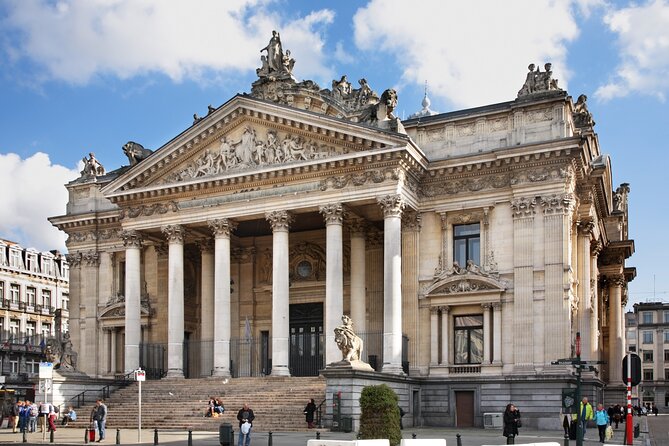
You’ll pass the Brussels Stock Exchange, then the Brussels City Museum, and then the big administrative stage at the Brussels Town Hall. Even without entering everything, the tour treats these stops as part of how the city organized itself and presented authority.
I particularly like the way Town Hall is handled. It is a place you could easily just glance at while walking by, but the audio encourages you to look at it as a civic symbol, not just an attractive façade.
If you want to add a museum visit on your own, remember that tickets are not included. But even deciding not to enter, you can still get value from the story context, which makes the architecture feel more meaningful.
Manneken Pis and Jeanneke Pis: comedy as a city trademark
No Brussels walk review is complete without these, and this one gives them their moment. You’ll meet Manneken Pis, the iconic little statue that almost feels like a Brussels rite of passage. The audio frames it as a whimsical symbol of the city’s humor.
Then you’ll also spot Jeanneke Pis, which keeps the playful tone going. I like when a tour includes humour on purpose, because it prevents the whole day from feeling like homework.
Practical note: these statues can be surrounded by photo clusters. Step to the side, let the audio finish your cue, and you will usually get your picture without a five-minute traffic jam.
La Monnaie De Munt and the Sablon churches that calm the pace
The tour includes La Monnaie De Munt, the well-known opera house area. Even if you are not catching a performance, the audio helps you see the building in a cultural context and connect it to Brussels’ artistic identity.
Then you head toward the Church of Our Lady of Victories at the Sablon. This is one of those quieter stops that works even if you do not go inside. The architecture cues, plus the way the tour connects religion and civic life, makes it feel like a thoughtful pause before the final lookouts.
If you are sensitive to noise, this section can be a relief compared with busier squares. It’s a good time to slow down and let the soundscape change.
Anneessenstoren, Grande Roue view, and the real payoff of the walk
As you move closer to the end, you’ll include Anneessenstoren for historic architecture perspective and cityscape views. It is a reminder that Brussels has multiple “layers” of viewpoint points, not just one obvious hilltop.
Then you get a scenic moment at View Grande Roue Bruxelles, where the tour has you ascend for a panoramic view. If you are photo-minded, this is the stop where I would plan to linger. Sunrise and late afternoon light can make facades and rooftops look especially detailed from above.
Right after that, you face the big hitter: the Palais du Justice. The tour has you ascend steps here for what it calls the best panoramic view. This is also where the earlier note about hills and steps becomes real. Even if your legs are fine, expect the climb to take more time than the audio alone.
And that is why the payoff feels worth it: you’ve earned your view by walking through squares, arcades, chapels, and city institutions first.
Ending at Lookout des Marolles: a fitting finish in the Marolles area
The tour ends at Lookout des Marolles on Rue des Minimes. Finishing with a viewpoint is smart because it turns the final minutes into a reward instead of a random stopping point.
From there, you’ll likely want a snack or a drink, but the tour does not include food and drink. I’d plan to bring water, especially if you start on a warm day, since the route includes stairs and uphill segments.
Also, you have flexibility after you book. The tour includes unlimited use before your booking date and after it, and there is an option to use a virtual tour at home too. That means you can do a dry run later, or revisit the stops you liked most without paying again.
Price, value, and how to decide if this fits you
At $9.99 per person, this is priced like a budget friendly walking plan, not like a full paid guided tour. The big reason it works is that you get lifetime access, plus offline audio and maps. If you’ve ever paid for a guided tour that you only used once, the repeat access is a real advantage.
This is also a good deal for people who like to move at their own pace. The tour is designed so you can stop, take photos, and resume. It is not dependent on a specific group schedule beyond your own start time.
What you do not get at this price is museum admissions, tickets, transport, or food. The audio will guide you at museum locations and major sites, but if you want to actually enter museums like the Musical Instruments Museum, you’ll need to pay separately.
So, I’d say this tour is best when:
- you want a structure that tells you what to look for,
- you’re okay doing some walking and stairs,
- you have a smartphone and headphones ready (not included),
- you prefer self-paced sightseeing over joining a person-led group.
Should you book this Brussels self-guided VoiceMap tour?
Yes, if you want a legit guided-feeling walk without paying for a live guide, and you’re excited by the idea of connecting Brussels’ royal story, civic buildings, and cultural quirks in one route. The price is low enough that you can treat it like a smart foundation for your trip.
I’d hesitate only if you hate uphill walking or you know you struggle with app-based audio. In that case, make sure you start with a charged phone, give yourself time for steps at Palais du Justice, and be prepared to contact VoiceMap support if the audio misbehaves.
FAQ
How long is the self-guided tour in Brussels?
It takes about 1 hour 30 minutes to 2 hours.
Where does the tour start and end?
It starts at Pl. des Palais 1, 1000 Bruxelles, Belgium and ends at Lookout des Marolles, Rue des Minimes 66, 1000 Bruxelles, Belgium.
Do I need tickets for museums or attractions on the route?
No tickets are included. Any museum or attraction entrances you want to use are not included in the price.
Is the tour completely offline once I download it?
Yes. The included VoiceMap setup provides offline access to audio, maps, and geodata.
What do I need to bring?
You should have a smartphone and headphones, since those are not included.
Is this tour private or shared with others?
It is listed as a private tour/activity, so only your group participates.
Can I get a refund if I cancel?
No. It is non-refundable and cannot be changed for any reason.
Reviewed lately in Brussels
- WWII Battle of the Bulge Private Guided Day Tour from Brussels★ 5.0 · 3 reviews
- Taxi Shuttle DE Brussels Airport < - > SPA (1 to 8 SEATS)★ 4.0 · 3 reviews
- Pub Trail Brussels: an adventure full of surprises★ 3.5 · 3 reviews
- Brussels Exploration Game and City Tour on your Phone★ 4.0 · 3 reviews
- Private Day Trip from Brussels to Bruges★ 4.5 · 3 reviews
- Brussels : Must-See Attractions Walking Tour with a Guide★ 4.0 · 3 reviews
- Leuven: City Walk with Audio Guide in 7 Languages on your Phone★ 3.0 · 3 reviews
- Brussels: Museum Halle Gate Entry Ticket★ 4.1 · 3 reviews
Self-Guided Tours, compared.
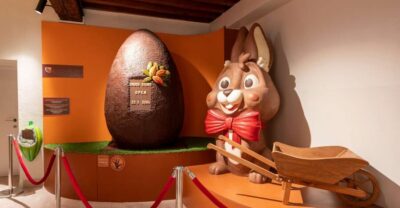
Bruges: Choco-Story Museum with Audio Guide and Tastings
Read our review →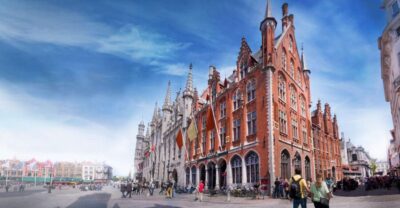
Bruges: The Beer Experience Museum Entry with Audio Guide
Read our review →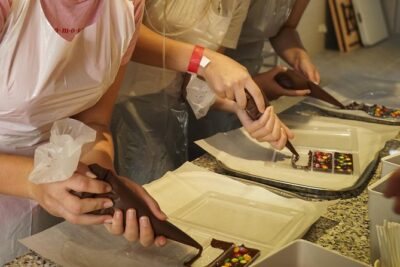
Chocolate Workshop and Self-Guided Museum Visit at Choco-Story in Brussels
Read our review →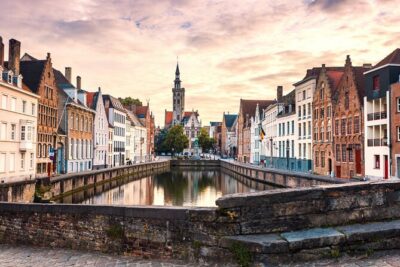
Bruges Scavenger Hunt and Highlights Self Guided Audio Tour
Read our review →
Romantic Bruges: Love Between the Canals Exploration Game
Read our review →
Antwerp: City Walk with Audio Guide in 7 Languages on your Phone
Read our review →
Antwerp Scavenger Hunt and Highlights Self Guided Audio Tour
Read our review →
Antwerp Scavenger Hunt and Best Landmarks Self Guided Audio Tour
Read our review →Browse the lists this tour appears in