
Reviewed · CITY TOURS
Brussels: Private Tour of the Upper and Lower City
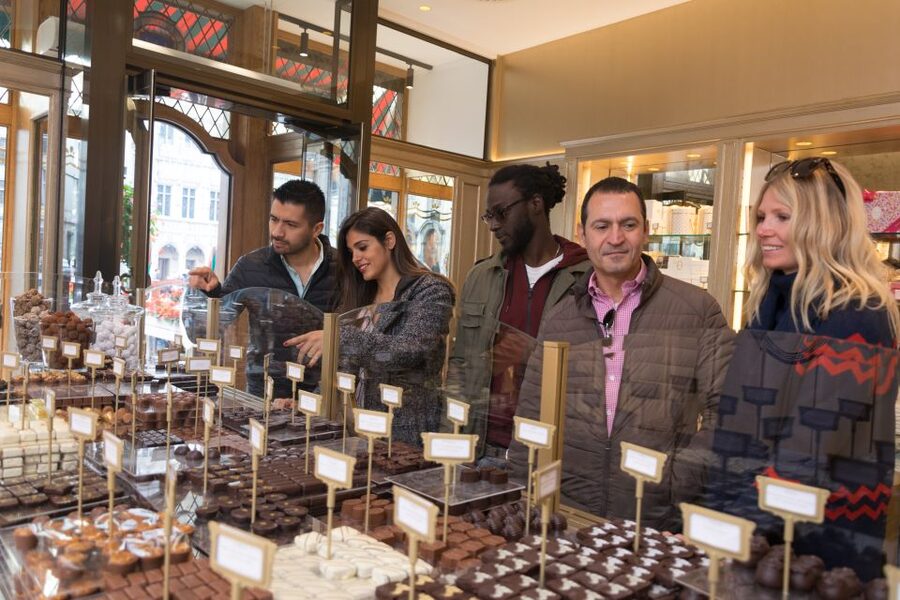
This private Brussels walk is interesting because you go from the city’s lower ground up to the hilltop Upper City, with the guide stitching together how Brussels developed over time. You start in the Lower City at Grand Place and finish with views and landmarks that belong to the Upper City.
I love how this tour uses major squares and monuments as a timeline. And I like that you do not just look at buildings, you get guided context on Art Nouveau plus Belgian beer and chocolate culture.
One thing to keep in mind: the tour focuses on seeing key places, but museum entry is not included. So if you want to go inside places with tickets, you may need to plan extra time or pay separately.
Key highlights that matter on the ground
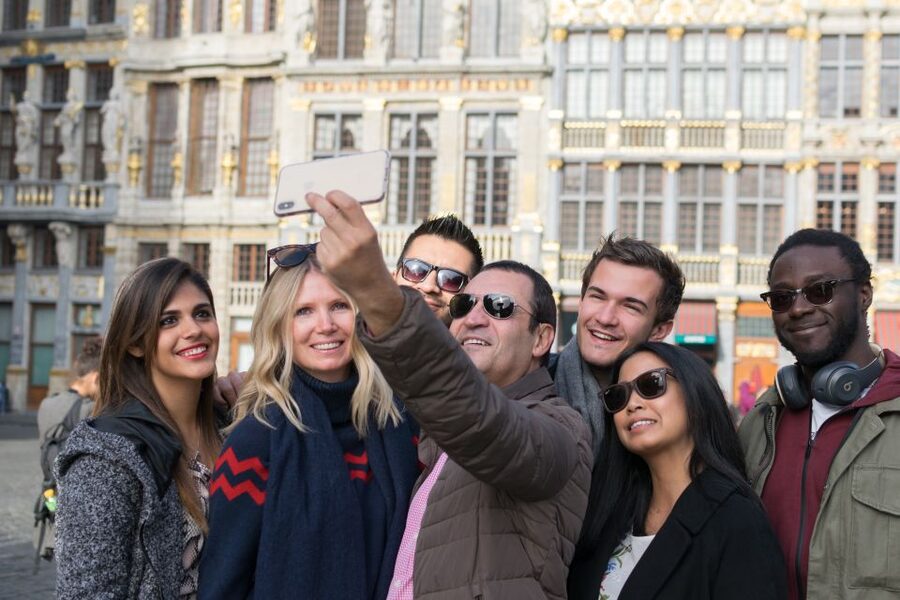
- Grand Place as your anchor point: You start there, then everything else snaps into place.
- Upright walking, not just flat sightseeing: The route naturally shifts from low to high Brussels.
- Cathedral interior time: You can admire stained glass from inside St. Michael and St. Gudula.
- A gallery-style finish in the Lower City: Saint-Hubert Royal Galleries end the lower loop with arcade atmosphere.
- Sablon stops for atmosphere and culture: Petit Sablon and Grand Sablon land you near some of the city’s most meaningful squares.
- Guides with energy in bad weather: Emil and Hr. Boeykens show up in praise for staying upbeat, even when it is cold.
How this 3-hour private route actually flows
This is a private group tour (with hotel pickup possible) that takes you through the Lower City first, then up into the Upper City. The whole experience is listed as 3 hours, so you should expect smart pacing. You will not have hours at each stop, but you will get enough time to orient yourself, understand what you are seeing, and connect each place to the next.
I like that it is built around “readable” landmarks. Brussels can feel like a mix of eras and styles, but this route is designed to help you make sense of it. The guide’s job is not just pointing, it is translating. You will learn how Brussels formed and grew, and why certain squares and institutions ended up where they did.
For comfort, come with good walking shoes. You will be climbing uphill as the tour shifts into the Upper City, and even if you take short breaks, you will still cover a lot of ground in a short window.
More City Tours in Brussels
- Brussels: City Highlights Walking and Tasting Tour
★ 4.9 · 505 reviews - Brussels: City Highlights and Hidden Gems Bike Tour
★ 4.8 · 443 reviews - Brussels: City Center Guided Food Tour with Tastings
★ 4.9 · 296 reviews
Grand Place to Manneken Pis: the Lower City opener
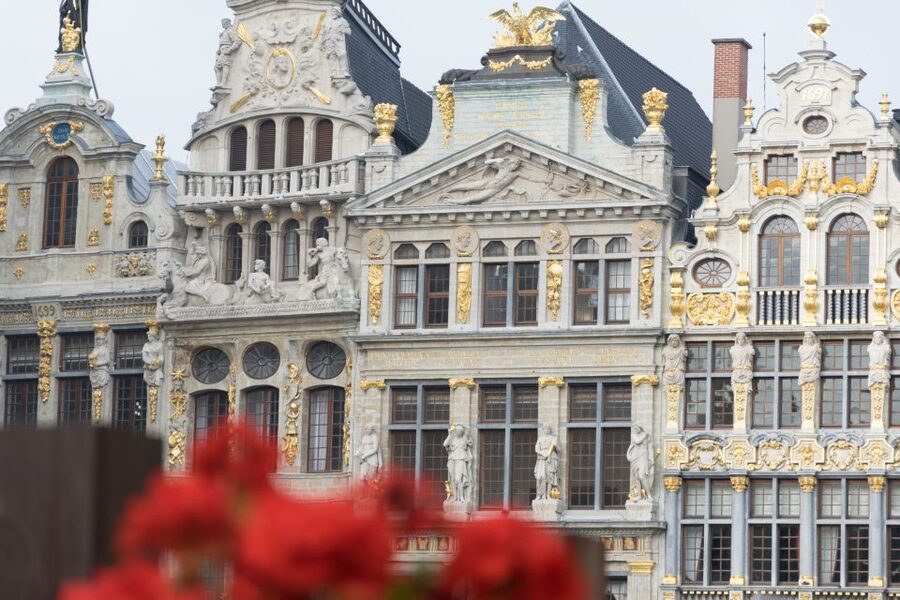
You begin in the Lower City at Grand Place, the central square that acts like a compass for Brussels. This is not just a pretty setting. Grand Place is where you can quickly get the logic of the old city, because major streets and landmarks radiate outward from it.
From there, you head toward Manneken Pis, the bronze landmark that has become a global symbol for Brussels. The fun part is that the guide can explain more than the joke. You get the sense of how a small icon can become a civic emblem, and why it shows up in the city’s identity again and again.
Next comes Saint-Géry island, once the largest island in the Senne river. This stop is valuable because it ties the city’s physical geography to its origin story. Brussels has water and lowlands in its past, and this is one way the tour helps you visualize that. If you like “why is it here” explanations, this portion is right up your alley.
St. Catherine, De Brouckère, and Monnaie squares: architecture you can interpret
The route continues with St. Catherine square, then onto De Brouckère and Monnaie squares. These stops work well because squares in Brussels often act like stage sets for different time periods. When you walk from one to the next with a guide, the stylistic shifts start to feel less random.
What you should look for here is how public spaces get designed. The guide can point out the kinds of details that signal different eras, and how those design choices relate to how people lived, worked, and gathered.
This is also where the tour’s “cultural life” theme becomes real. Brussels is known for museums and institutions, but you feel that presence on the street through these landmark spaces.
The Belgian federal opera house, then Saint-Hubert Royal Galleries
A major highlight in the Lower City stretch is the federal opera house of Belgium. Even if you only see it from outside on this schedule, it is a strong visual anchor. Opera houses in European capitals are never just performance venues. They often represent a city’s cultural ambition and wealth at a certain point in time, and the guide’s context helps you read that.
After that, the Lower City ends at Saint-Hubert Royal Galleries, an ensemble of glazed shopping arcades. I like this ending because it is a change of pace. You shift from broad squares to a covered, architectural corridor. Those arcades are the kind of place where Brussels shows a practical side, the same city that can do formal monuments and also loves everyday strolling.
If you enjoy shopping streets but do not want the typical “just walk and browse” approach, this stop gives you atmosphere with meaning. You will understand why these galleries matter, instead of treating them like a detour.
Something different while you are in Brussels:
- Brussels: Atomium Entry Ticket with Design Museum Ticket
★ 4.4 · 9,254 reviews - From Brussels: Guided Day Trip to Bruges and Ghent
★ 4.6 · 8,353 reviews - From Brussels: Bruges & Ghent Day Tour – 2 Fairytale Cities
★ 4.7 · 8,242 reviews - Choco-Story Brussels: Chocolate Museum Entrance with Tasting
★ 4.3 · 4,883 reviews
Climbing to St. Michael and St. Gudula Cathedral
After the Lower City loop, you move toward the Upper City. The first big landmark climb is to the Cathedral of St. Michael and St. Gudula. The key value here is that you can admire the stained-glass windows from inside.
That is a rare win on a short private tour. Many city tours stop at church façades, but inside light and color change how you experience the building. Even if religious art is not your top interest, stained glass is still one of those “wow, that is the point” moments.
I also think the cathedral stop works for first-time visitors. It gives you a clear sense of scale and authority on the hill, and it helps explain why the Upper City feels different from the Lower City.
Practical tip: stained glass is best when you slow down. Give yourself a couple extra minutes to look up after you step inside, even if the guide is moving you along.
Place des Palais, royal park, and palace viewpoints
From the cathedral you head toward Place des Palais, where you find the royal park and palace. This is where the tour helps you understand Brussels as a capital, not only a collection of attractions.
The royal park and palace area gives you a feeling for power and planning. Squares and streets below are shaped by commerce and city life. Up here, the design and framing shift toward government space and ceremonial grandeur.
If you like history that feels physical, this portion is worth your attention. You can look at the space and get why rulers and institutions preferred locations that feel elevated, controlled, and symbolically central.
Choosing your museum lane: Musical Instruments, Magritte, or Palace of Fine Arts
Now you get a more flexible cultural moment. The tour includes a stop at the Musical Instruments Museum, or it lets you pass by the Magritte museum and the Palace of Fine Arts to arrive at the Petit Sablon and Grand Sablon.
Two important notes for your planning. First, museum tickets are not included. So whether you go inside or simply pass by will depend on what you want and what you can fit into the time you have. Second, because the itinerary is described as adaptable, you can align the choice with your interests.
If you love sound, craftsmanship, and how music evolves, the Musical Instruments Museum is a good match. If you prefer modern art and Belgian visual storytelling, the Magritte museum and the Palace of Fine Arts route might feel more aligned.
Either way, the move to Sablon afterwards is a smart way to connect indoors culture to outdoor atmosphere.
Petit Sablon and Grand Sablon: finishing in the right kind of squares
You end the Upper City segment by reaching Petit Sablon and Grand Sablon. These are strong concluding stops because they feel like places you can actually linger with a map in hand after the tour ends.
Sablon squares are also a natural fit for the tour’s food and culture themes. Belgian beers and chocolate are listed as part of what you will learn, and the Sablon area is the kind of place where those topics fit into the broader cultural picture. You might get context about how Belgian tastes and traditions became part of the city’s identity.
If you want an easy next step after the tour, this is a great zone to head to cafés or plan a short walk. The tour leaves you in a part of town where it is easy to keep exploring without needing to recalculate everything.
Art Nouveau clues you can spot while you walk
Art Nouveau is specifically called out in what the guide will help you learn. On the street, you can use a simple approach. Look for flowing lines, ornamental details, and building façades that feel like they have a personality rather than just plain geometry.
Even in a compact 3-hour tour, you will likely get enough context from the guide to know what to look for. That is the advantage of having a professional with you. You do not need to be an art expert. You just need someone to tell you what matters, then you can confirm it with your eyes.
This is also where “origins and historic development” becomes practical. Brussels did not adopt one style and call it a day. Styles changed, tastes changed, and buildings followed. If you pay attention to the clues the guide points out, your own self-guided walk later becomes easier.
Belgian beer and chocolate lessons without the hard sell
The tour highlights Belgian beers and chocolate as part of the learning. The key is that this is not presented as a tastings-only activity. You get cultural context as you walk, tied to what the city valued, and how those tastes became part of the Belgian story.
If you enjoy food culture, this makes the route feel more personal. You are not only walking through stone and windows. You are also learning why Belgium has a reputation for what it drinks and what it eats.
A practical way to use this: as you walk, think about what you would try next. The guide can help connect the dots so your future beer or chocolate stop feels like part of the same story, not a random snack.
Price and value for a private group up to 20
The price is $353 per group, for up to 20 people, for a total duration of 3 hours. That sounds high if you think in per-person terms, but it gets reasonable when you split it.
Here is the quick math. At the maximum of 20 people, it works out to about $17.65 per person. If your group is smaller, the per-person cost rises fast, but you still gain the value of having one guide for your pace and your interests.
Also, transport is not included, and tickets to museums are not included. That means you should budget for any indoor time you decide to add. The tour is designed so you can still get a lot of value without museum entry, since major landmarks and architecture are the core focus.
What you are paying for is guidance: a professional who can explain Brussels as you walk the Upper and Lower City route, in multiple languages, with a private-group approach.
Who this tour suits best (and who should consider another option)
This private tour is a strong fit if you want first-time orientation with substance. It is also ideal if you travel with a group of friends or family, because the per-person cost becomes much better when you can fill the group size.
It is also a good match for people who like learning through streets. You get squares, monuments, and cultural institutions in a logical sequence, which makes it easier to remember what you saw later.
Consider a different option if you are hoping for a long museum-heavy day with lots of ticketed entry. Since museum tickets are not included and the route is time-compressed, you may not get the deep inside time you want.
Guide quality, based on what matters most on the street
Two guide names show up in praise for how they manage the experience: Emil and Hr. Boeykens. Emil is praised for mixing the city’s timelines well, which is exactly the skill you need for a tour built on origins and historic development. Hr. Boeykens is praised for keeping the group in good spirits, including when the weather was cold.
That matters because Brussels weather can turn quickly, and a private walking tour lives or dies on pacing and energy. You want someone who can adapt the flow without rushing.
Should you book this Brussels Upper and Lower City private tour?
If you want a guided, high-value overview that connects Grand Place, Manneken Pis, the cathedral, royal areas, and the Sablon squares into one coherent story, this is an easy yes. The route is structured so you understand why places are important, not just what they look like.
I would book it if you are traveling in a group and want your money to stretch. I would also book it if you prefer learning from a guide while walking, rather than trying to piece together Brussels alone with a map and random museum stops.
I would hesitate only if your top goal is museum interiors and ticketed time. In that case, you might need a different tour or you might plan to add paid museum stops on your own.
FAQ
How long is the Brussels Upper and Lower City private tour?
It lasts 3 hours.
Where does the tour start?
The tour begins in the Lower City at the Grand Place.
Is transport included?
No. Transport is listed as not included. Pickup from your Brussels hotel is possible.
Are museum tickets included?
No. Tickets to museums are not included.
What languages are available for the live guide?
The guide is available in Spanish, Dutch, English, French, German, Italian, Russian, and Portuguese.
Is this a private group tour?
Yes, it is a private group tour.
Is the tour wheelchair accessible?
Yes, it is listed as wheelchair accessible.
Reviewed lately in Brussels
- Taxi Shuttle DE Brussels Airport < - > SPA (1 to 8 SEATS)★ 4.0 · 3 reviews
- WWII Battle of the Bulge Private Guided Day Tour from Brussels★ 5.0 · 3 reviews
- Pub Trail Brussels: an adventure full of surprises★ 3.5 · 3 reviews
- Brussels Exploration Game and City Tour on your Phone★ 4.0 · 3 reviews
- Brussels : Must-See Attractions Walking Tour with a Guide★ 4.0 · 3 reviews
- Private Day Trip from Brussels to Bruges★ 4.5 · 3 reviews
- Leuven: City Walk with Audio Guide in 7 Languages on your Phone★ 3.0 · 3 reviews
- Brussels: Museum Halle Gate Entry Ticket★ 4.1 · 3 reviews
City Tours, compared.
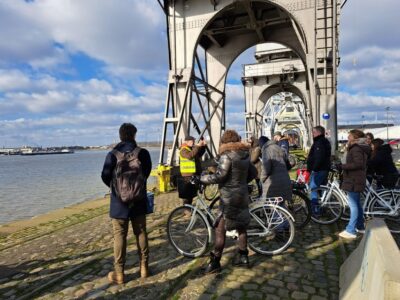
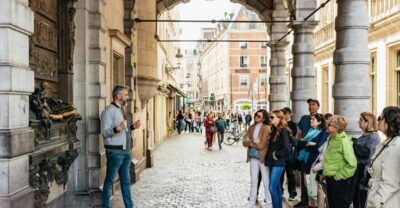
Brussels: City Highlights Walking and Tasting Tour
Read our review →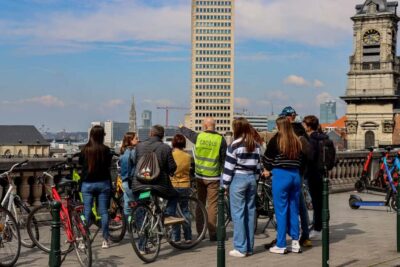
Brussels: City Highlights and Hidden Gems Bike Tour
Read our review →
Ghent: 40-Minute Historical Boat Tour of City Center
Read our review →
Antwerp: Historical Walking Tour in the Old City
Read our review →
Brussels: City Center Guided Food Tour with Tastings
Read our review →
Browse the lists this tour appears in