
Reviewed · SCAVENGER HUNTS
e-Scavenger hunt Hasselt: Explore the city at your own pace
This is interesting because Hasselt is compact, so you can see real landmarks and local stories without marching on someone else’s schedule. It turns your walk into a self-guided city game, with a digital trail that nudges you from sight to sight at your pace.
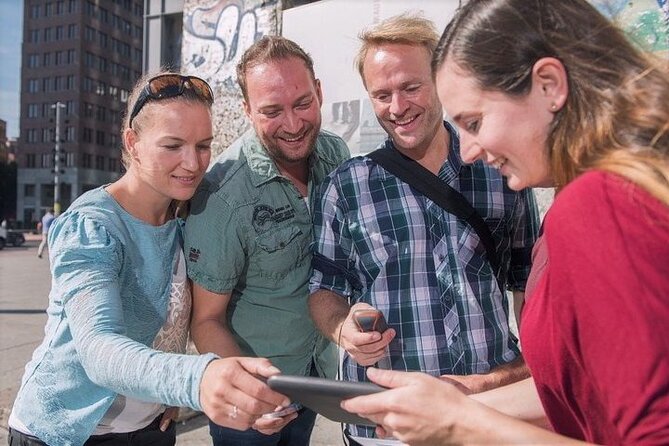
I like the way the experience uses your phone like a friendly game master. You get an app with tasks plus fun facts, so you spend less time figuring out where to go and more time actually enjoying Hasselt’s streets.
One consideration before you book: this is meant to be more game than guided lecture. If you want long, deep explanations at every stop, you may find the information feels a bit short, and translation can get weird if you rely on automatic phone translation.
Key highlights to know before you start

- Self-paced city trail that lets you start when you want within the long open window
- Phone-based tasks (you get an app, but you supply your own device and data)
- Up to 6 people per group, which can make the per-person cost very reasonable
- Major sights with variety, from churches and museums to the Japanese Garden
- Multiple ways to navigate, with both map and GPS-style guidance in the app
- Tips for after the hunt inside the app, so the afternoon does not vanish after you finish
Self-paced Hasselt: where it starts and how you’ll use your phone
The e-Scavenger hunt is built for walkers who like choice. You can do it in about 2 to 4 hours, depending on how often you stop for photos, how quickly you answer, and how long you linger at the bigger sights.
Your meeting point is Diesterstraat 1, 3500 Hasselt, Belgium, and the route loops back there at the end. Because the activity runs Monday through Sunday from 12:00 AM to 11:59 PM, you’re not stuck with one rigid slot. You pick a time that matches your day, then follow the digital trail.
You’ll use a mobile ticket and the experience is designed to run on an online app on your phone. One important detail, though: a smartphone and data are not included. So if you want the navigation and the tasks to work smoothly, bring a charged phone and make sure you have a data plan or reliable Wi‑Fi nearby.
If you’re traveling with others, the group size is capped at 6 and it’s private for your group. That matters, because your team can talk through answers and split up to read signs while the rest stays on track. If you’re going solo or as a couple, it can still work, but you lose some of that lively group energy.
And if you care about practical comfort, it’s marked as user-friendly for hearing impaired, and service animals are allowed. It’s also near public transportation, which is handy in Hasselt where walking is easy but you may want a quick hop between areas.
More Scavenger Hunts in Flanders:
- e-Scavenger hunt Turnhout: Explore the city at your own pace
★ 4.5 · 12 reviews - e-Scavenger hunt Antwerp: Explore the city at your own pace
★ 4.5 · 67 reviews - e-Scavenger hunt Bruges: Explore the city at your own pace
★ 4.5 · 58 reviews
Pricing reality: $37.21 per group, and why group size changes everything
The price is $37.21 per group up to 6 people. That’s where the math starts to matter.
- For a group of 6, your share is about $6.20 per person for a 2 to 4 hour outing.
- For 2 people, it’s about $18.60 per person, which is where the value can feel more questionable.
If you’re comparing this to a regular guided city walk, you’re basically buying flexibility and a game format, not a long spoken narrative. If your priority is conversation and extended interpretation, a guide might feel more satisfying. If your priority is getting around and seeing key places in a fun, low-pressure way, this pricing can make a lot of sense.
Stop 1: Gin Museum Hasselt, and why the start sets the tone
The hunt begins with a visit to the Gin Museum. The idea here is not just to check a box, but to shift gears into the theme of the day. The museum is described as a mindful experience focused on attention for both mind and body, so you can expect something that sets context before the route starts moving harder.
What I’d do here as a player is keep it practical. Read what you need for the game, look around at a human pace, and don’t turn the whole thing into a slow museum marathon unless you really want to. Starting with something themed can also make the later questions feel more natural, like the trail is telling a story rather than acting like a random scavenger list.
A small drawback to keep in mind: if gin-themed stops are not your thing, you might feel that you’re spending time on a topic that you would otherwise skip.
Virga Jesse and a basilica with a 14th-century statue
Next up is an 18th-century church, now a basilica. Inside is the statue of Mary of Jesse, also called Virga Jesse, from the 14th century. This is the kind of stop that adds weight fast, because it connects Hasselt’s religious heritage to a specific famous statue, not just a generic church exterior.
As you play, the game format tends to push you to notice details you might otherwise walk past. So look up at the parts of the space that catch your eye, then check the app for what it wants you to spot.
Potential drawback: churches can be visually busy, and if the app’s prompt is quick, you may feel slightly rushed. If that’s you, pause and slow down anyway. You’ll enjoy the basilica more if you treat the game as a guide to your own curiosity, not a stopwatch.
St. Quintinus Cathedral: the center of Hasselt and a change in status
In the heart of Hasselt, you’ll encounter St. Quintinus Cathedral. It’s dedicated to Quintinus, and an interesting detail is that St. Quintinus’s Church became a cathedral when the Diocese of Hasselt was founded in 1967.
This is a great stop for understanding how a city’s landmarks evolve. The building is not just old. It became important in a particular modern moment too. When the app asks you questions here, you’ll likely be forced to connect the dedication and the cathedral status. That makes it easier to remember later, especially because Hasselt’s center is compact.
One more practical tip: since the historic center is not very large, you can often make quick loops on foot. If you want a little buffer, start the hunt earlier rather than later, so you’re not rushing through church visits or museum doors right at closing times.
Modemuseum Hasselt in the Oud Gasthuis: a 17th-century setting

Then the trail moves to Modemuseum Hasselt, located in the Oud Gasthuis, a unique seventeenth-century building. This stop can be a nice contrast to the churches: instead of sacred art and statues, you’re in a building that is tied to everyday life across centuries.
Drawback check: the name of the museum hints that it may lean into fashion or design. If that’s not your interest, you might find you want to use the game as your guide and not turn it into a full museum session. You still get the context of the building and likely enough to complete the tasks.
It’s still a worthwhile stop for the setting alone. Old Gasthuis buildings carry a specific feel, because you can see how people once used the space. The app trail helps you pay attention to the right corners instead of wandering aimlessly.
Plopsa Indoor Hasselt near the arena: big city energy, but inside
One of the more modern stops is Plopsa Indoor Hasselt, Belgium’s first partially covered theme park. It’s located next to the Ethias Arena and Grenslandhallen.
This is a good checkpoint if your group includes kids or if you simply enjoy seeing a place that serves families, not just sightseeing pilgrims. It also adds variety to the route, because the hunt is otherwise weighted toward churches and museums.
Consideration: if you’re traveling as a quiet adult crowd and theme-park energy is not your vibe, you might treat this as a quick, game-driven pause. You can still enjoy the contrast without needing to stay for attractions.
Town hall change story: Stadskantoor opened in 2018
Next you’ll pass the town hall of Hasselt, called Stadskantoor. It opened in 2018 and serves as a replacement for the Old Town Hall.
This is a smart stop because it shows how a city keeps moving. People often think historic centers mean frozen time, but town halls need updates too. The app’s trail here is a chance to notice modern civic architecture inside a historic area.
If you enjoy comparing old and new, this is a natural moment to pause and ask yourself: what do cities choose to update, and what do they preserve?
The beguinage trace and Iconoclasm history you cannot ignore
Another station is tied to the oldest beguinage, mentioned as early as 1245. It was located outside the ramparts, approximately at Virga Jessecollege (Guffenslaan). That beguinage was destroyed during the Iconoclasm.
This is one of the heavier historical bits on the trail. It’s also the kind of information that can stick with you, because it points to a specific time period and a specific kind of loss. When the app turns this into a game question, it’s encouraging you to remember the timeline rather than treating history as background noise.
If your group prefers light walking days, you can still handle it well. You just need to be ready for a short burst of serious context in the middle of an otherwise playful route.
Japanese Garden in Hasselt: the largest in Europe
Then comes a standout nature and culture moment. The Japanese Garden in Hasselt is described as the largest of its kind in Europe, and it’s the place to experience Japanese culture.
This is where a self-guided scavenger hunt can feel more than just trivia. Gardens work best when you actually slow down. So I’d use the game here as permission to wander slowly, not as a reason to rush.
Practical tip: if you know you will spend time here, plan for your 2 to 4 hour window to flex upward. The Japanese Garden can easily turn into a longer pause for photos and quiet time.
Herkenrode Abbey: a chronological trail through 600 years of women
The trail includes a route about Herkenrode Abbey, described as a chronological trail through 600 years of women on Herkenrode.
That chronological angle is valuable. You’re not just learning one fact. You’re moving through a timeline, which helps you understand change over time. In a game format, timelines can feel less dry, because the next task nudges you to keep going.
Drawback to expect: if you prefer a guided storyteller who can answer follow-up questions, a self-guided game will feel more limited. Still, it’s a great choice if you like structure and you enjoy absorbing history at your own speed.
Dusart, military school, and Congo in 1890: a stop with real context
One of the more specific historical story elements involves Dusart. He went to the Royal Military School in Brussels, became a lieutenant at age 19, left for Congo in 1890, and Congo is mentioned as being private property of King Leopold II.
This part adds a strong, adult history thread. It’s also a reminder that “local stories” are often connected to bigger European events. Because the experience is game-based, you may see only what the app chooses to highlight. If this topic grabs you, consider using your finish time to do a little extra reading later.
If you’re traveling with younger kids, this station might require a quick, careful approach. You might read the app content, then talk it through briefly in age-appropriate terms.
Minderbroederskerk and Father Valentinus Paquay: thousands of visitors
Then you’ll reach the burial chapel and museum of Father Valentinus Paquay in the Minderbroederskerk, which attracts thousands of visitors every year.
This is one of those places where the game format can help you avoid missing key details. When people visit in large numbers, there’s usually a story, and the app often steers you toward the elements you would otherwise overlook.
Practical note: burial chapels and small museums often have rules about photos or noise. If you want to stay respectful, keep your phone use quick and follow any posted guidance on site.
Grote Markt and the small scale of Hasselt’s center
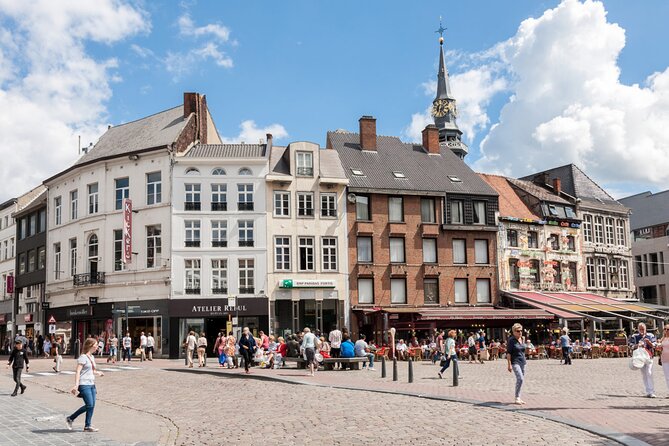
Hasselt’s Grote Markt comes into the game too. Because the city center is not very large, the square is partly surrounded by cozy restaurants, hotels, and some shops.
This is a good moment to treat yourself. Even if you’re playing hard for answers, take a snack break. Grote Markt is the kind of place where you can reload your energy, then return to the hunt with better focus.
Also, this “compact center” fact matters because it makes the whole experience feel doable. You’re not crossing the city chasing clues. You’re walking a manageable loop.
Stadsmus streets and the mysterious citizen who appears every seven years
Near the end, you’ll play with a stop tied to The Stadsmus, where you discover the streets of Hasselt with its famous inhabitants. There’s also mention of a mysterious citizen who sees the light of day once every seven years.
That kind of folklore-style detail is exactly what makes a self-guided trail fun. It turns ordinary streets into a story you want to solve, and it gives Hasselt a character beyond the postcard sights.
If your team enjoys teasing out mystery hints, this portion is likely to be the most memorable. If you prefer straightforward landmarks, the oddball folklore element may feel like playful filler. Either way, it’s a good stretch break before you finish back where you started.
How to avoid common problems with the app and still have fun
The biggest real-world risk with any app-based hunt is simple: you lose time because of translation or navigation confusion.
If you’re using a phone translation feature, consider turning it off before you start. The experience is offered in English, and automatic phone translation can sometimes create doubled or awkward text. That can turn a fun question into a frustrating one.
Another approach that helps: use the app’s map or GPS guidance and stick with one method once you’re moving. Switching between navigation modes can slow you down, especially in busy spots near squares or museums.
Finally, lean into the “after the hunt” suggestions inside the app. The trail is designed so you do not end the day with nothing to do. Use those tips to extend your walk into a relaxed meal or a second look at whatever grabbed you most.
Should you book this e-Scavenger hunt Hasselt?
Book it if you want a low-pressure way to cover a lot of Hasselt in a few hours, and you like learning through tasks instead of listening to a lecture. It’s especially good value when you have a team of 3 to 6, because the total group price spreads out quickly.
Skip it or rethink it if your main goal is deep explanations at every stop, or if you dislike games and puzzles. Also reconsider if you’re going as a couple and expect a guided-style experience for the price, because self-guided means less conversation.
If you can handle short reads, enjoy noticing details, and you’ll bring a phone with enough data, this is a practical way to turn an ordinary Hasselt walk into something you can remember.
FAQ
How long does the e-Scavenger hunt Hasselt take?
The duration is approximately 2 to 4 hours.
What is the price for this experience?
The price is $37.21 per group, up to 6 people.
Is it self-guided, and can I start whenever I want?
Yes. You start when you wish, and it runs Monday through Sunday from 12:00 AM to 11:59 PM.
What language is the experience in?
The experience is offered in English.
Do I need a smartphone or data?
You will need a smartphone and data. A smartphone and data are not included.
Where do we meet, and where does it end?
You meet at Diesterstraat 1, 3500 Hasselt, Belgium, and the activity ends back at the same meeting point.
Is it a private activity for just my group?
Yes. It is a private tour or activity, and only your group participates.
Reviewed lately in Flanders
- e-Scavenger hunt Turnhout: Explore the city at your own pace★ 4.5 · 12 reviews
- Experience Authentic Belgian Cuisine: Cooking Lesson and Meal with a Ghent Local★ 5.0 · 24 reviews
- Pub Trail Hasselt: an adventure full of surprises★ 3.0 · 4 reviews
Scavenger Hunts, compared.

e-Scavenger hunt Antwerp: Explore the city at your own pace
Read our review →
e-Scavenger hunt Bruges: Explore the city at your own pace
Read our review →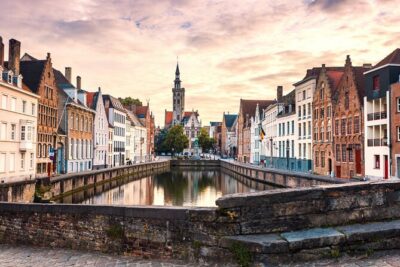
Bruges Scavenger Hunt and Highlights Self Guided Audio Tour
Read our review →
e-Scavenger hunt Ghent: Explore the city at your own pace
Read our review →
Beer Tasting and Scavenger Hunt in Brussels – About 3 Hours
Read our review →
e-Scavenger hunt Mechelen: Explore the city at your own pace
Read our review →
e-Scavenger hunt Brussels: Explore the city at your own pace
Read our review →
e-Scavenger hunt Leuven: Explore the city at your own pace
Read our review →Browse the lists this tour appears in