
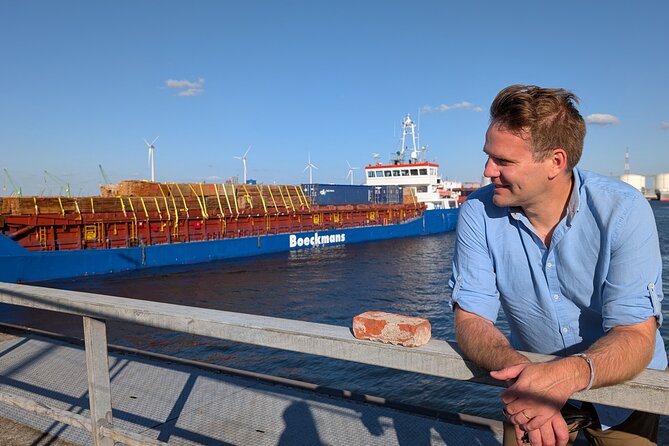
Reviewed · SHORE EXCURSIONS
Guided Antwerp Port Tour, in your Car or Minibus
Antwerp’s port is the kind of place you think you know, then the scale hits you like a wave. This guided tour drives you through the industrial zones most people never get close to, mixing huge port engineering with small human details like a ghost village marker and geese at Lillo Fort.
I love how the guide turns the route into a story, not a list. I also love the contrast moments, like seeing Zaha Hadid’s sleek Havenhuis opposite historic dry docks, then switching to the petro-chemical view and a long graffiti flood wall. One thing to keep in mind: this is an active industrial setting, and it’s not recommended for travelers with serious respiratory diseases. Also, big ship sightings depend on timing, so if you’re chasing a specific vessel photo, go in with flexibility.
Key Highlights You Should Expect
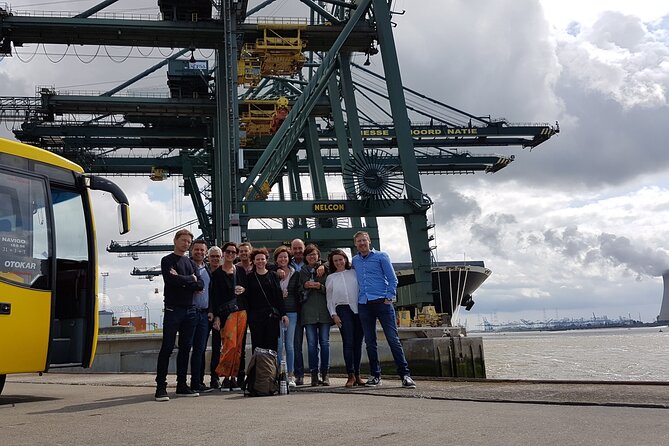
- Zaha Hadid and the dry docks area with strong photo angles and design talk
- Lock viewing that feels up close through the Boudewijn and Van Cauwelaert gates
- Scheldelaan contrasts, petro-chemical industry on one side, an international graffiti wall on the other
- Scale you can measure with your eyes, from Europe’s biggest wharf to the Berendrecht sea lock
- A time shift at Lillo Fort, where geese and old houses sit next to modern chemical giants
- Rail and fruit logistics, including the gravity shunting hump yard and Europe’s large fruit terminal
The Practical Setup: Private Group, Car or Minibus, and a Real 2.5 Hour Loop
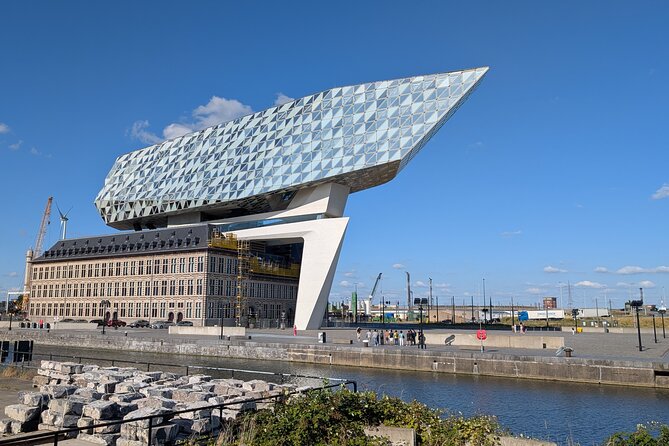
This is a private tour for your group, up to 15 people, priced at $314.42 per group. That matters for value. If you can fill the full group size, the cost drops to about $21 per person. Even at fewer people, you’re paying for a guide who can tailor the pace to questions, and you are not stuck in a giant sightseeing bus.
Plan on about 2 hours 30 minutes of guided time. The tour is offered in English, and you get a mobile ticket. You start and end at Kinepolis Antwerpen, Groenendaallaan 394, 2030 Antwerpen.
Transportation is the key detail. The tour is designed to run in your car or minibus, and the guide boards your vehicle. That usually means a smoother, more direct route than a fixed coach itinerary, and it also makes it easier for your group to stay together.
One more practical note: the experience requires good weather. If weather cancels it, you’ll be offered another date or a full refund, so keep an eye on forecasts if you’re booking near rain or wind.
More Shore Excursions in Antwerp:
- Round-Trip Shuttle Service from Zeebrugge to Bruges
★ 4.0 · 1,143 reviews - Deluxe Bruges Shore Excursion from Zeebrugge Cruise Port
★ 4.5 · 80 reviews - Bruges Tour with Canal Cruise from Zeebrugge Cruise Port
★ 4.5 · 78 reviews
Havenhuis Vantage at Droogdokkenweg: Zaha Hadid Meets 19th-Century Dry Docks
The tour starts with a moment that makes you stop scanning your phone and actually look around. You disembark at a quiet pier opposite Havenhuis Vantage, where the building’s diamond-glass look seems to float above a 19th-century fire station. It’s visually modern, but the setting is classic industry.
What makes this stop work is the way the guide reads the building like a clue. You’ll hear how Zaha Hadid’s design choices connect to the port’s industrial past, especially with the nearby dry docks. Those dry docks are being transformed into the city’s Maritime Museum, so you get a “then and next” view, not just a photo stop.
If you like waterfront photography, this is one of your best chances. You’re placed across from a reflective structure, with the dock geometry doing half the composition for you.
The time here is brief, about 10 minutes, and the stop includes free admission. That’s useful because it keeps the day moving while still giving you a real anchor point for what you’re seeing later.
Oosterweel Contrast Drive: From a Medieval Church to Europe’s Largest Wharf
Next comes a drive that teaches you how to read geography. You pass the small 15th-century Oosterweel church, then turn your head to the adjacent construction zone. That contrast is the point: the port is not a separate world from the city. It keeps expanding into living neighborhoods, leaving markers behind.
The guide connects the dots between medieval river parishes and what happened later, when post-war expansion pushed the harbor further inland. In today’s layer, you’re looking at the Oosterweel works, described as Europe’s biggest wharf, where tunnel segments for Antwerp’s long-awaited Ring closure are being cast.
In plain terms, you learn that ports aren’t just about shipping. They’re also about roads, tunnels, and the next decade of movement. If you like “systems thinking,” this drive gives it to you without getting too academic.
Scheldelaan’s Duality: Petro-Chem Titans, a Graffiti Flood Wall, and Hidden Pipelines
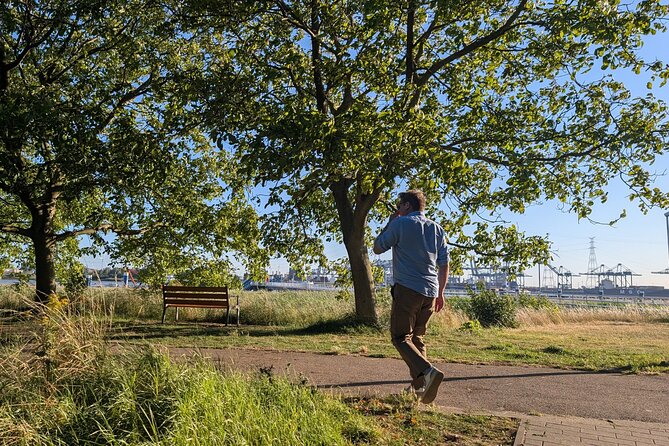
When you roll along Scheldelaan, the road becomes a kind of moving exhibit. One side shows stainless tanks, cracking towers, and steam plumes from Europe’s second-largest chemical cluster. The other side changes the mood completely: a flood wall stretching for about a kilometer, covered with color thanks to an annual international graffiti contest.
The best part isn’t just the visuals. The guide helps you understand how the industrial network functions. You’ll hear how pipelines run under the roadway, like hidden arteries. That turns the street you’re riding on into something you can picture as infrastructure, not just scenery.
There is also a useful emotional lesson here. You see how creativity and heavy industry coexist in the same city space. The port can feel harsh, but it still attracts human expression.
More days in Antwerp:
- Historical Walking Tour: Legends of Antwerp
★ 5.0 · 1,837 reviews - Antwerp: City Highlights Walking Tour
★ 4.7 · 816 reviews - Antwerp: City Highlights Guided Bike Tour
★ 4.7 · 529 reviews - Antwerp: Historical Walking Tour in the Old City
★ 4.8 · 373 reviews
Boudewijn and Van Cauwelaert Locks at De Vaarkom: Small Gates, Big Supply Lines
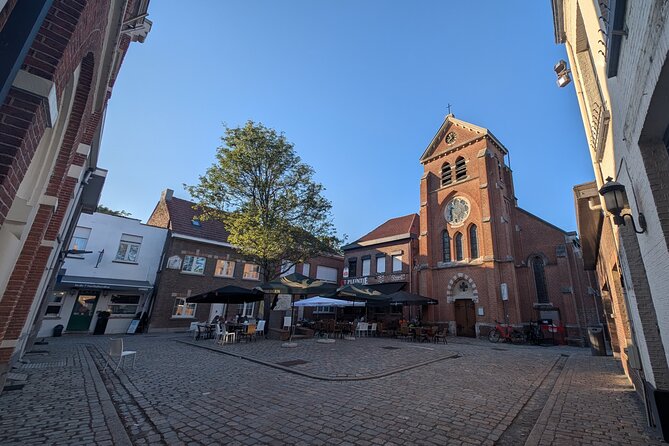
Now the tour shifts from “viewing the port” to “understanding how it keeps working.” You step out by De Vaarkom basin, with chemical stacks on one side and the twin Boudewijn and Van Cauwelaert locks on the other.
By port standards these locks are described as modest, but they are vital. Your guide explains lock-master signals and points out details that make you feel like you’re watching machinery, not just boats. You may even notice bow-thruster turbulence underfoot as vessels are maneuvered nearby.
This stop is where the tour earns its reputation as educational without being stiff. You’ll learn how workhorse gates keep refinery supply lines moving day and night. And when you watch tugs nudge short-sea freighters through the narrow sluices, it stops being theory and becomes a real-time choreography.
It’s short, around 10 minutes, with free admission, but it gives you a “how the system moves” feeling that you’ll carry to the bigger locks later.
Lillo Windmill Drive-By: The Ghost Village Marker That Explains Port Sprawl
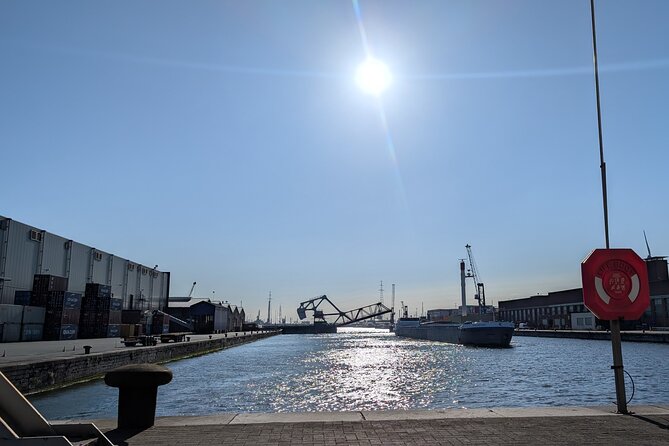
You’ll spend a moment looking at one lonely object: a solitary brick windmill connected to the vanished village of Lillo. That one structure becomes a narrative tool for the scale of the port.
The guide uses it to show how far the harbor reaches. Even after traveling about 30 km, you’re described as only about halfway through the port territory. The message is blunt but clarifying: this port didn’t just grow around the city. It expanded and changed where people lived.
The windmill becomes proof of that. You’ll hear how entire hamlets were bought out and dismantled as docks pushed inland, and how memories from villagers who refused to leave linger through physical survivors like this windmill.
It’s a drive-by, about 10 minutes, with free admission, but it’s one of the most human pauses on the route.
Berendrecht Lock Fly-By: Gateway for Giants
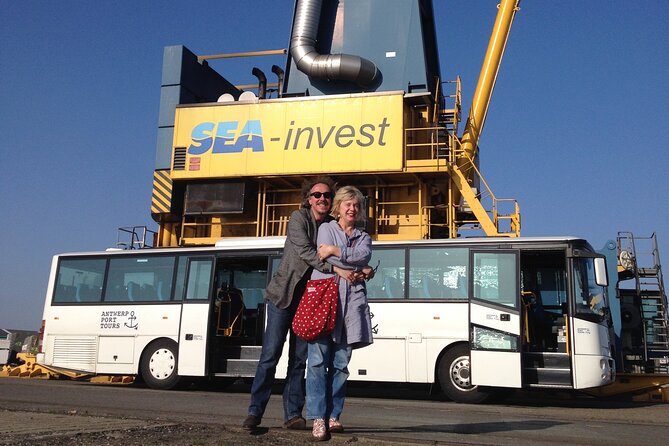
If you want one spot that makes the port feel huge even when you don’t see a ship yet, this is it. As your vehicle rolls along the service road, Berendrecht Lock opens up beside you as the main doorway to the docks beyond.
Your guide gives you jaw-dropping scale and then translates it into what you’re seeing. You get the tugboats and line-handlers choreography, and you understand why the lock is such a critical gate in the network.
Timing can help. If you’re lucky, a vessel such as a 300-metre bulker or another large container ship may pass at the guide rails, giving you a windshield-level view of hull plates that feel bigger than city buildings.
But here’s the important part: even without a ship at that exact moment, the scale and the insider commentary still make it a highlight. This is one of those stops where learning how to look matters more than catching a specific photo moment.
Dock 910 on Zandvlietweg: Terminal in Motion, Containers Like Steel Cities
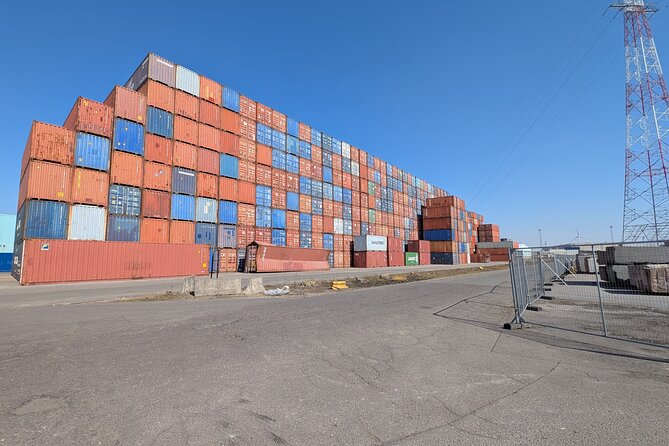
Next you step into a different kind of port energy. At Dock 910, you’re meters from PSA’s quays, where straddle carriers move around like oversized insects and twin rows of cranes keep feeding the river nonstop.
The guide helps you focus your eyes. From a single vantage, you can pick out multiple “frontiers” at once:
- live container movement in front of you
- the Berendrecht and Zandvliet locks behind
- the Belgium-Netherlands border line mid-stream
- the Doel nuclear plant cooling towers in the distance
That layering is why this stop feels satisfying. It’s not just one view. It’s a map you can see with your own eyes.
This stop is short, about 10 minutes, and includes free admission. It’s also a good reset before the more narrative stops later.
Lillo Fort: Geese, 18th-Century Homes, and Stories Next to a Chemical Cluster
The tour slows just enough to let you breathe, in the best possible way. You head over Lillo Fort’s ancient roads, and the vibe flips from industrial machinery to older textures.
Resident geese show up on the grassy ramparts, and the fort grounds include 18th-century fishermen’s houses plus a tiny dock. You smell café-type scents and hear birdsong, and the guide uses that calm setting to tell sharper stories.
You’ll learn about Spanish sieges, smugglers, and the community that held onto its identity even with the chemical cluster’s presence across the dike. That’s the tour’s neatest trick: the past is not a museum display here. It sits next to modern industry and shares the same air and horizon.
This part takes about 30 minutes, includes free admission, and it’s one of the places where the guide’s storytelling style really lands. In feedback, I saw a consistent theme around guides telling passionate stories rather than reciting dates, and Lillo Fort is exactly the setting where that approach pays off.
Antwerp North Hump Yard Drive-By: A Rail Symphony You Can Hear
Ports are road, river, and rail. This drive-by gives you the rail piece, and it does it with the kind of technical description that stays watchable.
From the car, you look down on Antwerp’s vast marshalling yard, described as a spiderweb of tracks where up to one thousand wagons can be reshuffled each day. Your guide explains gravity shunting as a ballet with brakes and sensors, not just random shuffling.
You hear how locomotives push mixed trains over the “hump,” wagons roll downhill, and systems like laser sensors and track retarders handle the braking for each car. Computer-controlled switches then slot cars into new consists bound for places like Germany, France, or the Ruhr.
If timing is right, you may be able to watch part of the live process. Even when you cannot, the explanation helps you see the yard as a designed machine, not a background yard.
This stop is about 5 minutes, with free admission, so don’t expect a full rail stop. Expect context and clarity.
Lubeckweg Container Canyon Finale: Granite Exports and Europe’s Fruit Gateway
The last push is a sensory one. You drive into a maze of multicoloured container stacks, where the steel towers sit close enough that you can read box seals. It feels like walking into a warehouse photo, except you are moving through it.
One side of the view is dominated by house-sized granite blocks waiting for export. The other side focuses on food logistics: refrigerated reefer racks around Europe’s largest fruit terminal, with bananas and citrus moving from ship to supermarket in hours.
That speed is the value of the finale. After seeing locks, pipelines, and rail systems, the container canyon shows you what all that engineering is for: goods moving efficiently through a network.
This last segment is about 5 minutes, includes free admission, and it’s a strong ending because it hits both big materials and everyday essentials.
Who Should Book This Port Tour, and Who Should Skip It
This tour suits you if you want an educational experience that does not feel like a classroom. The route is packed with contrast, and the guide style described in feedback focuses on passionate storytelling, with moments that turn into real dialogue.
It also helps if you like practical travel thinking. You’re learning what makes a port run, not just looking at it. You’re seeing how ships, locks, rail yards, pipelines, and logistics facilities connect.
A few cautions based on the tour facts:
- Minimum age is 12, so it’s more comfortable for families with older kids.
- It’s not recommended for travelers with serious respiratory diseases, which matters if you have asthma or similar concerns.
- It’s best with good weather, since you’ll be outdoors at multiple points.
Good to know: service animals are allowed, and the meeting point is near public transportation.
Should You Book It?
If you like your city tours with real function behind the scenery, I’d book it. This is the kind of tour that helps you leave Antwerp with a mental map of how the port works, from locks to container terminals, not just a handful of photos.
I’d especially book if your group includes people who get bored with facts-only tours. The guide approach here is described as passionate and story-led, which fits stops like Lillo Fort where atmosphere does the heavy lifting.
On the flip side, if your priority is a guaranteed ship spotting moment, keep expectations flexible. The tour includes dramatic scale regardless, but vessel timing can affect what you see in motion. If respiratory health is a concern, skip this one and choose a different kind of Antwerp experience.
FAQ
How long is the guided Antwerp Port Tour?
It runs for about 2 hours 30 minutes.
What is the price and group size?
It costs $314.42 per group, for up to 15 people.
Is the tour private?
Yes. It is a private tour, and only your group participates.
What language is the tour offered in?
The tour is offered in English.
Are admission tickets included for the stops?
The stops listed include free admission time (for example, 10 minutes at several stops and 30 minutes at Lillo Fort).
Is the tour suitable for children and health conditions?
The advised minimum age is 12. It is not recommended for travelers with serious respiratory diseases. Service animals are allowed.
Reviewed lately in Antwerp
- Surprise tour of Antwerp guided by a Local★ 5.0 · 3 reviews
- Historical Old Harbour Boat Tour in Antwerp★ 5.0 · 3 reviews
- Discover Antwerp while playing! Escape game – The alchemist★ 4.5 · 4 reviews
- Discover the secrets of Antwerp while playing! Escape game★ 4.5 · 6 reviews
- Antwerp: Private custom tour with a local guide★ 4.5 · 6 reviews
- Antwerp Historical Walking Tour: by MG City Tours★ 5.0 · 6 reviews
- Antwerp: Food Walking Tour with 5 Tastings★ 4.5 · 7 reviews
- Antwerp: Pub Crawl in the Historical City★ 4.9 · 10 reviews
Shore Excursions, compared.
Round-Trip Shuttle Service from Zeebrugge to Bruges
Read our review →
Deluxe Bruges Shore Excursion from Zeebrugge Cruise Port
Read our review →
Bruges Tour with Canal Cruise from Zeebrugge Cruise Port
Read our review →
Best Bruges Shore Excursion including Deluxe Canal Cruise
Read our review →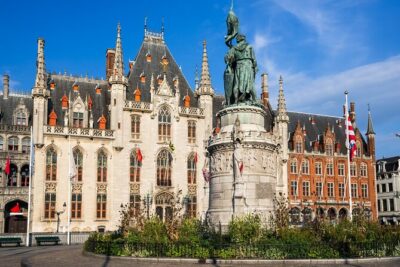
6 Hour Bruges Shore Excursion from Zeebrugge Cruise Port
Read our review →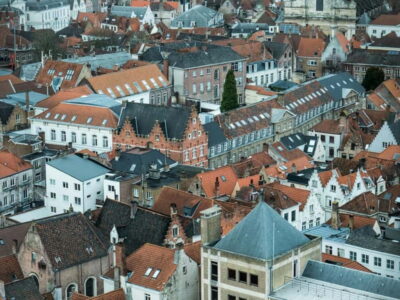
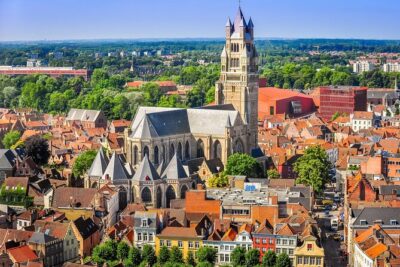
Best Bruges Shore Excursion from Your Ship with Canal Cruise
Read our review →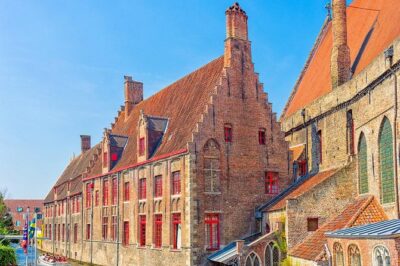
Private shore excursion from Zeebrugge to Bruges with driver and guide
Read our review →Browse the lists this tour appears in