
Reviewed · CYCLING TOURS
Small-Group Highlights of Brussels Bike Tour
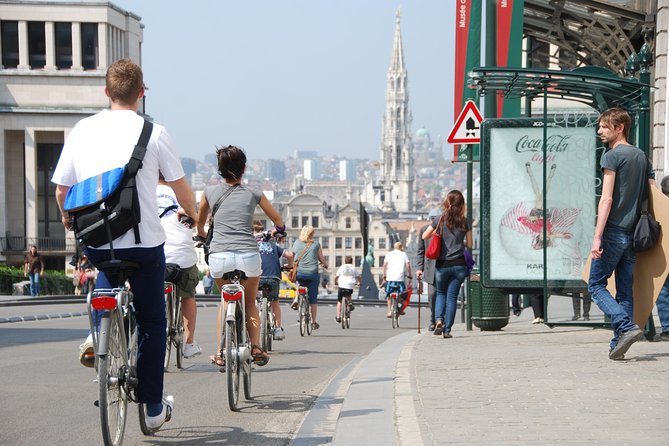
Brussels by bike is interesting because you get the city rhythm fast, not just the postcard angles. You ride from the old center to the European institutions, and you see how these two worlds share the same streets. What I like most is the way it’s small-group friendly and packed with stops, so you come away with real context, not just motion.
I also like that the tour is built for practical seeing: bikes and a local guide are included, and you hit major landmarks plus neighborhood flavor. You’ll spend real time at the big hitters like Grand Place, then roll through places most visitors skip because they are hard to reach on foot.
One thing to consider before you book, though: you do need some riding stamina. Even though it is only about 13 km total, there are hills and a few short cobbled or rougher sections, plus you are sharing city streets and bike lanes with cars and other cyclists.
Key Things to Know Before You Ride
- Small group size up to 14, so you get questions answered and a guide who can manage pace.
- English-guided and timed for photos, with short stops at many landmarks and longer time where it matters.
- 13 km route with three uphill segments. The first two you walk alongside your bike, the third you can ride or walk.
- EU sites without the lines. You do a hemicycle area visit from the outside experience, with explanations of how the EU works.
- Parks plus big squares. Warandepark, Parc du Cinquantenari, and Mont des Arts are major payoff moments.
- No food included, but the route includes a break where you can grab Belgian fries.
Why This Brussels Bike Tour Works for First-Timers
This tour is a smart way to get your bearings because it stitches together three kinds of Brussels in one half day. You start in the heart of the historic city, then move into the judicial and EU zones, and finish with classic viewpoints and gardens.
What makes it work is the stop mix. Grand Place is the obvious anchor, but you also get neighborhood stops like Quartier Marolles and the core of the city around Place du Jeu de Balle. Those are the stops that help you understand what Brussels feels like when you are not standing in a museum line.
And since it runs in all weather, you avoid the common problem where your “best day” turns into “maybe next time.” Just dress for conditions, bring a rain layer if needed, and expect the route to keep going.
More Cycling Tours in Brussels:
- Brussels: City Highlights and Hidden Gems Bike Tour
★ 4.8 · 443 reviews - Brussels Highlights & Hidden Gems Bike Tour
★ 5.0 · 195 reviews - Brussels: Sightseeing Bike Tour
★ 4.7 · 106 reviews
Price and Value: What $47.18 Buys You in Real Time
At about $47.18 per person for roughly 3 hours 30 minutes, you are paying for three things: bikes, a guide, and a route plan that saves you decision fatigue.
The bikes are included in the price. That matters in a city where renting and then trying to navigate traffic rules can turn your “simple bike day” into extra effort. You also avoid wasting time figuring out what to see first, because the guide keeps the route moving and gives you historical and political context along the way.
You should also notice what is not included. Food and drinks are not part of the ticket. That is not a deal breaker, but it means you need to budget for a snack or meal on your own, or use the built-in break to grab something like Belgian fries.
Meeting Point and End: How to Start Smoothly
You meet at Starbucks Grand Place 4, 1000 Bruxelles at 10:00 am. The end is CyCLO Bike Point, Central Square de la Putterie, 1000 Bruxelles, and that is near Brussels Central train station, where your bike garage is located.
If you like arriving early, do it here. Brussels streets around Grand Place can be crowded, and you want a calm moment to get oriented before the group starts rolling. Since this is English offered and you receive a mobile ticket at booking time, have your confirmation ready to show.
No hotel pickup and drop-off is included, so plan to get yourself to the start. The good news is that the meeting area is near public transportation, so you do have options.
Bikes, Skills, and the Real Terrain in Brussels
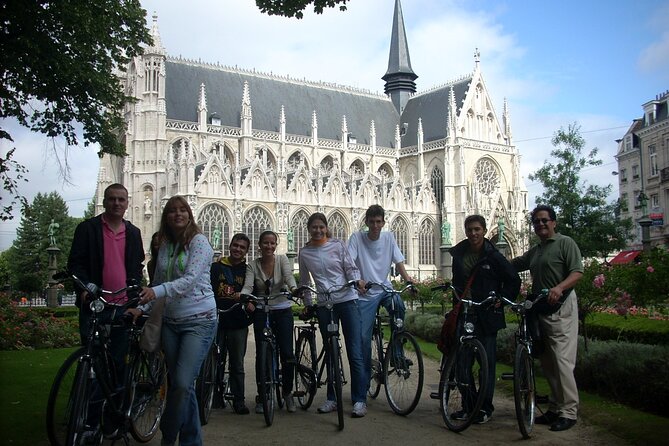
This tour is not about extreme mountain biking. Still, it is not flat. You ride about 13 kilometers, with three uphill segments.
Here is the practical breakdown:
- Uphill segment one is about 50 meters. You walk it.
- Uphill segment two is about 80 meters. You walk it.
- Uphill segment three is about 187 meters. You ride it, but you can walk it if you prefer.
In addition to hills, the route includes city riding with some sections that may feel rougher, including cobbled areas. You do not need advanced cycling skills, but you do need to feel comfortable riding a bike in an urban setting where you share space with cars and other cyclists.
Also, note the height requirement: you need to be at least 1.50 m (about 4 feet 11 inches) to join. And the bikes are standard bikes, not e-bikes.
One more practical tip from rider feedback: basic bike ability helps a lot. If you can ride confidently at city speeds for short bursts and steer smoothly over uneven pavement, you will enjoy this more.
More days in Brussels:
- Brussels: Atomium Entry Ticket with Design Museum Ticket
★ 4.4 · 9,254 reviews - From Brussels: Guided Day Trip to Bruges and Ghent
★ 4.6 · 8,353 reviews - From Brussels: Bruges & Ghent Day Tour – 2 Fairytale Cities
★ 4.7 · 8,242 reviews - Choco-Story Brussels: Chocolate Museum Entrance with Tasting
★ 4.3 · 4,883 reviews
Stop by Stop: Grand Place to Mont des Arts
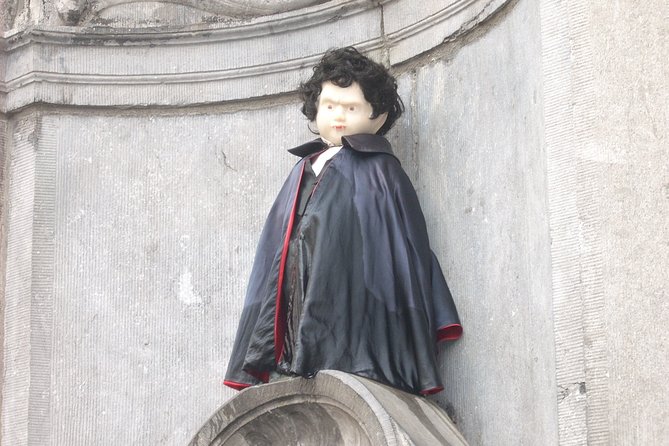
This is where the tour earns its keep. The route is paced so you get time for photos at the big moments, then quick context at the others.
Stop 1: Grand Place (about 15 minutes)
Grand Place is one of the most famous squares in Europe, and the time here makes a difference. Fifteen minutes sounds short, but it is enough to walk the edges, take photos without racing, and absorb the scale of the buildings.
If you are arriving to Brussels for the first time, this is the moment that locks in the city’s “old center” look. It also sets you up for the rest of the ride because you now have a mental map of where you are.
Stop 2: Manneken Pis (about 5 minutes)
Yes, it is small. Yes, it is crowded sometimes. But the point of a quick stop is context, not a long time standing there.
You get a look at the landmark and then move on. That is the benefit of a bike route, you get to see the symbol and still keep the day balanced.
Stop 3: Quartier Marolles (about 5 minutes)
This is the tour’s neighborhood pulse. Marolles is described as the most Brussels of neighborhoods, and even with a short stop you can feel the vibe shift after the tourist-heavy center.
Think of this stop as a way to not get stuck in only “monument Brussels.” You are getting real street character, which is what you will be craving later when you go exploring on your own.
Stop 4: Place du Jeu de Balle (about 5 minutes)
This is presented as the heart of Brussels. The stop is brief, but it helps connect the dots between neighborhood life and the grand squares nearby.
If you like markets, this area is worth paying attention to. Even if you do not eat or shop here during the tour, it is a useful reference point for when you plan your own time.
Stop 5: Palace of Justice (about 5 minutes)
The Palace of Justice gets attention because it is described as the biggest court house in the world. On a bike, you can take it in quickly and then roll right into the legal and political theme of the ride.
This is one of the stops where the guide’s explanations can make a big difference. If you want to understand why this architecture matters, ask follow-up questions while the group pauses.
Stop 6: Atomium from Poelaert Square view (about 5 minutes)
Here is a smart twist: you do not go to the Atomium itself, but you see it from a view near Poelaert Square, where the court house area is.
That gives you the visual hit without spending time transporting across town or adding a long detour. It is also a good reminder that the best bike tours are often about smart routes, not just visiting everything.
Stop 7: European Parliament hemicycle (free visit, about 5 minutes)
You do not go inside the Parliament, but you do get a free hemicycle experience and explanations. You also learn how the European Union works, which is a huge value add if you are not staying long in Brussels.
This stop is perfect if you like politics and big systems. You will likely come away with a clearer picture of what you are actually seeing when you look at EU buildings.
Stop 8: Parc du Cinquantenari (about 5 minutes)
This park stop is about breathing room. You get a recognizable landmark moment, then you roll again before the group gets too tired or restless.
Parks on this tour help balance the urban riding. You get a pause for photos and a reset before the power-and-institutions stretch.
Stop 9: Council of the European Union building (about 5 minutes)
This stop is about EU power. The tour calls it the center of power for the European Union, with the European Commission and the Council buildings here.
Even without going deep into interior spaces, the outside context is useful. You will understand why people talk about Brussels as a political hub once you see how much space is dedicated to governance.
Stop 10: Parc de Bruxelles, Warandepark (about 5 minutes)
Warandepark is a classic “in the middle of it all” break. It is one of the places that makes the ride feel less like sightseeing sprinting and more like a guided route through the city’s rhythm.
It also sets up a better final view because your legs and your attention get a moment to reset.
Stop 11: Palais du Coudenberg (about 5 minutes)
This is described as the Palace of Brussels built on top of the old Coudemberg Palace, and connected to the king’s office. It is a short stop, but it adds royal history context to a day that also covers courts and EU buildings.
If you like how layers of Brussels history stack on each other, this is the kind of stop that turns a photo opportunity into a story.
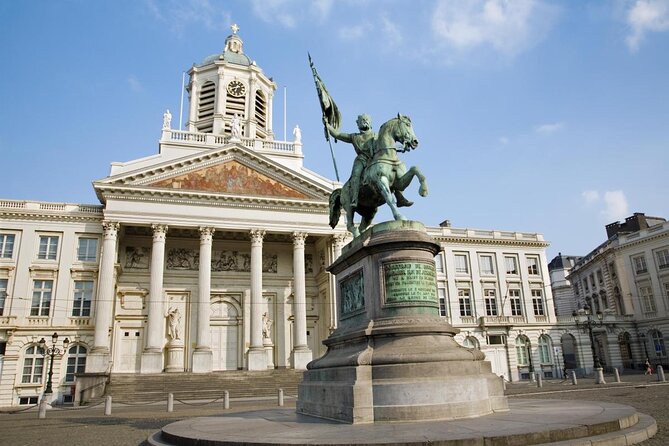
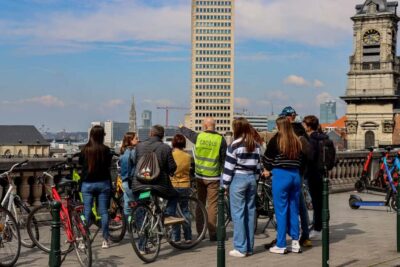
Stop 12: Mont des Arts (about 5 minutes)
This is the grand finale with a fantastic view of the city. The timing is short, but Mont des Arts is exactly the kind of place where five minutes can feel like a reward because the view does the work.
End your tour here if you like finishing with something scenic. When you later walk around, you will have an easier time understanding where key areas are in relation to each other.
The EU Part: Why the Hemicycle Explanation Is the Point
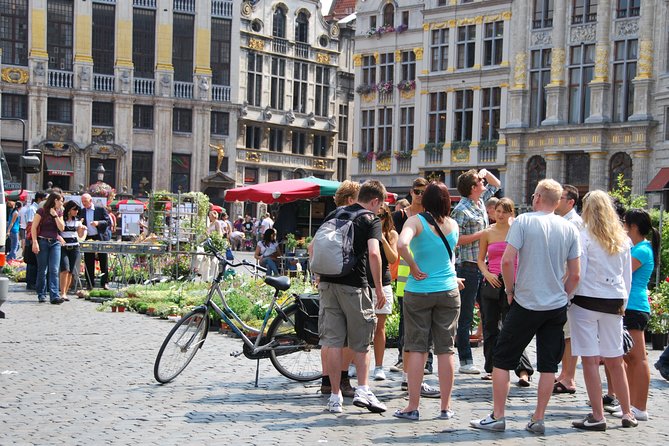
A lot of tours in Brussels treat EU buildings like scenery. This one does more than point. You get a quick look at major EU sites and also an explanation of how the system functions.
That matters because Brussels can feel abstract if you only see stone and flags. With the guide’s talk, you can connect building names to real roles and decision making. Even if you only stay a day or two, you will understand what you are looking at.
Also, skipping interior visits can be a practical advantage. It keeps the tour moving and avoids turning your morning into a waiting game.
Parks and Neighborhood Stops That Make Brussels Feel Like a City
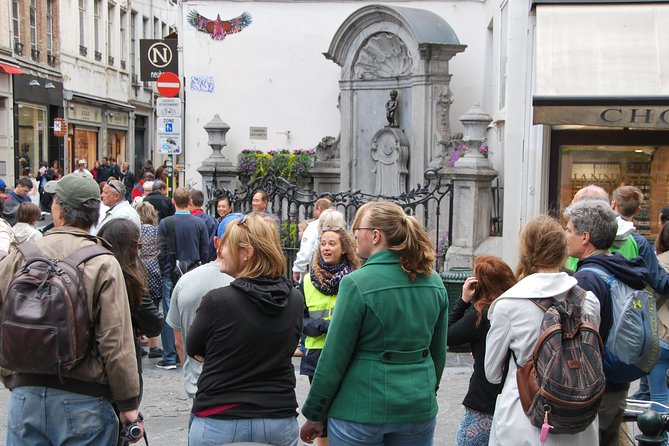
The ride is not only about landmarks. It also includes the kind of stops that help you plan your own side quests later.
Quartier Marolles and Place du Jeu de Balle give you neighborhood texture. Warandepark and Parc du Cinquantenari give you breathing space. Mont des Arts gives you the view you can use as a reference point for where you want to wander after the tour.
In bike form, these stops are efficient. You do not need to choose between “old center” and “parks.” You get both, plus you cover territory quickly enough that you still have energy to explore afterward.
What the Ride Feels Like, Based on What Guides Deliver
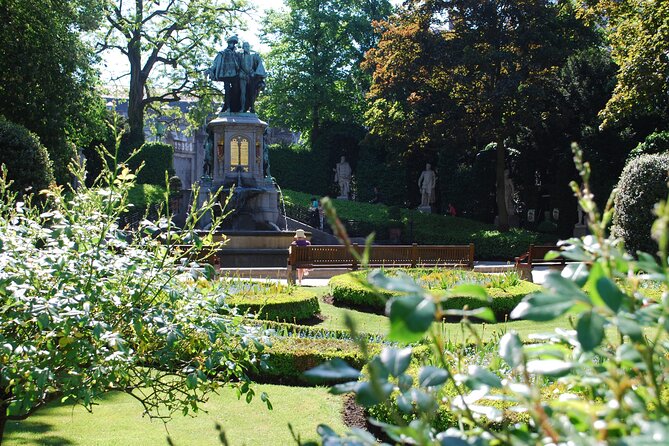
Small-group bike tours succeed or fail on pacing and communication. This one has a reputation for a good pace and clear explanations, and that shows up in how people describe their guides.
Names you may hear in positive feedback include Thomas, Robin, Kobus, Jonas, Klovis, Zoey, Nina, Lars, Cesar, and other spelling variations. The consistent theme is that the guide sets a comfortable tempo, points out what matters, and gives enough time for photos without turning the tour into a stop-and-start mess.
There is also usually a break halfway through, and that is where riders often grab a snack. One repeated recommendation is to go for Belgian fries and keep it simple, then get back on the bike feeling fueled instead of stuffed.
Safety is another theme. People note that the ride often uses designated bike lanes, which makes a big difference in a city environment. Still, stay alert, watch for other cyclists, and treat junctions with extra care.
Who Should Book This Tour, and Who Should Skip It
This is a great fit if:
- You want an efficient first look at Brussels in one half day.
- You enjoy cycling through city neighborhoods, not just walking past monuments.
- You like learning how places connect, especially around courts and EU institutions.
- You are comfortable with basic bike riding and handling short uphill efforts.
You might want to consider another option if:
- You are a brand-new rider and city traffic makes you nervous.
- You want zero hills. There are three, and even if two are walked, you still feel the change in grade.
- You do not like cobbled or rougher pavement sections.
For families, it can work if kids meet the minimum height and can ride confidently. For older teens or adults who want a fun, structured overview, it is a strong pick.
Should You Book This Brussels Bike Tour?
I think this is a book-worthy choice if you are trying to see a lot of Brussels without spending your entire day walking and backtracking. It hits the key squares, gives you EU context, and ends at a view that helps you navigate the rest of your trip.
The main reason to hesitate is terrain comfort. If you know you handle city biking well and you accept short uphill effort, you will likely enjoy the route. If you are unsure about cobbles or mixing with traffic, go slower mentally and plan to walk hills without feeling pressured.
For the price, bikes plus a guided route plan is the value driver. This is not a tour where you pay for access you do not use. It is more like buying time and clarity, so you can spend your later hours exploring with your bearings already set.
FAQ
How long is the Brussels bike tour?
It runs for about 3 hours 30 minutes.
What’s included in the price?
You get the bike and the local guide. Food and drinks are not included.
Where does the tour start and end?
It starts at Starbucks Grand Place 4, 1000 Bruxelles at 10:00 am. It ends at CyCLO Bike Point, Central Square de la Putterie, 1000 Bruxelles, near Brussels Central.
What language is the tour in?
The tour is offered in English.
Do I get to visit the Atomium?
No. You do not go to the Atomium, but you see it from a view from Poelaert Square.
What kind of riding and hills should I expect?
The tour covers about 13 kilometers with three uphill segments. Two are walked with your bike, and the third can be ridden or walked.
Are there any age or size requirements?
You need to be at least 1.50 m tall to join.
Reviewed lately in Brussels
- WWII Battle of the Bulge Private Guided Day Tour from Brussels★ 5.0 · 3 reviews
- Taxi Shuttle DE Brussels Airport < - > SPA (1 to 8 SEATS)★ 4.0 · 3 reviews
- Pub Trail Brussels: an adventure full of surprises★ 3.5 · 3 reviews
- Brussels Exploration Game and City Tour on your Phone★ 4.0 · 3 reviews
- Private Day Trip from Brussels to Bruges★ 4.5 · 3 reviews
- Brussels : Must-See Attractions Walking Tour with a Guide★ 4.0 · 3 reviews
- Leuven: City Walk with Audio Guide in 7 Languages on your Phone★ 3.0 · 3 reviews
- Brussels: Museum Halle Gate Entry Ticket★ 4.1 · 3 reviews
Cycling Tours, compared.
Brussels: City Highlights and Hidden Gems Bike Tour
Read our review →
Bruges: Guided Retro Bike Tour of Highlights and Hidden Gems
Read our review →
Guided Bike Tour: 2 Hours Highlights of Antwerp
Read our review →
Bruges: Guided Bike Tour with a Local to Sights & Secrets
Read our review →
Browse the lists this tour appears in