
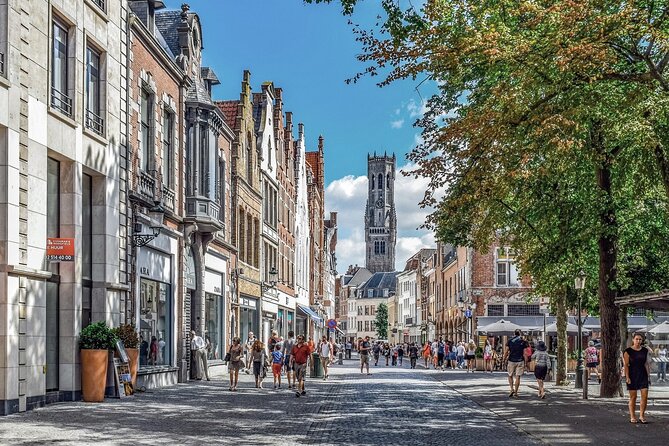
Reviewed · BRUSSELS TOURS
Bruges and Ghent – Belgium’s Fairytale Cities – from Brussels
A day trip that hits two UNESCO cities can feel like a blur, but this one is built to help you get your bearings fast and still enjoy the details. You ride out of Brussels in a comfortable, air-conditioned vehicle, then switch to guided walking time in Ghent and Bruges, with radios so you are not stuck behind someone’s shoulders.
What I like most is the mix of guided stops and real time to wander, plus the practical extras like earphones and a structured schedule. I also appreciate that many major sights are quick and often free to enter, which makes your money go farther since lunch is on you. The only real drawback to flag is that this is a group outing, so timing is tight and the experience can get a little tiring if the guide is switching languages during the day.
Key points worth clocking before you go
- AC coach plus radios: you can hear the guide clearly while you keep your own pace.
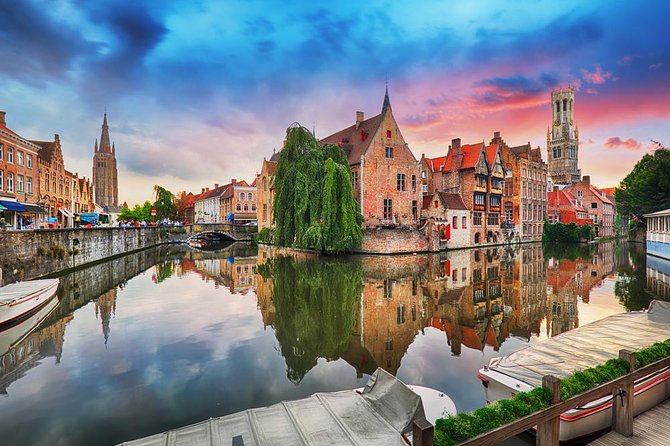
- UNESCO hits in both cities: Ghent’s major monuments and Bruges’ core sights get covered in one day.
- St. Bavo Cathedral timing note: Mystic Lamb access is not possible on Sundays.
- Multiple walk-and-pause rhythms: enough structure to understand the places, plus breathing room to roam.
- Optional Bruges canal boat: great views, and it costs extra, so decide based on your time and budget.
- Arrive early: latecomers cannot be accommodated, which is a bigger deal than it sounds.
Brussels to Ghent and Bruges in one day: how this tour really works
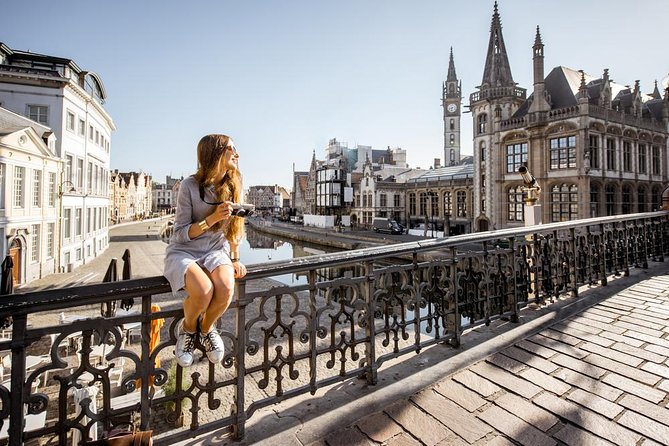
This is a long day, about 10 hours 30 minutes, starting at 9:00 am in central Brussels (Bd de Berlaimont 18) and ending at Brussel-Centraal. That schedule matters because both Ghent and Bruges are walk-first cities. If you hate cobblestones, you still can do it, just don’t plan on lounging through the day.
The coach ride through the Belgian and Flemish countryside is not the main event, but it helps you transition from big-city Brussels into the medieval vibe quickly. Once you arrive, the tour leans into what these places do best: churches, squares, canals, and storybook streets.
Most landmarks you stop at are described as free entry, but not every interior experience is guaranteed every day. For example, access to the Mystic Lamb at St. Bavo Cathedral is not possible on Sundays, so you should be ready for a slightly different emphasis that day.
More days in Brussels:
- Brussels: Atomium Entry Ticket with Design Museum Ticket
★ 4.4 · 9,254 reviews - From Brussels: Guided Day Trip to Bruges and Ghent
★ 4.6 · 8,353 reviews - From Brussels: Bruges & Ghent Day Tour – 2 Fairytale Cities
★ 4.7 · 8,242 reviews
Price and value: what you pay for at $59.13
At about $59.13 per person, you are paying for the hardest part of a two-city plan: transportation, organization, and a guided route that connects the dots between places. This price includes a professional guide, an air-conditioned vehicle, and radios/earphones, which are a big deal on walking tours with larger groups.
Lunch is not included, so you will need to budget for food and drink. Lunch typically lands between 12:00 pm and 2:00 pm, and it can shift depending on the day. In Bruges, you also get a lunch option with a café near Minnewater (Lake of Love), which sounds romantic because it is, but the service and price will vary by café.
Optional extras exist too. The Bruges canal boat tour is organized on the day for an extra cost. If you love water views and want more stories while you sit back, it is worth considering. If you are already canal’d out from earlier visits, you can skip it and save the money.
Getting on the coach: meeting point discipline and group size reality
The meeting point is near public transportation, but you should treat it like a flight. The tour states they cannot accommodate latecomers, and some reviews specifically warn that if you are more than a couple minutes late, you might get left behind and have to reach the group by train.
Once you are aboard, the coach experience tends to be a highlight. People point out the ride is comfortable and safe, and the drivers handle busy streets and tight parking maneuvers without drama.
One more practical note: this tour has a maximum of 200 travelers, but your personal experience depends on your specific departure and how many people are in your language group. Many guests like that radios and earphones let you hear the guide without staying glued to the speaker.
Ghent begins at St. Bavo’s Cathedral: the Mystic Lamb and the Gothic wow factor
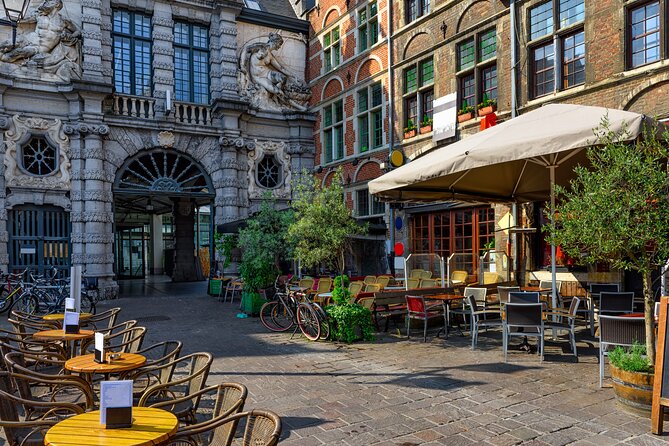
Ghent’s tour starts at St. Bavo’s Cathedral. It is a tall Gothic cathedral, about 89 meters, and it is the setting for the famous Ghent Altarpiece. The tour specifically notes that access to the Mystic Lamb is not possible on Sundays, so even if you are excited about that moment, plan for the cathedral visit to be more about the setting and context on Sundays.
The cathedral stop is listed as free for admission, and the way the tour is written suggests the guide gives the key stories right there. The tour also notes entrance can be optional, so you might spend more or less time inside depending on timing.
In a city like Ghent, St. Bavo’s Cathedral is not just a photo stop. It anchors the whole medieval story, so the walking route afterward makes more sense. You start recognizing names and landmarks faster because the guide sets the cultural stage.
Something different while you are in Brussels:
- Choco-Story Brussels: Chocolate Museum Entrance with Tasting
★ 4.3 · 4,883 reviews - Brussels: Hop-On Hop-Off Bus Tour
★ 4.0 · 4,016 reviews - Brussels: Guided Walking Tour
★ 4.6 · 3,560 reviews - Hungry Mary’s Famous Beer and Chocolate Tour in Brussels
★ 5.0 · 2,258 reviews
Stroll Ghent with the guide: Gravensteen, Graslei, and the Leie River quays
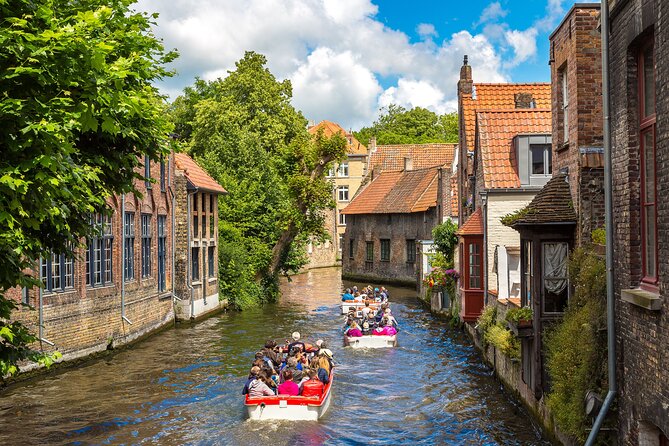
After the cathedral, you shift into a walking tour of central Ghent. This is where you get the “why is this town special” part, not just the “what is the building” part.
Key stops include:
- Gravensteen (Castle of the Counts of Flanders)
The current castle dates to 1180 and served as the residence of the Counts of Flanders until 1353. After that, it was repurposed again and again: court, prison, mint, even cotton factory. That history is why Gravensteen feels different from a pure royal castle. It is about power, punishment, and changing uses over centuries.
- St. Nicholas’ Church
This church is one of Ghent’s oldest prominent landmarks. Work began in the early 13th century, replacing an earlier Romanesque church. The stop is short and free, but it helps you see how Ghent’s skyline is shaped by churches from different eras.
- Graslei and the Leie River quays
You spend time by a historic quay on the right bank of the Leie. This is the part of Ghent that looks like a postcard and also explains the city’s trade past. When the guide connects the buildings to the river economy, the place suddenly feels less random.
The itinerary also calls out the Ghent Belfry, a 91-meter-tall tower that overlooks the old city center, one of three medieval towers in the area. So as you walk, you keep seeing these vertical landmarks line up in different views.
Ghent timing tip: free-time expectations
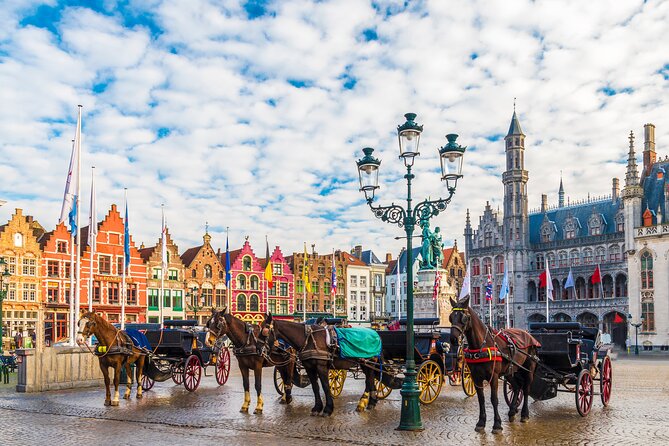
Your Ghent time is guided and structured, but there is also room to breathe. Still, this tour is not built for long, independent wandering sessions with zero structure. If your ideal day is getting lost on purpose, you might feel a bit herded.
That said, the best version of this day trip is the one where you use the guided stops to understand what you are looking at, then take advantage of the built-in free exploration later in Bruges. Ghent is where you get the city’s logic; Bruges is where you relax into the romance.
Bruges arrives: Minnewater (Lake of Love) first, because it sets the mood
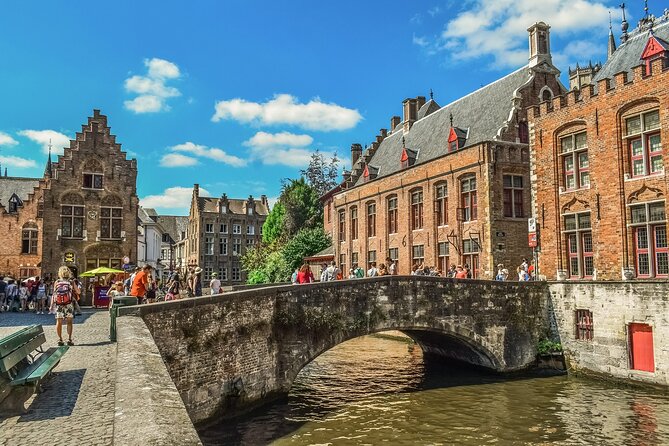
When the tour heads to Bruges, the first big emotional hit is Minnewater, also called the Lake of Love, plus Lovers Bridge. This is one of those stops that feels intentionally placed at the start because it slows you down.
Minnewater is listed with a free entry note and a short stop window, and the setting makes it easy to take photos, regroup, and decide how you want to pace the rest of the day. It is romantic, yes, but it is also practical: you can step away from the densest foot traffic while you reset.
Lunch happens around this period, at a café overlooking the water. Lunch is not included, so check your budget before you sit down. If you are traveling on an empty stomach, do not wait too long to order. Service timing can matter when the schedule is tight.
Bruges UNESCO core: City Hall, Market Square, Holy Blood Basilica, and Our Lady’s Church
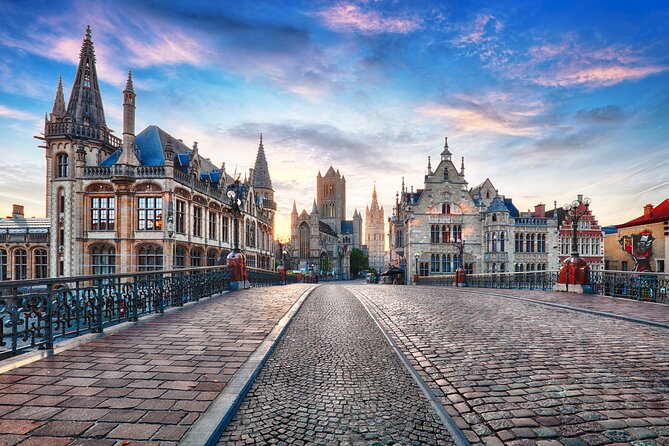
After lunch and a stroll, you get the big Bruges landmarks on foot. The tour hits:
- Bruges City Hall (Stadhuis) in Burg Square
You stop in Burg Square, the political center of Bruges. The city hall sits in the area of a former fortified castle, so it is not just decorative. It is the historic command center of the city. The stop window is short, but it is a useful orientation point.
- Market Square and nearby medieval highlights
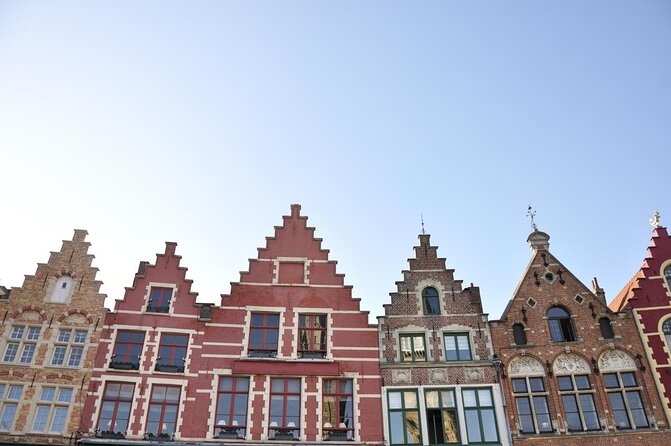
The itinerary explicitly calls out the Market Square as part of the walking tour. This is where the medieval street grid starts clicking in your head.
- Basilica of the Holy Blood
This is a Roman Catholic basilica in Bruges that houses a relic of the Holy Blood, allegedly collected by Joseph of Arimathea and brought from the Holy Land by Thierry of Alsace. The stop is listed at around 10 minutes and free for admission. Even if you are not into relic lore, the building is part of Bruges’ identity, and the guide’s explanation helps.
- Onze-Lieve-Vrouwekerk (Church of Our Lady)
The main church stop you get includes a note that the tower is about 115.6 meters, making it the tallest structure in the city and the second tallest brickwork tower in the world. That tower presence is why Bruges feels tall even when everything looks small from street level.
- Princely Beguinage Ten Wijngaarde
This preserved beguinage is listed as the only preserved one in Bruges. No beguines live there anymore, but since 1927 it has operated as a convent for Benedictines, and it was founded by canon Hoornaert. This stop is a nice break from squares and churches, and it gives you a different side of medieval religious life.
If you love architecture, this portion is your payoff. If you hate stairs, you can still handle it because the tour windows are short, but you should be ready to keep moving.
The canal tour option: when it’s worth paying extra in Bruges
The tour includes organization of a Bruges boat trip at extra cost, with booking handled by the guide on the day. Many guests like canal views because they show what you cannot see from the street: the layered façades, the curve of the waterways, and the way the city turns its back to the river only in rare spots.
If you pick the boat tour, keep it simple: plan to use it as a photo-and-story break. You sit, you reset your legs, and you get a different perspective on the same sights you just walked.
If you skip it, you still have enough highlights on foot that you will not feel like you missed the core Bruges experience. The decision really comes down to how much you enjoy water views and whether you want another paid add-on.
Timing, walking, and your legs: the real trade-off
This is a long walking day. It is not presented as a slow sightseeing stroll. Even without a stated step count in the main details, the day involves multiple stops, short transitions, and constant movement through older streets.
The practical way to handle it:
- Wear comfortable walking shoes you trust on cobblestones.
- Keep your schedule energy up with a quick snack before you start your day, because lunch depends on the timing window.
- Expect to move fast enough that you might skip sitting in cafés unless you find a spot close to the lunch plan.
Some reviews complain about limited free time in the middle of the day, and that is a fair warning. This tour is for people who like structure and guided context, not for people who want to wander at will in every neighborhood.
Language and guide style: the part you should plan for
The tour is offered in English, and it may include bilingual commentary. Reviews also mention that language switching can happen, and in some cases guests felt it became exhausting when multiple languages were used back to back.
Here is the practical takeaway: if you are someone who listens best when the information is delivered in one language consistently, choose your expectations carefully. Radios help, but when the guide swaps languages, you still have to mentally re-sync.
Guide quality seems to vary by person, but several names come up in the feedback, including Albert, Niko, Stephan, Pablo, Surge, Ariane, Sergio, and Ariana. Many guests praise clear communication and good pacing. If you are lucky enough to get a guide who keeps things crisp, the day feels smooth.
Who this tour is best for in real life
This works especially well if you want:
- A one-day introduction to both Ghent and Bruges without figuring out trains and connections.
- A plan that shows you the key landmarks, then lets you roam enough to breathe.
- The convenience of radios/earphones, especially in larger groups.
It might be less ideal if you:
- Need lots of unstructured time to shop and drift.
- Are sensitive to language switching during narration.
- Arrive late or rely on flexible meeting points (the meeting point rules are strict).
It also helps to have at least moderate physical fitness, since the tour is mostly walking.
Should you book this Bruges and Ghent day trip?
Yes, if you want a guided, organized day that gets you into the medieval core of both cities with minimal planning stress. The value is strong for the mix of AC transport, radios/earphones, and the fact that many big stops are free to enter.
I would book it if you:
- Love architecture, church interiors, and historic city squares.
- Prefer guided structure but still want time to wander.
- Like the idea of an optional canal tour but are okay deciding that day.
I would think twice if you:
- Want long independent time in each city.
- Are very strict about language consistency.
- Cannot commit to arriving on time at the meeting point.
If you handle those two or three conditions, this is a solid way to experience Belgium’s storybook cities in a single day without turning it into a logistics project.
FAQ
What time is lunch on the Belgium’s Fairytale Cities Tour?
Lunch is usually between 12:00pm and 2:00pm. The exact time can change depending on the day.
Can I change the date of my excursion?
Yes. You can request a change to another date, depending on availability.
Will you wait for me if I am late to the meeting point?
They can wait for 5 minutes if you let them know in advance about your delay. You would need to call +32 2 513 77 44.
Can I book the canal tour in Bruges in advance?
No. The canal tour in Bruges can only be booked with your guide on the day of your trip.
Can I stay in Bruges after the tour ends?
Most of the times, it is possible, but you need to discuss it and confirm with your guide on the day.
Can I take luggage with me?
Yes. The tour uses large, comfortable tourism coaches, so you can bring luggage.
Do I need a passport for this trip?
There are no border controls once you are in the Schengen Area. Still, they advise carrying ID with you.
Do you cancel tours when it is raining?
No. Tours are only cancelled in case of extreme weather like heavy storms or floods.
Do you offer pick-ups from hotels?
No. There is no hotel pick-up. You meet at the location listed on your voucher.
Reviewed lately in Brussels
- WWII Battle of the Bulge Private Guided Day Tour from Brussels★ 5.0 · 3 reviews
- Taxi Shuttle DE Brussels Airport < - > SPA (1 to 8 SEATS)★ 4.0 · 3 reviews
- Pub Trail Brussels: an adventure full of surprises★ 3.5 · 3 reviews
- Brussels Exploration Game and City Tour on your Phone★ 4.0 · 3 reviews
- Private Day Trip from Brussels to Bruges★ 4.5 · 3 reviews
- Brussels : Must-See Attractions Walking Tour with a Guide★ 4.0 · 3 reviews
- Leuven: City Walk with Audio Guide in 7 Languages on your Phone★ 3.0 · 3 reviews
- Brussels: Museum Halle Gate Entry Ticket★ 4.1 · 3 reviews
Brussels Tours, compared.
Brussels: Atomium Entry Ticket with Design Museum Ticket
Read our review →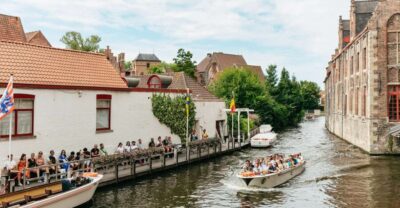
From Brussels: Guided Day Trip to Bruges and Ghent
Read our review →
From Brussels: Bruges & Ghent Day Tour – 2 Fairytale Cities
Read our review →
Choco-Story Brussels: Chocolate Museum Entrance with Tasting
Read our review →
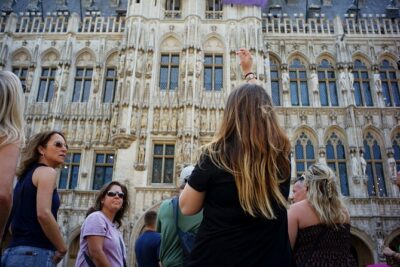
Hungry Mary’s Famous Beer and Chocolate Tour in Brussels
Read our review →
Brussels: Belgian Chocolate Making Workshop with Tastings
Read our review →
Brussels: Pub Crawl and Nightlife Party Experience
Read our review →Browse the lists this tour appears in