
Reviewed · CHOCOLATE WORKSHOPS
Brussels: Belgian Chocolate Making Workshop with Tastings
This is interesting because you get a real hands on chocolate making session in Brussels, plus tasting that starts at the cacao fruit and works forward. I especially like that you taste fresh cacao beans and the mucilage from the cacao pod, not just finished chocolate. I also like that you leave with multiple chocolates you personally made, not a tiny sample. One thing to consider: the workshop room is air conditioned, so it can feel a bit chilly, and you’ll need to wear a hairnet and follow strict timing.
You’ll be in a brand new 150m2 training centre with a proper setup, and the process is explained in a way that connects plantation to chocolate. I like that everything you make is yours to take home, and you also get tastings that show why origins taste different. The only drawback for some people is that this is not a match for common food needs like gluten intolerance or lactose intolerance, and toppings include nuts.
Key highlights you should care about
- Fresh cacao pod experience: handle a pod and taste the bitter beans and the pod juice (mucilage)
- True bean to bar focus: you learn steps from beans to finished chocolate, not just decoration
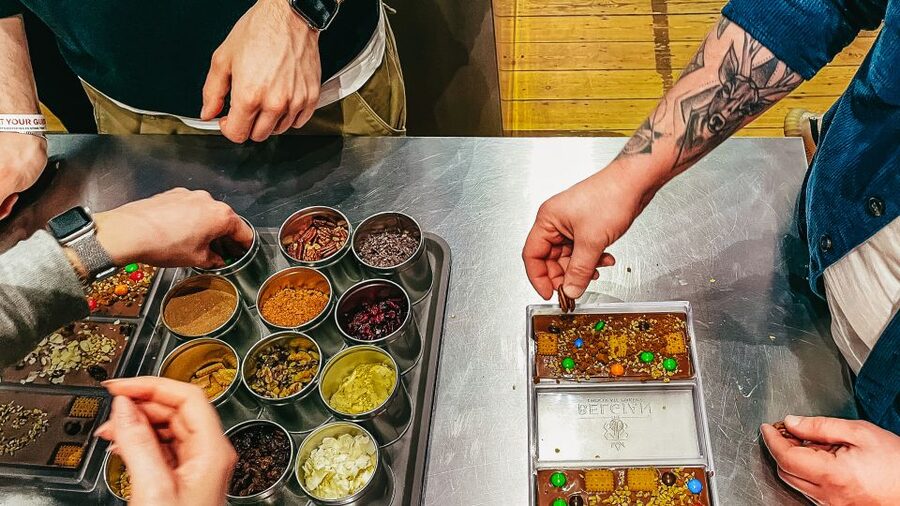
- Make-and-take workshop: you craft mendiants, truffles, and a personalized bar
- Origin tasting lineup: sample premium cacao from multiple countries, with special emphasis on Haiti
- Hygiene rules that keep quality consistent: hairnet and wristband system in a controlled training space
- Good value add on: you get 20% off chocolates in their Brussels stores
A Belgian chocolate workshop that starts with the cacao pod
If your idea of Belgian chocolate is mainly glossy bars in a shop window, this workshop changes your frame. You start with cacao as a fruit, not a candy. That means you understand the difference between what cacao tastes like straight from the tree and what it becomes after fermentation, drying, roasting, and grinding.
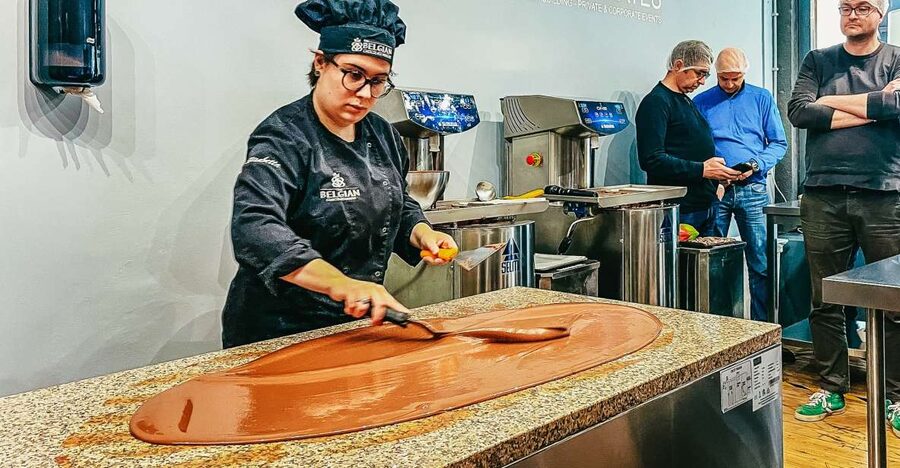
The experience is built around bean to bar making. The instructors and staff are handcraft chocolate makers certified by the Belgian government, and the workshop is set up like a real training centre, not a casual demo corner. That matters because you can see the process, ask questions, and actually produce edible results in the time you have.
Also, you are not just tasting sweets. You get guided tastings along the way, including cacao liquor, which is cacao mass with no alcohol, and liqueur de cacao during the session. And yes, you get the mucilage experience too, the sweet and funky pod juice that surprises most first time tasters.
The tone is lively and structured. The chocolatier Patricia has a reputation for being funny while still running the class tightly, so you end up with chocolates that look better than you might expect from a first timer.
More Chocolate Workshops in Brussels
- Brussels: 2.5-Hour Belgian Chocolate Making Workshop
★ 4.8 · 933 reviews - 1.5h Belgian Chocolate Workshop in Brussels (bean to bar)
★ 4.5 · 462 reviews - 2.5h Belgian Chocolate Pralines Workshop in Brussels
★ 5.0 · 406 reviews
Where to go first: Place de la Justice, then the short walk
You begin at The Belgian Chocolate Makers ticket office at Place de la Justice 5. It’s near Gare Centrale and Mont des Arts, so it’s easy to reach when you’re already walking around central Brussels.
Here’s the part that affects your whole experience: you should arrive early. The check in closes when your session starts, and there is no late entry once the workshop has begun. Plan to queue about 15 minutes before. After ticket verification, staff give you a hairnet and a wristband. Then they bring you to the training centre by walking about 200 meters.
This is simple, but it’s also strict. If your train runs late or you wander too far, you can lose your seat for that session. If you want a stress free start, treat the ticket office as your main anchor point.
Inside the 150m2 training centre: why the setting matters
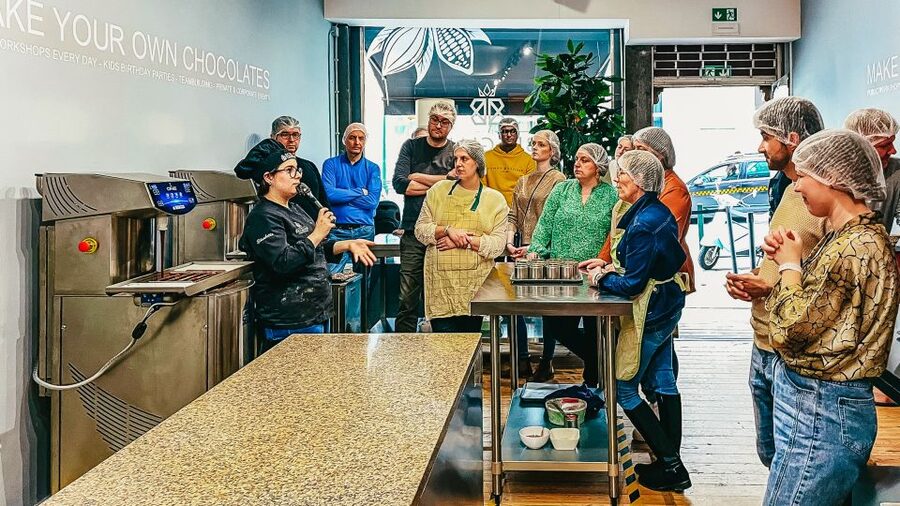
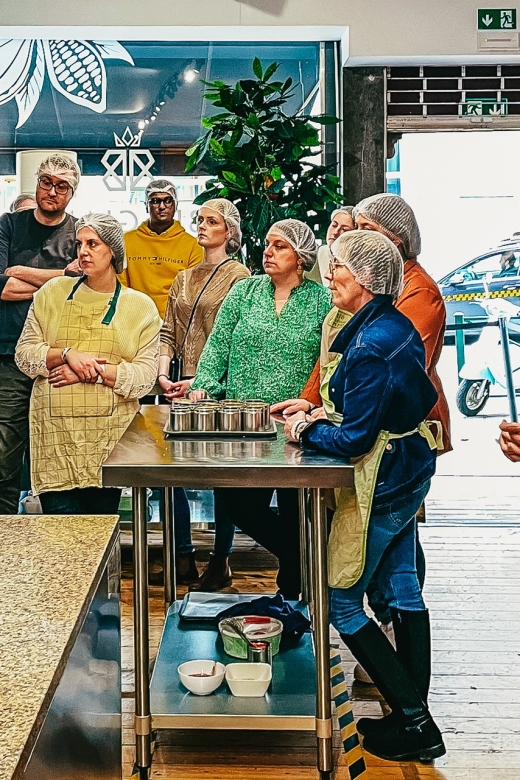
The workshop happens in a brand new training centre with room for up to 60 participants at once. That sounds big, but your work happens at stations, so you are not just watching from a chair.
The space is fully air conditioned. In winter, that means you might want a warmer layer even if Brussels outside is cold enough already. You also need to tie back long hair because you will wear a hairnet the whole time.
Practical extras are included in the building too, like water dispensers and a disabled toilet. The activity is wheelchair accessible, but since there are some stairs involved on the route and at the space, mobility constraints are worth checking carefully before you book.
A small detail that’s easy to miss: you are given a wristband after check in. You’ll need it to access the workshop area, so keep it on.
The 90 minute flow: tastings, then making your chocolates
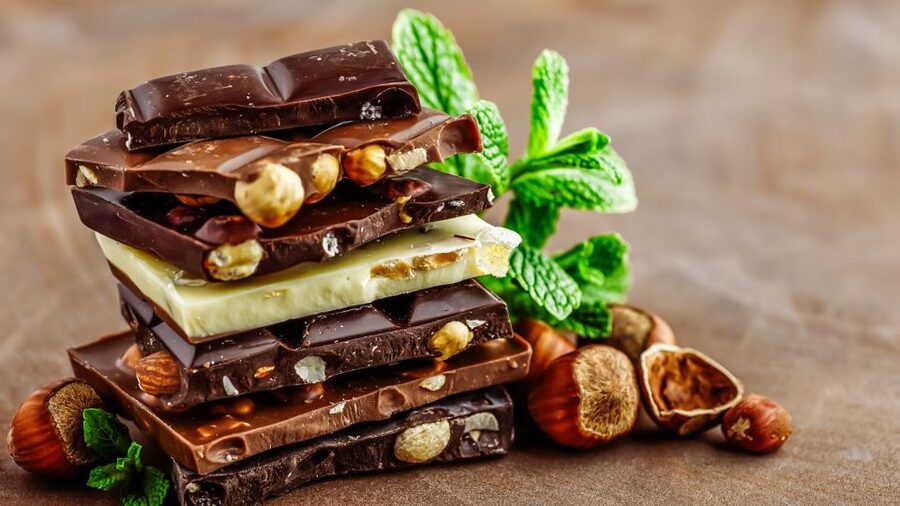
The session lasts 90 minutes, and it’s paced so you get both education and hands on time. The format is roughly: guided explanation, tastings of multiple cacao stages, then crafting your own chocolates.
You are also offered a drink as part of the included package. Depending on season, you get hot chocolate in winter or chocolate granita in summer. That small comfort drink helps if you’re coming in from cold weather and want your energy back before you start working with chocolate.
The tasting portion is one of the strongest reasons to book, because it makes you stop thinking about chocolate as one flavor. You taste different things at different stages, including:
- cacao beans, which are super bitter on purpose
- cacao liquor, the cacao mass used for chocolate making
- pod mucilage, the juice you experience directly from the cacao fruit
- premium origin cocoa samples from different countries
- liqueur de cacao tastings during the workshop
Then the making phase hits, and that is the part most people remember when they get home.
Something different while you are in Brussels:
- Brussels: Atomium Entry Ticket with Design Museum Ticket
★ 4.4 · 9,254 reviews - From Brussels: Guided Day Trip to Bruges and Ghent
★ 4.6 · 8,353 reviews - From Brussels: Bruges & Ghent Day Tour – 2 Fairytale Cities
★ 4.7 · 8,242 reviews - Choco-Story Brussels: Chocolate Museum Entrance with Tasting
★ 4.3 · 4,883 reviews
The chocolate you make: mendiants, truffles, and a custom bar
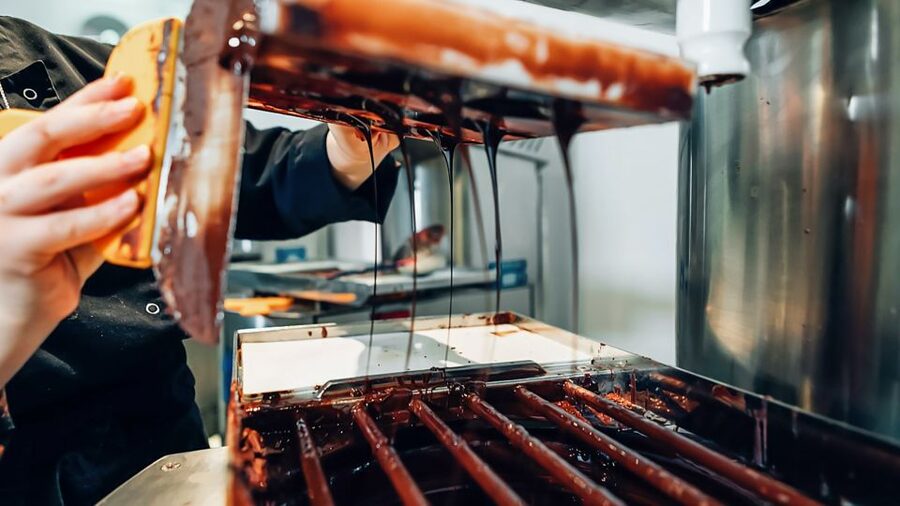
You make three main items during the workshop, and they are all take home. That means you are not leaving with one small piece. You leave with enough for sharing, and likely enough for a second snack later.
Your personalized chocolate bar
You handcraft a chocolate bar and customize it. The exact topping options aren’t listed in the details you provided, but the process is: you work the chocolate, then build your bar with toppings you choose. This is usually the part that feels most creative because you get to decide what your bar looks like.
Important: the workshop uses dark and milk chocolates. If you are vegan or lactose intolerant, you can only work with dark chocolate.
Truffles
You also make truffles. Truffles are a great choice for a workshop because they show texture and finishing. You still get the hands on experience, even if you are not doing full tempering at home.
Mendiants
You make mendiants too. These are a classic style of Belgian style chocolate that teaches balance, since the chocolate base and the toppings both matter. If you like the look of Belgian chocolates in boxes, you will recognize this style immediately.
A note that can save you an awkward moment later: toppings contain nuts. That affects people with allergies, and you should plan accordingly.
The cacao education that actually sticks
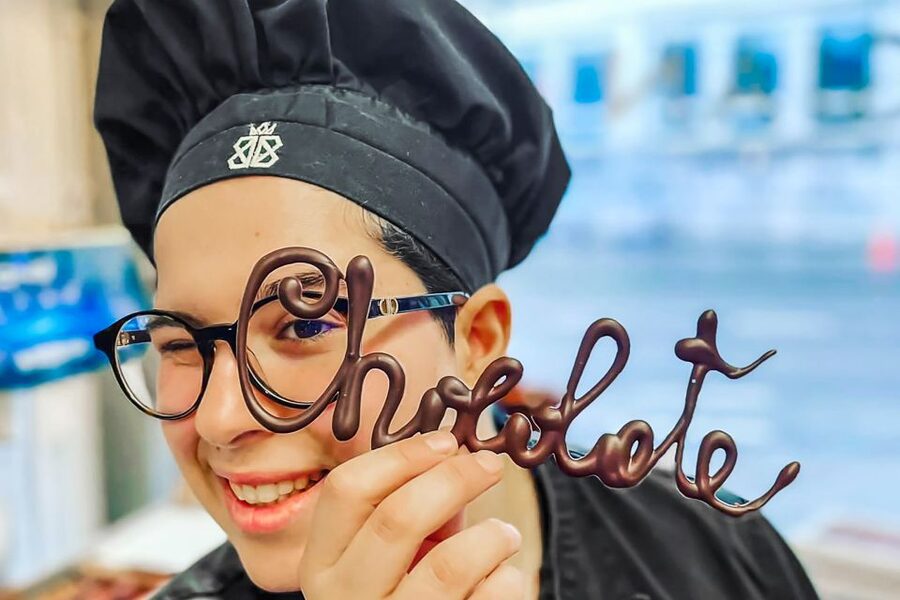
This workshop does more than label flavors. It connects why cacao tastes different across stages and origins, and it ties that to what gets made into chocolate.
They emphasize bean to bar steps and you get explanations from the chocolate maker during tastings and while you’re working. You also get a stop to visit their bean to bar machinery after the workshop, with an explanation of the equipment and how it fits the process.
The brand behind the training centre claims a 100% traceable supply chain for the cacao used. They also state that the chocolate supply does not involve deforestation or child labor and that farmers receive a fair revenue level. That’s the kind of statement you should still read with a practical mindset, but it does align with why this workshop focuses on traceability and origin.
They specifically mention Haitian cacao from Grand Anse as part of the premium chocolates used during the session. So if you’re building a chocolate taste map for future tastings, you’ll likely remember this origin because the workshop ties it directly to what you’re handling.
Cacao tastings: bitter beans, cacao liquor, and pod mucilage
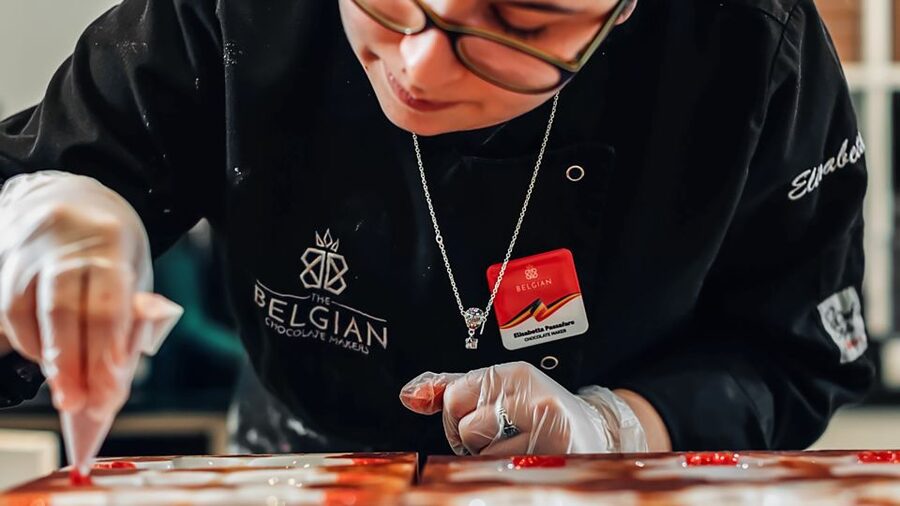
If you are a chocolate person, the tastings can feel like the real heart of the experience. The workshop gives you a guided way to taste, so you learn what to look for instead of just swallowing whatever they hand you.
You get to taste a cacao bean, and it’s described as super bitter. That’s not a problem. It’s the whole point. You taste something unprocessed so you can understand what fermentation and processing do to transform bitterness into chocolate flavor.
You also taste cacao liquor, which they clarify is cacao mass without alcohol. That distinction matters because you can taste the cacao character without being confused by other flavors.
Then there is the mucilage. This is the juice from the cacao pod you taste directly. Most people find it surprising because it doesn’t taste like chocolate at all in the way they expect. It helps you understand cacao as a fruit first, and as chocolate second.
Finally, you taste premium origin cacaos from different countries, which shows you how terroir and processing choices affect flavor.
Value in real terms: what $82 buys you
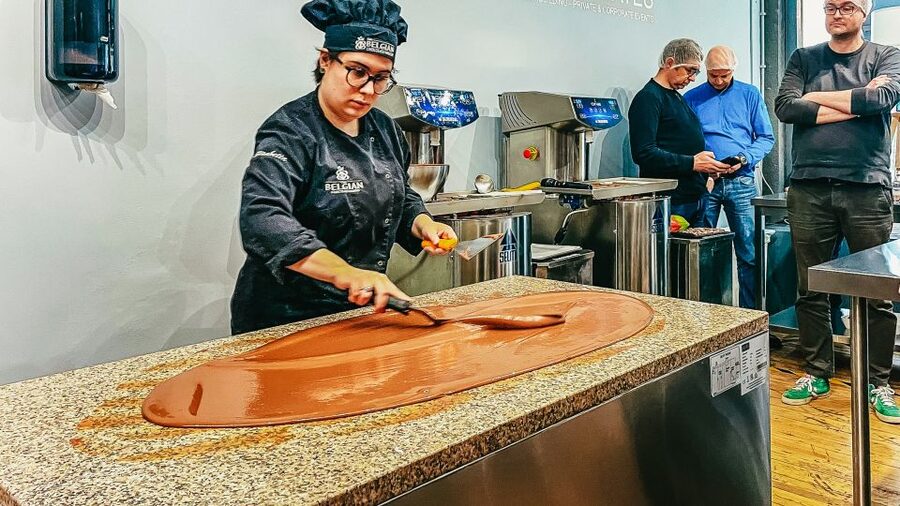
At $82 per person for a 90 minute class, you might wonder if it’s “touristy.” In this case, the value is in what’s included and what you take home.
You get:
- ingredients and tools for making chocolates
- tastings during the process, including cacao liquor and pod mucilage
- hot chocolate or chocolate granita, depending on season
- a box to take your chocolates home
- a visit to their bean to bar machinery with explanations after the workshop
- 20% off on chocolates in their stores
On top of that, you make mendiants, truffles, and a custom bar. The take home part is huge. If you’ve ever done a cooking class where you make something tiny and eat it all on the spot, this is different. Here, the product leaves with you.
There is also an optional VIP upgrade mentioned in the details. If you select VIP, you may get a glass of Champagne and an embroidered apron with their logo. VIP also may include a visit of the laboratory. Those are add ons, not required for the core experience.
One more value point: the workshop runs multiple daily sessions at 11AM, 2PM, and 5PM, so you have flexibility in planning your day around other Brussels stops.
Timing, rules, and small practical tips that save you time
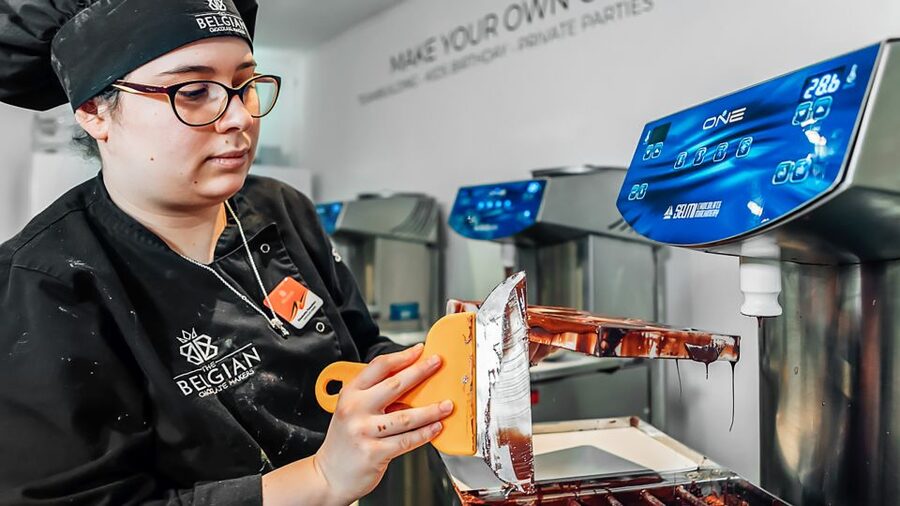
This is one of those activities where good planning beats good luck.
- Wear clothes you do not mind getting a little messy. Chocolate work can be forgiving, but it’s still hands on.
- Bring hair ties if you have long hair, since you will need a hairnet.
- Plan your route to the ticket office early. Once the session starts, acceptance stops.
- Don’t bring food, drinks, or luggage. Large bags and oversize luggage are not allowed, and pets are not allowed either.
- If you have food allergies or intolerances, tell staff during ticket check.
A quick reality check on dietary needs: vegan or lactose intolerant participants can work only with dark chocolate. If you have gluten intolerance, people are not suitable for the experience per the info provided. If you have lactose intolerance, you should also plan for the dark only limitation.
Who this workshop is best for
I think this is ideal if you want more than a chocolate souvenir. You’ll like it if you are the type who enjoys learning how things are made, and you like the idea of tasting cacao in multiple stages.
It’s also a fun option for couples and small groups because you make your own items and end up with shared results to taste together later.
It’s less ideal if you have serious allergies or multiple dietary restrictions. The info provided points out people with food allergies, gluten intolerance, and lactose intolerance as not suitable. Toppings contain nuts, so that’s a key consideration.
For families, the information says children under 6 years are not suitable. If you’re traveling with older kids, you may find it entertaining because the class is interactive and hands on.
And if you’re hoping for a quiet, laid back walkthrough with zero rules, you might feel the workshop structure. The hygiene and timing rules are real, and Patricia’s teaching style can be strict in a helpful way. That structure is often what keeps the session smooth.
Should you book this Brussels chocolate making workshop?
Book it if you want a hands on class with real bean to bar education, plus tastings that include fresh cacao beans and pod mucilage. The take home factor, mendiants plus truffles plus a custom bar, is a big reason it feels worth the price.
Skip it if you are dealing with restrictions that match the not suitable categories, especially gluten intolerance or lactose intolerance, or if nut allergies are a concern. Also, if cold rooms and hairnet requirements will bother you, dress for it.
If you can handle a structured 90 minutes with strict start times, this is the kind of Brussels activity that gives you something you can taste later, not just a photo from inside a chocolate shop.
Reviewed lately in Brussels
- WWII Battle of the Bulge Private Guided Day Tour from Brussels★ 5.0 · 3 reviews
- Taxi Shuttle DE Brussels Airport < - > SPA (1 to 8 SEATS)★ 4.0 · 3 reviews
- Pub Trail Brussels: an adventure full of surprises★ 3.5 · 3 reviews
- Brussels Exploration Game and City Tour on your Phone★ 4.0 · 3 reviews
- Brussels : Must-See Attractions Walking Tour with a Guide★ 4.0 · 3 reviews
- Private Day Trip from Brussels to Bruges★ 4.5 · 3 reviews
- Leuven: City Walk with Audio Guide in 7 Languages on your Phone★ 3.0 · 3 reviews
- Brussels: Museum Halle Gate Entry Ticket★ 4.1 · 3 reviews
Chocolate Workshops, compared.

Brussels: 2.5-Hour Belgian Chocolate Making Workshop
Read our review →
Bruges: Belgian Praline and Mendiants Chocolate Workshop
Read our review →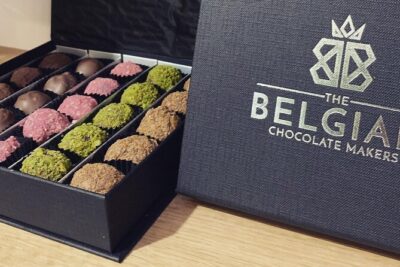
1.5h Belgian Chocolate Workshop in Brussels (bean to bar)
Read our review →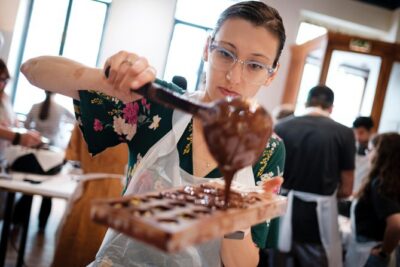
2.5h Belgian Chocolate Pralines Workshop in Brussels
Read our review →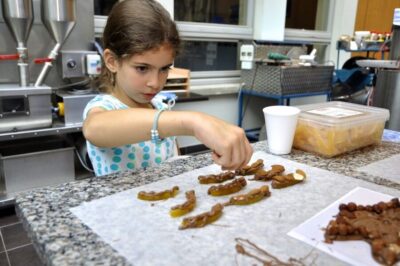
Bruges: Chocolate Making Workshop and Chocolate Museum Entry
Read our review →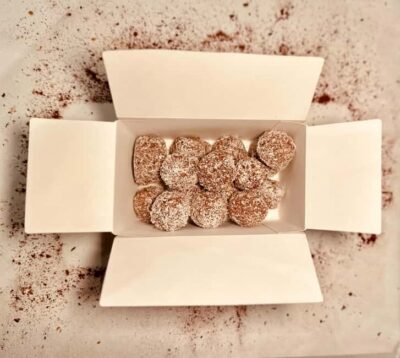
Brussels: Chocolate Truffle & Belgian Hot Chocolate Workshop
Read our review →
2-Hour Historical Walking Tour in Bruges with Praline Included
Read our review →Browse the lists this tour appears in