
Reviewed · FLANDERS FIELDS & WWI BATTLEFIELDS
Flanders Fields Remembrance Tour from Bruges
WWI in Flanders can feel like a textbook subject. This tour makes it personal, because you’re not just looking at monuments, you’re standing in the places where the war happened, then closing the day at the Menin Gate Last Post Ceremony. You’ll also get a strong, structured route that connects the German Military Cemetery sites, the preserved front-line areas, and the Commonwealth cemeteries around Ypres.
I love how the day blends moving memorials with real battlefield stops, not random photo points. I also like that you’re guided by a professional team, and many departures are led by guides such as Stephen or Diederik Naeyaert, who have a knack for turning facts into something you can actually feel. One drawback to plan for: it’s a long day, and if you get motion sick or have trouble hearing in a bigger group, you’ll want to sit where you can see the guide clearly when you’re on the vehicle.
Key takeaways before you go
- A day built around remembrance, not sightseeing, with multiple cemeteries and memorials
- Passchendaele and Tyne Cot scale, where the number of headstones hits hard in the best way
- Trench of Death and Hill 60, so you understand what the landscape meant to soldiers
- A respectful tie-in to poetry, at Essex Farm Field Hospital where John McCrae wrote In Flanders Fields
- The Last Post at Menin Gate, a daily ritual that keeps things simple and powerful
- Timing matters, since the tour spans from mid-day through the evening ceremony
Why the Bruges to Ypres WWI route feels more real than photos
The big reason this tour works is simple: the war is all around you here. You step from towns like Vladslo and Diksmuide into the Western Front area, then into Ypres, and the places you visit explain each other. One cemetery makes sense after the trench stop you saw earlier, and the museum pieces click after you’ve walked in the right ground.
The most praised part is the emotional arc. You start with graves and memorial sculpture, then you move to trench terrain where soldiers suffered and died, then you end with the Last Post Ceremony, where the day becomes a daily promise rather than a one-time visit. That rhythm is what turns a tour into something you remember for years.
More days in Bruges:
- Bruges: Small Group Boat Cruise and Guided Walking Tour
★ 4.8 · 4,102 reviews - Bruges: Guided Tour & Boat Ride with Optional Beer Tasting
★ 4.4 · 3,894 reviews - Historical Walking Tour: Legends of Bruges
★ 5.0 · 2,541 reviews
Bruges pickup timing, ride comfort, and the long-day reality
You meet in Bruges at Bargeplein Bargeweg and the tour starts at 11:00 am. It runs about 10 hours 30 minutes, and it ends back at the same meeting point.
Transportation is described as an air-conditioned vehicle, but I’d treat this as a “confirm what you’ll ride” moment. One review mentioned a larger coach bus than expected, which matters if you get motion sickness. If you’re sensitive, choose a seat where you have the smoothest ride and keep your water and a light snack ready for the day.
Group size has also been a real-world factor. The tour lists a maximum of 200 travelers, but some departures can still end up with more people than a smaller-van expectation. When groups grow, it can be tougher to hear every detail from inside the vehicle, so plan to sit near the guide when possible. The good news: the stops themselves are outside and at ground level, so you still get plenty of personal time absorbing each site.
Vladslo German Military Cemetery: Grieving Parents and the weight of names
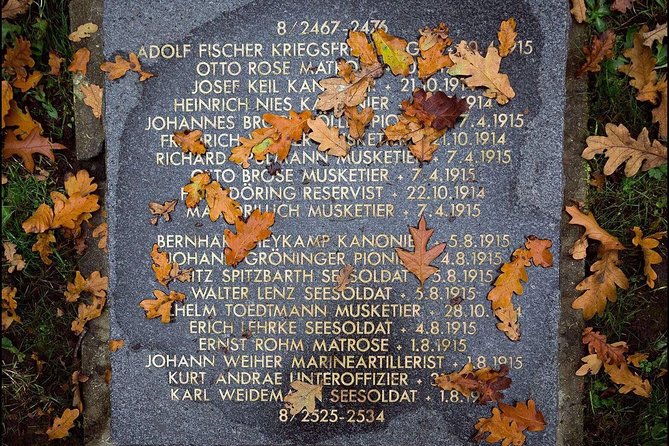
The day starts by heading toward Vladslo, where you visit the German Military Cemetery. This is not where you’ll learn tactics or battle maps. It’s where you feel the cost of the war without needing extra explanation.
The highlight here is the sculpture of Grieving Parents by Käthe Kollwitz. It’s the kind of artwork that doesn’t shout, it mourns. You’ll see it and immediately understand why memorials matter even when the historical details already seem “known.”
This stop also helps you understand how WWI affected families on all sides. Many tours rush straight into Commonwealth cemeteries. Here, you get a broader view early, which makes the later Commonwealth sites even more meaningful, because you’ve already seen that grief has the same shape everywhere.
Diksmuide’s Trench of Death and the Brooding Soldier gas-attack memorial
From there you move toward Diksmuide for two crucial reminders of what made WWI brutal: industrial-scale killing and the way soldiers were trapped in a ruined world.
You visit the Trench of Death, a stretch of the Western Front where many soldiers lost their lives. This is one of those spots where you can look at the terrain and finally understand why the war seemed endless. Even without perfect visibility or a full film set, the ground tells you the story: there’s no room to be heroic in the way movies imagine.
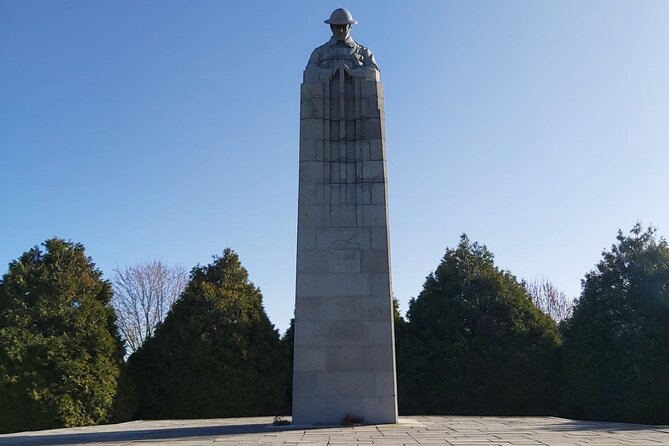
Then there’s the Brooding Soldier statue, commemorating the sacrifice of 2,000 Canadian soldiers during the first German gas attack. If you’re trying to grasp why WWI casualties were so hard to comprehend, this memorial makes it physical. It’s not a debate point, it’s a named loss.
Something different while you are in Bruges:
- Bruges: Choco-Story Museum with Audio Guide and Tastings
★ 4.2 · 1,825 reviews - From Bruges: Great War Flanders Fields Minibus Tour w/ Lunch
★ 4.9 · 1,257 reviews - Bruges: Guided Rickshaw Tour
★ 4.9 · 1,199 reviews - Round-Trip Shuttle Service from Zeebrugge to Bruges
★ 4.0 · 1,143 reviews
Passchendaele morning: New British Cemetery, the gas-attack landscape, and Tyne Cot
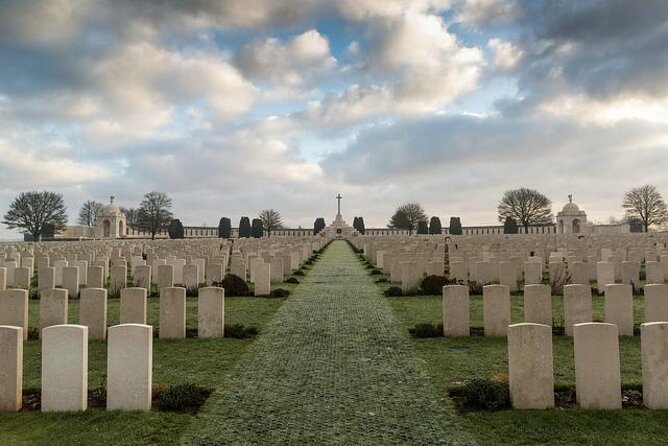
After a lunch stop in the Ypres area, you head to Passchendaele, including Passchendaele New British Cemetery (listed with free admission and about 30 minutes there). The guide brings you to the landscape connected to the first gas attacks, which gives the cemetery a context beyond dates.
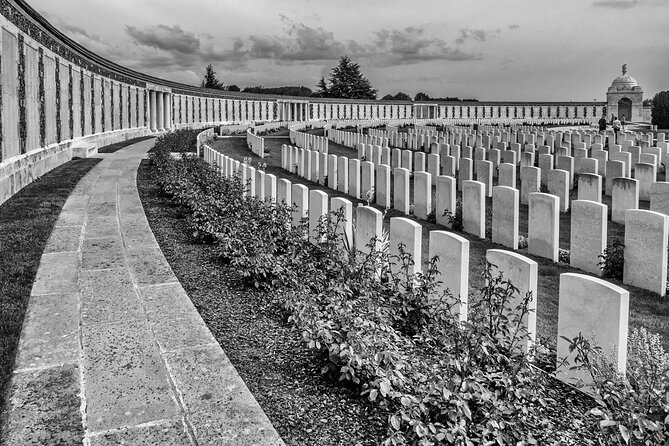
The scale is part of the lesson. In WWI cemeteries, numbers can feel abstract until you’re standing in rows. You’ll later call at Tyne Cot, which is described as the world’s largest Commonwealth cemetery. Another cemetery stop in the region is listed with 35,000 headstones, and that number lands differently after you’ve already seen the trenches and memorials earlier in the day.
If you care about historical accuracy, this is where it pays off to slow down. Don’t rush through names. Read them like you’re trying to remember people, not facts.
Hill 60 and the Flanders Fields Museum: where tunnels and audio make the war legible
You also get time around Hill 60. This is a key battlefield memorial site and park area in the Zwarteleen region (near Zillebeke). The tour includes an audio-guided component tied to the Flanders Fields Museum exhibitions, then you ascend toward Hill 60 to see the tunnels connected to the fighting.
Why this matters: trenches and cemeteries tell the story of loss. Hill 60 helps you understand how soldiers tried to survive the nightmare with engineering. Tunnels and underground fighting aren’t just “cool history.” They explain why the war was so hard to escape, and why artillery and gas could change everything so fast.
The audio element is a smart move for a day like this. It keeps you from getting lost in the museum room, and it makes it easier to connect museum objects to the places outside.
Practical tip: wear comfortable shoes. Even if you’re not hiking all day, you’ll be walking from stop to stop, and you’ll want your legs to feel fresh at the end.
Ypres time and the plowman-style lunch break that keeps the day humane
The tour includes a lunch stop in the Ypres area described as a hearty plowman-style meal at a local restaurant. Some information sources label lunch as not included, but the overall day plan clearly includes a restaurant meal stop in Ypres. Your safest bet is to double-check what your exact ticket includes before you go.
Either way, don’t skip lunch. This tour ends with an evening ceremony, and you’ll have several emotionally heavy stops in between. A solid meal keeps you steady, and it also gives you a normal human break in the middle of all that WWI weight.
Also, one review mentioned free time in Ypres for dinner plans ahead of the evening ceremony. That’s not guaranteed in every schedule, so treat it as a “maybe” and keep your dinner flexibility.
Essex Farm Field Hospital: where McCrae wrote In Flanders Fields
Next is Essex Farm Cemetery / Essex Farm Field Hospital. This is short on time (listed at about 15 minutes and free admission), but the impact can be large.
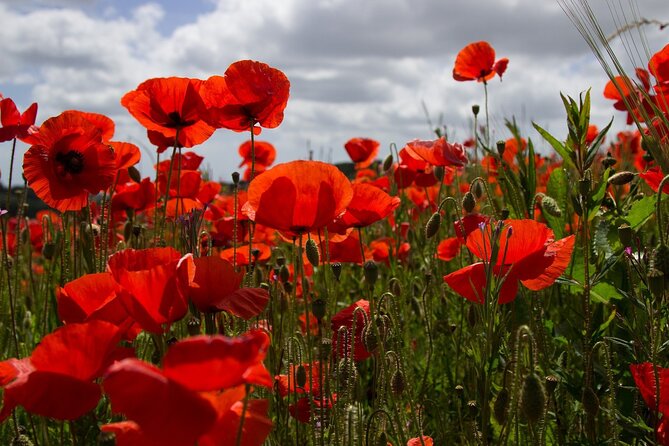
The key detail is that this was a dressing station, and it is tied to Dr. John McCrae, who wrote In Flanders Fields. The site includes the iconic bunkers associated with the poem.
Here’s the value for you: poetry can feel like a distant school reading. In this location, it becomes a response to a real place and a real moment. You see the physical structure, then you mentally place the words into the context of a battlefield where medical care was both vital and overwhelmed.
The Last Post at Ypres Menin Gate: the simplest tribute is the strongest
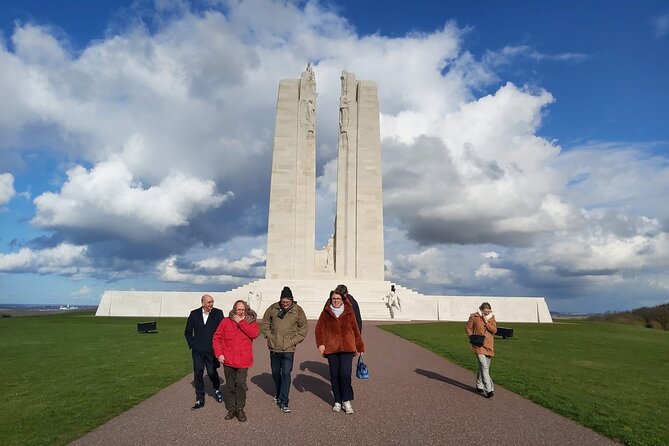
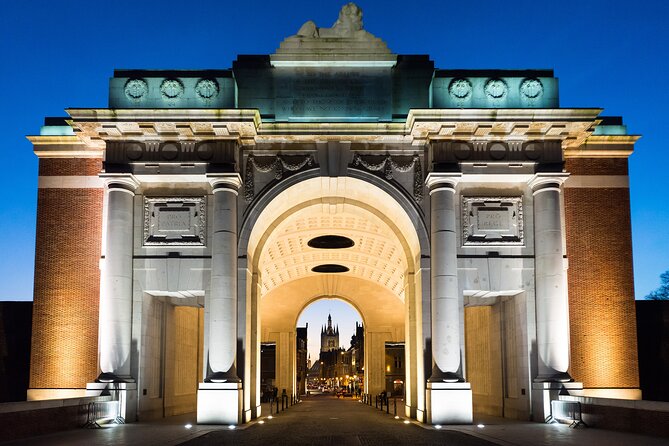
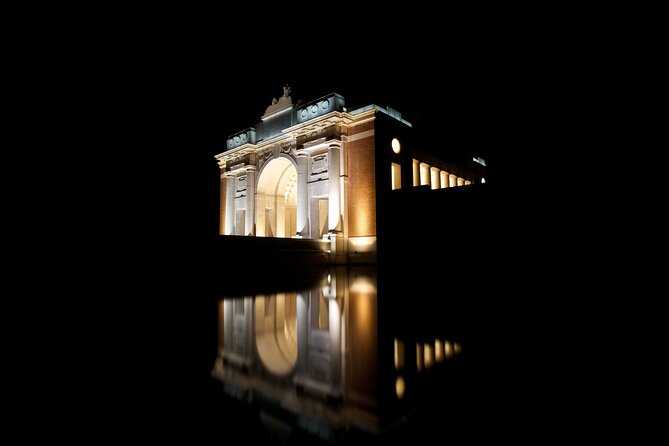
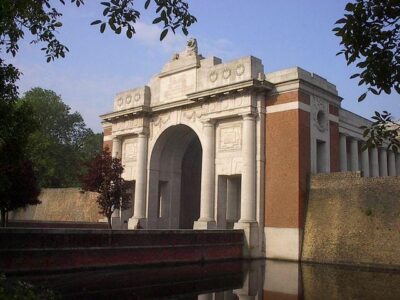
The day’s emotional payoff is the Last Post Ceremony at Ypres Menin Gate. It’s scheduled as a highlight, listed at about 30 minutes, and it’s a daily tribute to Commonwealth soldiers and officers who were missing after battle.
The best part, and the reason this moment gets mentioned again and again, is its restraint. The ceremony doesn’t try to turn grief into drama. It keeps the focus on remembrance, and that makes the silence and the crowd feel intentional rather than performative.
One practical thing to keep in mind: if you go during a period of construction or refurbishment, you may see scaffolding or on-site activity around the ceremony area. Even with visual interruptions, the ritual itself still carries its weight, but it’s worth mentally preparing for an active site.
When you finish, you return to your vehicle and head back to Bruges. The ride back often feels a bit like coming down from a storm, because you’ve spent the day holding a lot of loss in your head and your body.
Price and value: what $95.34 buys you in a day this full
At $95.34 per person, you’re paying for a full, guided, transportation-based day that strings together several major WWI sites. The included pieces are important: an air-conditioned vehicle and a professional multilingual guide.
You’re also getting multiple stops where admission is listed as free in the itinerary segments, including Passchendaele New British Cemetery and the Last Post Ceremony. Even when admissions are free, guides save you the real currency of time and confusion, especially in a region where the battlefields can look similar at first glance.
Does this tour feel like a budget deal? Yes, because you’re not driving yourself between sites, you’re not buying a bunch of separate tickets, and you’re not trying to stitch together the story in your own head. Does it feel heavy? Also yes. The memorial focus means you’ll spend the day thinking more than you’ll spend taking photos.
Who should book the Flanders Fields Remembrance Tour from Bruges
This is a great choice if you want:
- A structured WWI day connecting cemeteries, trenches, and memorials
- A strong ending with the Menin Gate Last Post Ceremony
- Guides who can explain the “why” behind each location, including what gas attacks and tunneling meant on the ground
It may not be the best pick if:
- You need frequent long free breaks. This itinerary is packed and designed around daylight and ceremony timing.
- You’re very sensitive to motion sickness. Confirm whether your departure uses a smaller vehicle or a larger coach.
- You struggle with crowds or hearing in transit. Sit where you can follow the guide.
Should you book this Bruges WWI remembrance day?
If you want one day that actually teaches you how WWI reshaped this region, yes, book it. The combination of Trench of Death, Hill 60, Tyne Cot, and the Last Post Ceremony creates a full arc from hardship to remembrance. It’s not a casual outing, but it is a meaningful one, and the value for your money is strong because you’re guided, transported, and kept on a clear route all day.
FAQ
How long is the Flanders Fields Remembrance Tour from Bruges?
The tour runs about 10 hours 30 minutes.
What time does the tour start, and where do I meet?
The tour starts at 11:00 am. The meeting point is Bargeplein Bargeweg, 8000 Brugge, Belgium.
Is the tour in English?
Yes. The tour is offered in English.
What transportation is used during the day?
You travel by an air-conditioned vehicle. Hotel pickup and drop-off are not included.
Is lunch included?
Lunch is described as a plowman’s lunch stop in Ypres, but lunch is listed as not included in the provided details. Check your ticket terms so you know what you pay for on the day.
What’s included in the price?
Included items are the air-conditioned vehicle and a professional multilingual guide. Mobile ticket is used, and some stops list free admission.
Do I need to pay for cemetery or ceremony entries?
The itinerary lists free admission for Passchendaele New British Cemetery and the Last Post ceremony, and it also lists free admission for Essex Farm Cemetery. (Other sites like museums are not specified in the provided details.)
Is cancellation possible if my plans change?
Yes, free cancellation is available. You can cancel up to 24 hours in advance for a full refund.
What kind of physical effort is required?
You should have a moderate physical fitness level for a full day that includes walking around sites.
Reviewed lately in Bruges
- Belgium’s Gems: Bruges & Ghent Full Day Shore Trip from Zeebrugge★ 4.5 · 3 reviews
- Private 3-hour walking tour of Bruges with official tour guide★ 4.0 · 3 reviews
- Bruges: Ticket Volkskundemuseum (Folk Museum)★ 5.0 · 3 reviews
- Bruges Photo Session By a Pro★ 5.0 · 3 reviews
- Explore the Instaworthy Spots of Bruges with a Local★ 5.0 · 3 reviews
- Bruges: Private custom tour with a local guide★ 4.9 · 3 reviews
- Self-Guided Secrets Tour – Explore Bruges & Miss nothing★ 5.0 · 4 reviews
- Family Friendly Guided Bike Tour from Bruges to Flatlands★ 5.0 · 4 reviews
Flanders Fields & WWI Battlefields, compared.
From Bruges: Great War Flanders Fields Minibus Tour w/ Lunch
Read our review →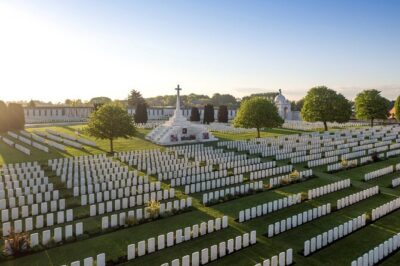
Flanders Fields Remembrance Tour from Brussels
Read our review →
From IEPER Private 4-hour Tour of the Ypres Battlefield
Read our review →
In Flanders Fields and Passchendaele Half Day Morning Tour
Read our review →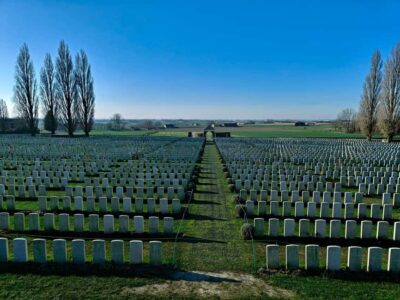
Ypres: An exploration of the deadly salient battlefields
Read our review →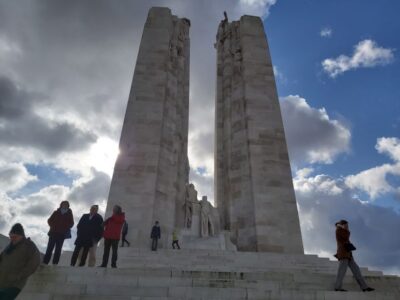
From Bruges: Flanders Fields Remembrance Full-Day Trip
Read our review →
Small Group Ypres Remembrance Day Filled With War History
Read our review →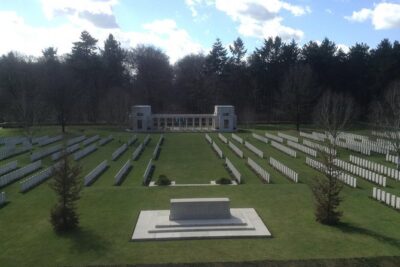
From Ypres, The Christmas Truce to Passchendaele Ypres Based WW1 private tour
Read our review →Browse the lists this tour appears in