
Reviewed · FLANDERS FIELDS & WWI BATTLEFIELDS
From Bruges: Great War Flanders Fields Minibus Tour w/ Lunch
World War I in Flanders has a way of feeling both close-up and impossible to fully picture until you stand on the ground. This Bruges-to-Ypres day tour is interesting because it moves through key sites tied to the Ypres Salient while a guide connects the dates to real places and real consequences. You also get the iconic Menin Gate Memorial with names that make the scale feel heartbreakingly human.
I especially like two things about this experience. First, you hear the story from a guide, not from a room full of plaques. Second, the itinerary is built around the places where the fighting actually happened, including Passchendale, Polygon Wood, and Hill 60, so the war stops being an abstract chapter.
The main drawback to consider is pace and walking. You are out for about 9 hours, you need comfortable shoes, and the day can be intense if you are sensitive to cemeteries, graves, and memorials.
Key points to know before you go
- Air-conditioned mini-coach keeps the long day comfortable, with frequent stops for stretching and questions
- Ypres rebuilt on a medieval plan helps you understand what changed after devastation
- Hill 60, restored trenches, and bunkers turn battle maps into visible terrain
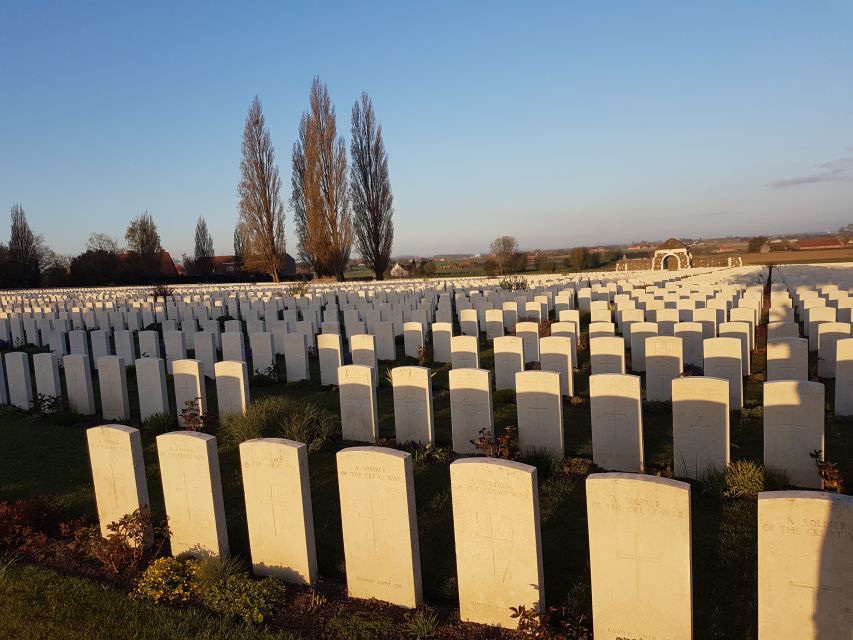
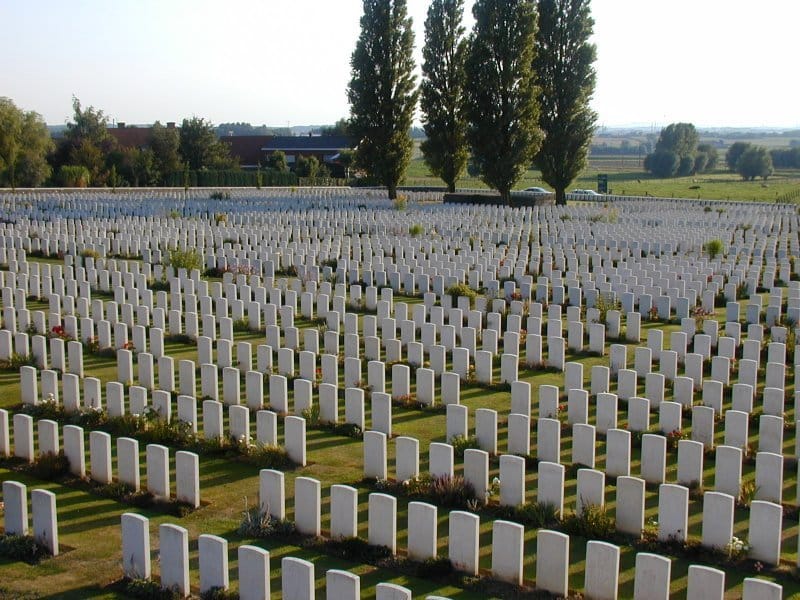
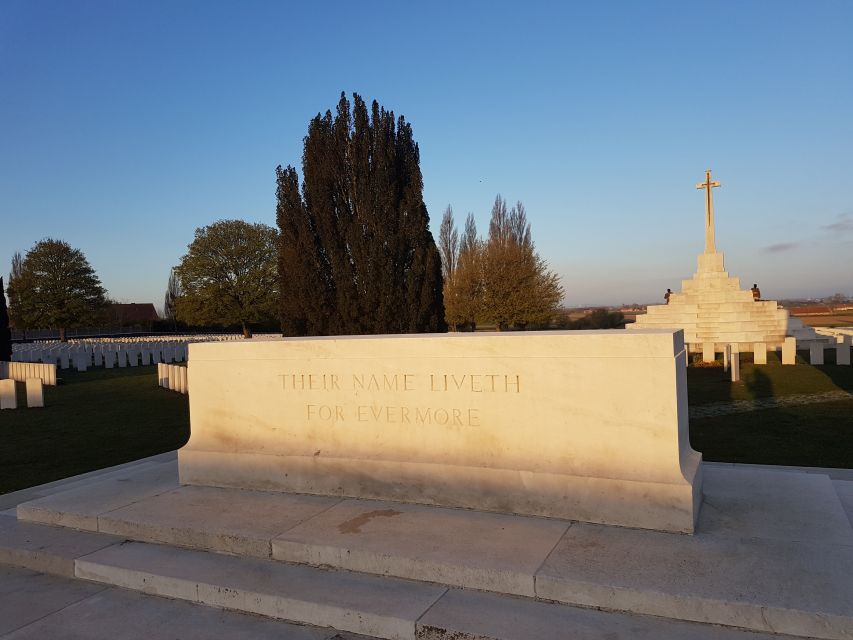
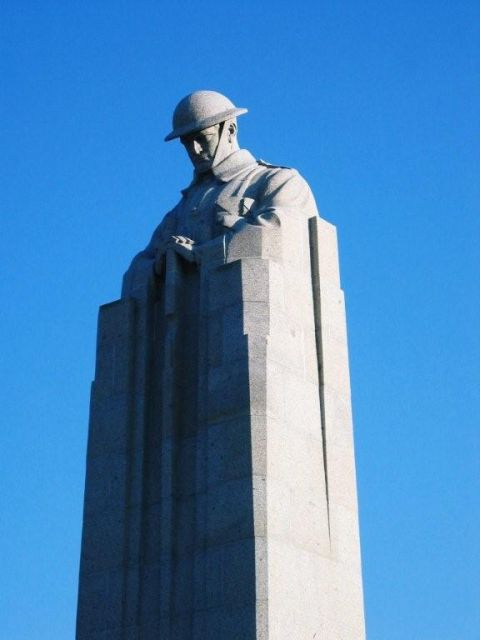
- Passchendale and Polygon Wood war graves make the cost of the fighting unmistakable
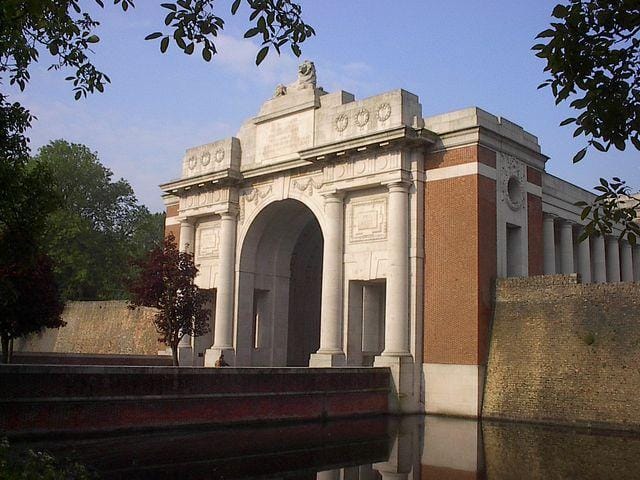
- Menin Gate Memorial features 55,000 names, with an option to stay for the Last Post
- De Dreve lunch stop breaks up the day without turning the tour into a food break
World War I in Flanders feels real when the guide tells it on-site
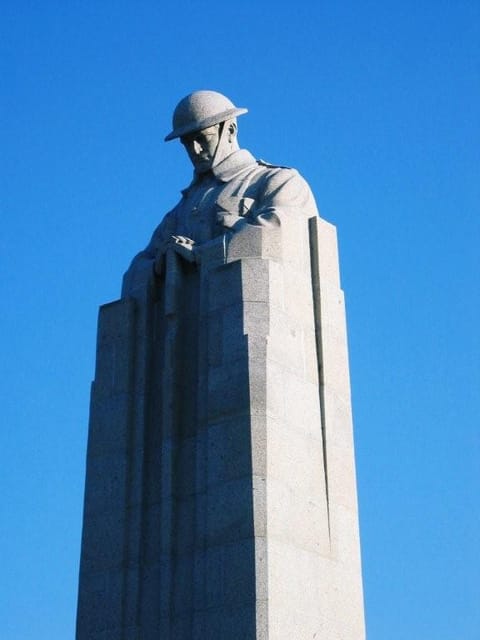
If you have only ever seen WWI through books or museum halls, this is the kind of day that makes the history stop floating above you and start sitting on the ground. I like that the guiding style focuses on the story tied to each location, so the day builds instead of jumping around.
A strong part of the experience is how the guide keeps tying it all together. You are not just looking at ruins, you are being shown why this region mattered to Germany and how the fighting unfolded around Ypres. Guides you might meet include Philippe or Philipp(e), Lucas Catteeuw, Peter, and Johan, and the common thread is respect and clear storytelling that includes more than one side of the conflict.
That matters because WWI in Flanders is emotional. You are dealing with graves, missing soldiers, and places where the landscape still holds memory. A good guide helps you face that without turning it into something casual or performative. You get the sense that the day exists to remember, not just to tick off sights.
A few more Bruges options to weigh up
- Brussels: Hard Rock Cafe with Set Menu for Lunch or Dinner
★ 4.5 · 460 reviews - Hard Rock Cafe Brussels with Set Lunch or Dinner
★ 4.0 · 44 reviews
Morning pickup in Bruges, then straight into the West Flanders drive
Your day starts early. You meet in front of the Grand Hotel Normandy on Hoefijzerlaan nr 37, standing outside at 8:55 am. The tour returns you to Bruges around 6:15 pm, with some wiggle room of about 15 minutes depending on the day.
Once you are on the mini-coach, you stay in the comfortable rhythm of a full-day tour: the vehicle handles the distances, and you get regular pauses to stretch, ask questions, and switch from road views to war-site views. The coach is air-conditioned, which is a quiet but real quality-of-life feature on hot days.
You will want to plan for an early start and a full schedule, especially if you are also doing other Bruges activities. I recommend treating this as your main day trip and keeping the evening open. Even if the rest of Bruges feels like normal life, this is the kind of tour that follows you back into the night.
Ypres and the medieval rebuild: why Wipers matters after the razing
You are headed to Ypres, a town often nicknamed Wipers, and it is hard to understand the later memorial culture without understanding what happened to the town itself. Ypres was essentially razed in the early 1900s, and then rebuilt afterward using a medieval blueprint.
That detail changes how you see everything that follows. When you look at the area today, you are not only seeing battlefield remnants, you are seeing a place that had to be remade. It also helps explain why so much of the remembrance is built around names and absence. The town came back, but the people did not.
On a tour like this, the guide usually sets a bigger picture quickly: the strategic value of northern France access, the German invasion into Belgium, and the way Ypres became a focal point for repeated fighting. It is the kind of framing that makes later stops feel logical instead of random.
If you like your history connected to geography, you will enjoy how the day keeps returning to the same idea: this region became a battlefield because it mattered. And it mattered because it was positioned to affect larger moves in the war.
Trenches, bunkers, and the Ypres Salient walking stops you cannot fake
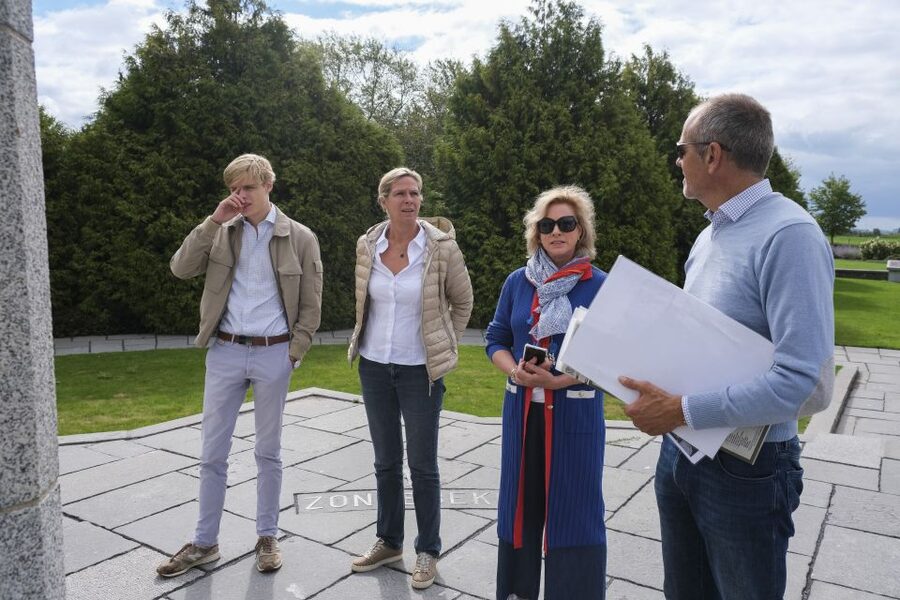
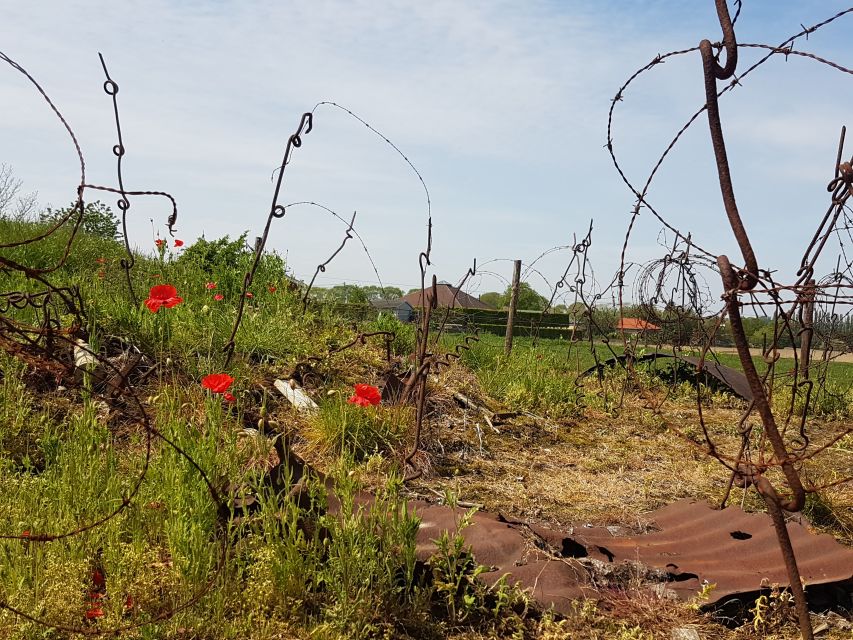
This tour leans into the places where the terrain still tells a story. You will see remaining artifacts and visit restored trenches, then move to key areas tied to major fighting.
Two of the stops that often hit hardest are the war grave areas around Passchendale and Polygon Wood. These are not just scenic cemeteries. They are a way to see how concentrated and widespread loss became in a small region during repeated assaults and stalled front lines.
Then comes the more rugged, close-to-the-earth feeling of Hill 60. Here you will clamber over preserved battlefield features including craters and bunkers. I like this part because it turns the war into something physical. Even if you have read about trench warfare, you do not fully get it until you are standing near the kinds of dugouts and ground disruptions soldiers faced every day.
A good guide keeps your focus grounded and respectful. You are not learning WWI as a trivia contest. You are learning why the fighting dragged on, why conditions were so brutal, and why the region is still cared for so intensely today. That is especially important at grave sites and memorial spaces, where it is easy for visitors to rush through.
More days in Bruges:
- Bruges: Small Group Boat Cruise and Guided Walking Tour
★ 4.8 · 4,102 reviews - Bruges: Guided Tour & Boat Ride with Optional Beer Tasting
★ 4.4 · 3,894 reviews - Historical Walking Tour: Legends of Bruges
★ 5.0 · 2,541 reviews - Bruges: Choco-Story Museum with Audio Guide and Tastings
★ 4.2 · 1,825 reviews
Quick reality check on comfort
You should assume this is a walk and stand day. Wear comfortable shoes and be ready for uneven surfaces in outdoor areas. The tour stops frequently, but the overall schedule still expects you to move.
Menin Gate Memorial and the Last Post: the missing-soldier moment
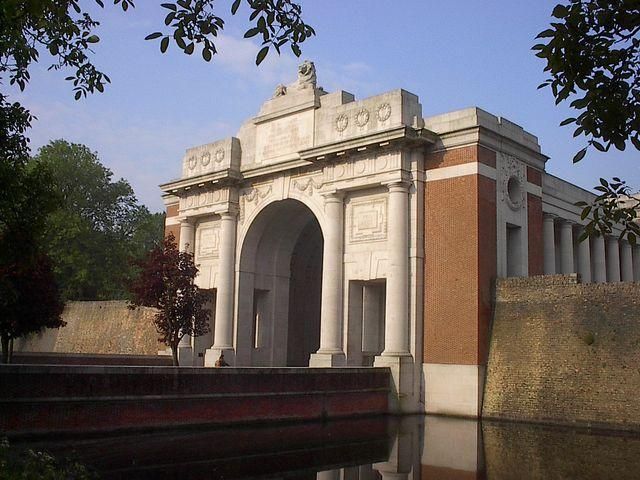
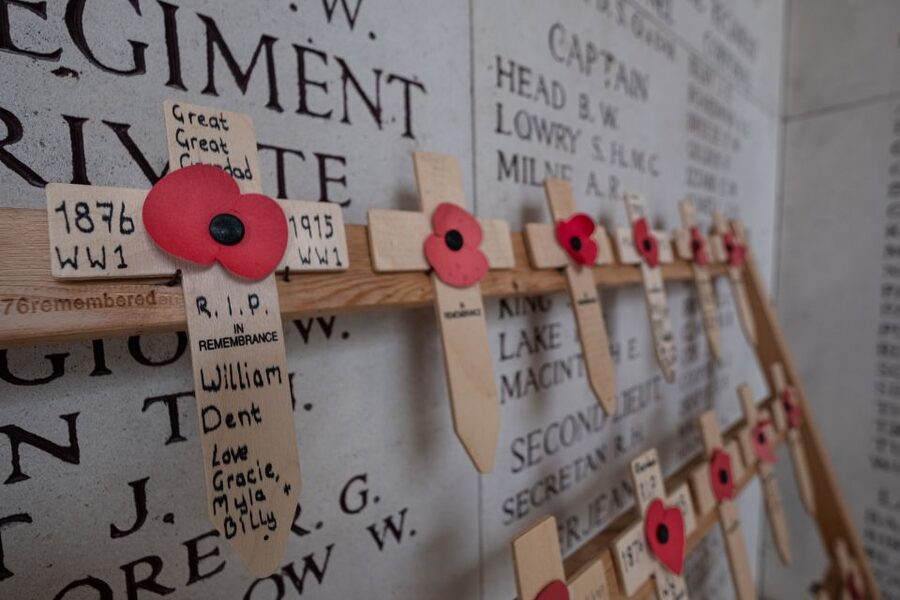
One of the most iconic parts of the day is the Menin Gate Memorial, where you can see the names of soldiers who never returned. The monument lists 55,000 names, and it sits at the spot where troops left the city for the battlefront.
This is a place where the details matter. The guide helps you understand what you are seeing, including how the memorial functions as both an honor and a record for those who are missing. It is also a reason the day feels more personal if you have family connections. The tour can even support those requests if you plan ahead.
If you want the extra emotional punch, you can stay for the Last Post Ceremony. With the option added to the day, you can remain in Ypres until 8:00 pm and then get transported back by taxi to your Bruges hotel area by about 9:15 pm. There is a small fee of €35 per person (minimum two persons required when you book the day trip option), and it is paid on the day, preferably in cash.
I think the Last Post option is worth serious consideration if you connect personally to WWI remembrance, or if you want the day to end in a moment that is clear, shared, and quiet. If you are not into ceremonies, you can also enjoy Menin Gate earlier and still get the heart of the site. The key is to decide what kind of emotional rhythm you want for the day.
Lunch at De Dreve, plus museum time that helps the story stick
The day includes lunch at De Dreve or an alternative stop if needed. I like that lunch is built into the middle of the schedule because it keeps you from turning the day into a nonstop sprint of somber stops.
The lunch stop is not just a sandwich break. Some versions include a museum component attached to the stop, which can help you process what you have already seen and prepare for what is still coming. It also gives you a chance to warm up or cool down, use restrooms, and talk with the guide and others in a less formal moment.
Drinks are not included, so plan for bottled water or whatever you like to drink to get through the rest of the afternoon.
One practical tip from the day: bring small change. Some restroom stops may charge a small fee (one commonly mentioned amount is 0.50€) and may not take cards, so cash saves stress.
Ancestor grave requests: personal and possible when planned early
If you have a family connection in the Ypres Salient area, this tour can sometimes help you visit an ancestor’s grave. The tour says it is possible to visit an ancestor’s grave if requested ahead of time when you are in the Ypres Salient.
I recommend doing this with a planning mindset. Ask well in advance, and be ready for the time and location match to be dependent on what is possible during the day’s routing. If it works out, the effect can be profound, because you are not just learning WWI events, you are stepping into a specific family story tied to the same places.
From a human angle, I appreciate that the tour allows room for that request. It recognizes that some people come for the battlefield sites, while others come for the names.
What to pack for a respectful, long walking day
Pack for comfort and weather, not for a fashion photo. You will want:
- Comfortable shoes for outdoor walking and standing
- Weather-appropriate clothing since you are outside during multiple stops
- A small amount of cash, especially for possible restroom fees
Also, this tour is not a good match if you have mobility limitations. It is noted as not suitable for children under 8, people with mobility impairments, and wheelchair users. If you are somewhere in between, it is worth thinking carefully about your walking endurance and how you handle uneven ground at historic sites.
One more reminder: no smoking. This keeps the day focused and respectful, and it also matters for comfort on the mini-coach.
Finally, pace yourself mentally. This is a day of cemeteries, memorials, trenches, and wartime remains. If you need breaks, take them when the vehicle stops. Those pauses make it possible to keep a steady attention span through a meaningful day.
$130 for a 9-hour WWI tour: where the value really comes from
At about $130 per person for a full 9-hour day, the price is not the cheapest way to do WWI sites. But you should look at what you get, not only the number.
You are paying for:
- Air-conditioned mini-coach transport from Bruges and back
- A live English guide who tells the story on-site
- Lunch at De Dreve or an alternative stop
The big value is the format. DIY transport from Bruges to Ypres and around the Ypres Salient takes planning, timing, and more transit than you might expect. When you add in the fact that the guide helps you interpret places like Hill 60 and the Menin Gate Memorial, the day becomes less about driving and more about understanding.
Also, the experience is designed to be a full circuit of key sites, not just one highlight. You get a broader sense of how the fighting shaped the region, with multiple stops that each change your perspective.
If you care about the quality of interpretation, this is the kind of tour that justifies a higher price tag. You are not paying for “bus with stops.” You are paying for context, and context is what makes the sites land.
Who should book this Bruges to Ypres WWI day trip, and who should not
Book this tour if you:
- Want an organized, one-day route through Ypres and the Ypres Salient
- Prefer learning from a guide who explains sites in plain language
- Are interested in WWI remembrance and the meaning of the Menin Gate Memorial
- Might value the optional Last Post ceremony as part of your day
I would think twice if you:
- Need a fully wheelchair-accessible day (this is listed as not suitable for wheelchair users)
- Are traveling with very young kids (it is not suitable for children under 8)
- Expect a light, casual outing. This is intense by nature, even when the guide’s tone is gentle and sometimes funny
If you are the kind of traveler who likes “show me the place” history, this fits your style. The best part is that the sites do not sit in isolation. The day connects them into a single story.
Should you book Quasimodo Tours Bruges Great War Flanders Fields?
I think you should book this tour if your goal is to understand WWI in Flanders in a way that feels grounded, respectful, and tied to real locations. The biggest selling points are the combination of an on-site guide story style, the range of stops from trenches to memorials, and the option to stay for the Last Post at Menin Gate.
If you want a simple battlefield checklist with minimal emotion, this might feel heavy. But if you want meaning, and you can handle a long day with walking, this is a strong choice.
FAQ
What is the duration of the tour?
The tour runs for 9 hours.
Where is the meeting point in Bruges?
Meet right in front of the Grand Hotel Normandy, Hoefijzerlaan nr 37. Stand outside the hotel at 8:55 am.
What is included in the price?
Included are transportation in an air-conditioned mini-coach, a live English guide, and lunch at De Dreve or an alternative stop.
Are drinks included with lunch?
No. Drinks are not included.
Can I add the Menin Gate Last Post Ceremony?
Yes, you can extend the tour to attend the Last Post Ceremony. You can stay in Ypres until 8:00 pm, and you will be brought back by taxi to your hotel in Bruges by about 9:15 pm. There is a fee of €35 per person with a minimum of two persons, paid on the day.
Is it possible to visit an ancestor’s grave?
It is possible if requested well in advance and when the tour is in the Ypres Salient area.
Is the tour free to cancel?
You can cancel up to 24 hours in advance for a full refund.
Is the tour suitable for children or wheelchair users?
No. It is not suitable for children under 8, people with mobility impairments, or wheelchair users.
Reviewed lately in Bruges
- Belgium’s Gems: Bruges & Ghent Full Day Shore Trip from Zeebrugge★ 4.5 · 3 reviews
- Private 3-hour walking tour of Bruges with official tour guide★ 4.0 · 3 reviews
- Bruges: Ticket Volkskundemuseum (Folk Museum)★ 5.0 · 3 reviews
- Explore the Instaworthy Spots of Bruges with a Local★ 5.0 · 3 reviews
- Bruges Photo Session By a Pro★ 5.0 · 3 reviews
- Bruges: Private custom tour with a local guide★ 4.9 · 3 reviews
- Self-Guided Secrets Tour – Explore Bruges & Miss nothing★ 5.0 · 4 reviews
- Family Friendly Guided Bike Tour from Bruges to Flatlands★ 5.0 · 4 reviews
Flanders Fields & WWI Battlefields, compared.
Flanders Fields Remembrance Tour from Brussels
Read our review →
From IEPER Private 4-hour Tour of the Ypres Battlefield
Read our review →
In Flanders Fields and Passchendaele Half Day Morning Tour
Read our review →
Ypres: An exploration of the deadly salient battlefields
Read our review →
From Bruges: Flanders Fields Remembrance Full-Day Trip
Read our review →
Small Group Ypres Remembrance Day Filled With War History
Read our review →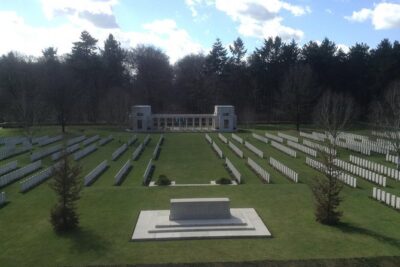
From Ypres, The Christmas Truce to Passchendaele Ypres Based WW1 private tour
Read our review →Browse the lists this tour appears in