
Reviewed · WALKING TOURS
Haunted Bruges Walking Tour
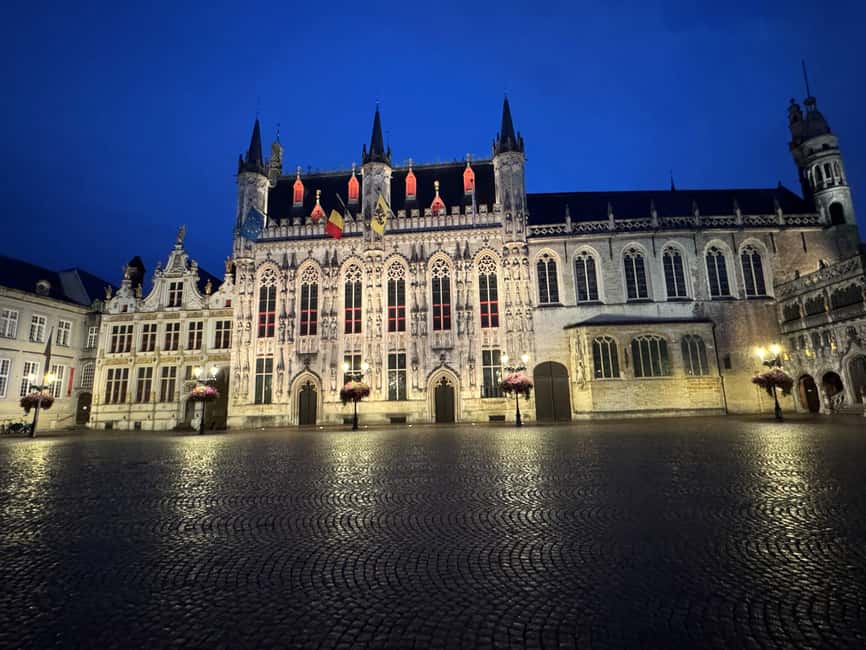
Bruges can look like a painted postcard, but this walking ghost tour shows what lived under the beauty: plague fear, political violence, and stories that refuse to stay buried. You’ll move through medieval lanes and squares while a live guide strings together eerie history in a way that feels grounded, not cheesy.
I like that you’re covering specific, memorable stops such as the Ghost House of Spanjaardstraat, the atmospheric Vismarkt, and the 800-year-old St. John’s Hospital. I also like that the guide leans into storytelling, with a chill factor, not a jump-scare show. One drawback: this is dark material, and it is a walking tour for 90 minutes, so it may not suit young kids or anyone sensitive to topics like witch trials, executions, and torture.
Key things to know before you go
- Starts in Market Square by the Belfort Tower, where the Black Plague and its aftermath still haunt the story
- Ghost House of Spanjaardstraat, with reports of cold drafts and footsteps that don’t match the footsteps you hear
- Witch trials and medieval punishment, including the kinds of methods discussed by the guide
- Vismarkt Fish Market, tied to hunger, desperation, and secrets that sit under the stones
- Bonifacius Bridge, paired with the eel legend and the darker side of love stories
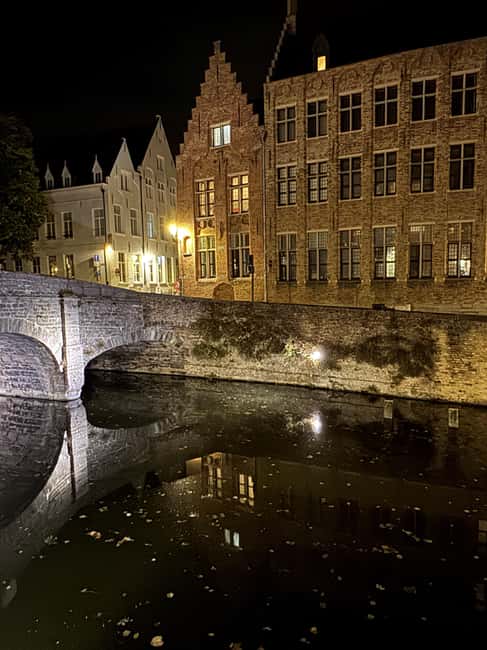
- Gruuthuse Palace, where tragedy, curses, and watchful windows close the loop
Bruges at night: fairy-tale streets with a darker underside
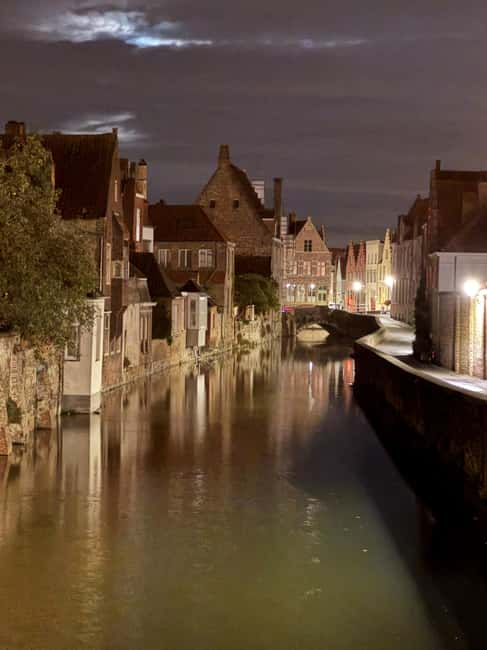
If you’ve only seen Bruges in daylight, you already know the look: canals, brickwork, lace-like facades, and that calm, museum feeling. The trick is that Bruges is not calm. It’s layered. Centuries of trade, illness, and power struggles left marks that live in street names, buildings, and the local legends people still tell.
That’s what makes this tour work. It’s not just, here is a haunted building, spooky music now. Instead, you get the human reasons behind the chills: plague fear, harsh punishment, and the way public violence was used to control a city. The guide frames each site as a place where real things happened, then connects those events to the stories locals keep repeating.
I’d file this under history you can feel in your body. You’ll walk. You’ll listen. And if you’re even slightly curious about how fear shaped everyday life in medieval Bruges, you’ll be pulled along.
More Walking Tours in Bruges
- Bruges: Small Group Boat Cruise and Guided Walking Tour
★ 4.8 · 4,102 reviews - Historical Walking Tour: Legends of Bruges
★ 5.0 · 2,541 reviews - Guided boat trip and walk
★ 4.5 · 703 reviews
Market Square meeting at the Belfort Tower, and the Black Plague story
Your tour begins in Market Square (Markt), in front of the Belfort Tower. This matters because Markt is not random scenery. It used to be the heart of trade, and in the Middle Ages it became a stage for mass death during the Black Plague.
In this stop, the big idea is scale. The guide explains that nearly half the city perished while the Belfry bells tolled. Even if you don’t normally buy into ghost stories, that detail lands. Bells have a way of turning memory into something physical, like sound that keeps echoing long after people are gone.
Then the tour takes a darker turn with a priest story tied to how victims were buried. The legend says he joined them, and that he still walks beneath the cobblestones. Whether you interpret that as pure folklore or something more, you’ll start noticing how sound and shadows work in a square that used to hold crowds.
Practical note: this opening set the mood fast, and you might want your shoes ready. Markt is busy, then the route starts to thin out into calmer lanes.
The Ghost House of Spanjaardstraat: forbidden love, canal whispers, and cold drafts
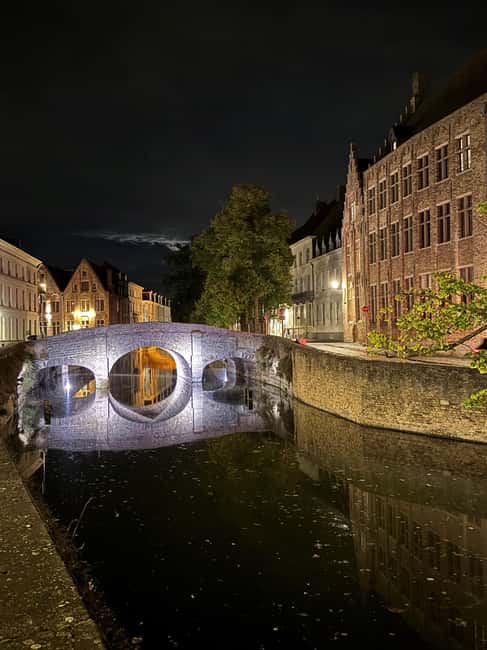
Next you head toward a tucked-away alley: Spanjaardstraat, home to the Ghost House connected to a forbidden romance. The story centers on a young nun and a monk, and how their relationship ended in violence beneath the canal.
What you’re really doing here is stepping from public history into hidden architecture. Narrow streets, damp air near water, and a building tucked into a side lane all make legends easier to believe. The tour emphasizes reported sensations too: cold drafts and soft footsteps with no one around. The guide connects the ghost story to a specific place rather than leaving it floating in vague, generic horror.
You’ll also get the sense that Bruges legends often blend romance and punishment. People didn’t only fear disease. They feared scandal, religious authority, and the consequences of stepping outside approved roles.
If you like ghost tours that feel like a guided walk through real neighborhoods, this is one of the strongest stops. It’s specific, atmospheric, and tied to location, not just theatrics.
Burg Square and Count Charles the Good: assassination, executions, and a kneeling silhouette
From there the tour moves to Burg Square, once tied to a great cathedral, and the story grows even sharper. You’ll hear about the assassination of Count Charles the Good in 1127, along with the brutal executions that followed for the conspirators nearby.
Here’s the value. The guide doesn’t treat the legend like a campfire tale. It gives you the civic context: power shifts, public retaliation, and how quickly a city can switch from ceremony to bloodshed. When the story says a shadowy figure kneeling in prayer has been spotted even when the square is empty, it feels less like a random scare and more like the afterimage of public violence.
This stop also helps you understand the tour’s larger theme: haunting in Bruges often points back to injustice. Plague was one kind of terror. But so was punishment that was meant to warn everyone watching.
If you’re sensitive to gruesome details, pace yourself here and stay grounded in the architecture. Focus on the square’s layout, the pathways people used, and the idea that everyone would have been able to see what happened.
Something different while you are in Bruges:
- Bruges: Guided Tour & Boat Ride with Optional Beer Tasting
★ 4.4 · 3,894 reviews - Bruges: Choco-Story Museum with Audio Guide and Tastings
★ 4.2 · 1,825 reviews - From Bruges: Great War Flanders Fields Minibus Tour w/ Lunch
★ 4.9 · 1,257 reviews - Bruges: Guided Rickshaw Tour
★ 4.9 · 1,199 reviews
Vismarkt Fish Market: hunger, vaults below, and the weight of drowned secrets
The next atmosphere shift comes at Vismarkt, the old Fish Market. This is a place of hunger and desperation in the tour narrative, which is important because it moves the story beyond death and into daily suffering.
You’ll learn that beneath the stones are hidden vaults tied to betrayal and restless spirits. The guide’s tone stays grounded in place, so you’re not just hearing about ghosts. You’re hearing about how the market system, food access, and water nearby could turn tragedy into something permanent.
Why this stop feels effective is that it adds variety. So far you’ve heard about plague and punishment, then forbidden love. Vismarkt brings in survival pressures, the kind that can make people do unforgivable things. That’s when the ghost stories start to feel like psychology, not just supernatural entertainment.
Also, Bruges has that water-and-stone construction everywhere. When you connect the canal and the old market spaces to legends of betrayal, the city starts making emotional sense.
St. John’s Hospital: plague prayers in ancient wards
Following the canal, you reach St. John’s Hospital, described as 800 years old. This stop is one of the most emotionally serious parts of the tour.
The guide explains that plague victims and the dying prayed there for mercy. It’s not a call to panic, it’s a reminder of what the Middle Ages did to ordinary bodies. People didn’t have the tools you and I take for granted. When someone got sick, the fear was immediate and the waiting was brutal.
You’ll also hear about reports of ghostly figures and unexplained sounds in and around the wards. Even if you think the sound is just an old building settling, the story makes you notice how hospitals were designed for desperation: crowded spaces, echoing corridors, and routines built around illness.
For me, this is the moment where the tour stops feeling like light spooky fun and starts feeling like a guided walk through what survival looked like when survival was not guaranteed.
Bonifacius Bridge and the eel legend, plus heartbreak by the canal
Then you get a postcard moment: Bonifacius Bridge. It’s pretty, it photographs well, and that contrast is part of the effect.
Under it, you’ll hear the legend of a sinister eel that pulls unwary people into the canal. The story also includes heartbroken lovers who leapt rather than face life alone. That mix of danger and despair is a recurring pattern in medieval legends: nature becomes a threat, and love becomes tragedy when social systems leave people no safe option.
What I like about placing this story here is that it’s visual. You can look at the water, imagine how easy it would have been to misjudge the dark, and then understand why legends grow around places that feel vulnerable.
If you’re walking with a group, this is also the sort of stop where people quiet down. The bridge makes the canal feel closer, and the guide keeps the focus on meaning rather than loud effects.
Gruuthuse Palace: windows that seem to watch over the street
Your final stop is the Gruuthuse Palace, once home to a powerful medieval family. Power does not stop tragedy, and the tour makes that plain.
You’ll hear sorrowful details, including the story of a woman who waited each night for a lover who never returned. The guide also explains why the windows here still seem to watch the street below, at least according to the legend.
This last section works because it ties the themes together. Earlier, you learned about public fear, plague, punishment, and hidden spaces. Here, you get the private cost. Waiting. Loss. The slow turning of grief into story.
Also, ending at a palace gives you a clean visual wrap-up. You’re leaving behind small alleys and moving into a grand setting that feels built for watching and being watched. That fits the tour’s final mood: Bruges history is never truly at rest.
Price and timing: what $29 for 90 minutes really buys
At $29 per person for about 90 minutes, you’re paying for three things: a guided walk with context, a storyteller who stays with the locations, and a condensed route that hits multiple iconic sites tied to the darker side of the city.
This isn’t a long half-day commitment. It’s also not a quick highlight sprint. Ninety minutes is enough time to feel the atmosphere shift across several neighborhoods without turning it into a blur.
You’ll want to treat it like a nighttime walking activity with a clear theme. If you go in expecting ghosts only, you might miss the point. The tour is at its best when you’re open to how plague, persecution, and punishment shaped the city’s myths.
English is the guide language, and the pacing is designed for storytelling. If you want a tour that turns Bruges into a story you can hold, this is a solid value.
Comfort tips so you enjoy the stories without getting stuck
This is a walking tour, so your comfort is part of the experience.
Bring comfortable shoes because you’ll spend a lot of the time on medieval streets and uneven surfaces. Wear warm clothing, since the route includes canal-adjacent areas where the air can feel colder than you expect.
Also, be ready for subject matter that goes beyond mild spooky. The guide covers hauntings plus the Middle Ages, including witch trials and torture methods. That makes it meaningful for adults who like serious history, but it can be upsetting for people who prefer lighter topics.
Who should book this ghost walk, and who should skip it
I think this tour suits you best if you:
- love Bruges but want a different angle than canals and chocolate shops
- enjoy history told through place, not just facts read at a distance
- like a guide who brings personality, warmth, and jokes into the dark material
- want English storytelling with a focused route and clear stops
It may not be for you if:
- you have mobility impairments, since it is a walking route
- you have heart problems, due to the walking and the intensity of the theme
- you’re traveling with children under 12, since the topics include executions, torture, and witch trials
One more practical point. If you’re easily spooked by atmospheric legends, take it as it comes. This is not described as a theatrical scare tour, but the stories are meant to feel chilling.
Should you book Haunted Bruges?
If you want Bruges in a human, honest way, this is an easy yes. The best part is that you’re not just collecting creepy photos. You’re connecting the city’s darker past to the places you can see right now, with a live storyteller and a route that feels intentional.
I’d book it if you’re comfortable with medieval tragedy and you enjoy guides who make history feel alive. You’ll likely remember the specific stops, especially the Ghost House of Spanjaardstraat, the Vismarkt vault stories, and the way Gruuthuse Palace closes the loop with a haunting family tragedy.
If you want a family-friendly night out or you dislike serious historical violence, pick a lighter Bruges experience instead.
FAQ
Where does the tour start?
The meeting point is Market Square (Markt) in front of the Belfort Tower.
How long is the Haunted Bruges walking tour?
The tour lasts 90 minutes.
How much does it cost?
The price is $29 per person.
What language is the guide?
The live tour guide speaks English.
What should I wear or bring?
Bring comfortable shoes for walking and warm clothing.
Is the tour suitable for children?
It is not suitable for children under 12.
Is it suitable for people with mobility impairments?
No, it is not suitable for people with mobility impairments.
Is it safe for people with heart problems?
No, it is not suitable for people with heart problems.
What topics are covered?
Expect stories involving hauntings, plague, murder, betrayals, and medieval topics such as witch trials and torture methods.
Is there free cancellation?
Yes, you can cancel up to 24 hours in advance for a full refund.
Reviewed lately in Bruges
- Belgium’s Gems: Bruges & Ghent Full Day Shore Trip from Zeebrugge★ 4.5 · 3 reviews
- Private 3-hour walking tour of Bruges with official tour guide★ 4.0 · 3 reviews
- Bruges: Ticket Volkskundemuseum (Folk Museum)★ 5.0 · 3 reviews
- Explore the Instaworthy Spots of Bruges with a Local★ 5.0 · 3 reviews
- Bruges Photo Session By a Pro★ 5.0 · 3 reviews
- Bruges: Private custom tour with a local guide★ 4.9 · 3 reviews
- Self-Guided Secrets Tour – Explore Bruges & Miss nothing★ 5.0 · 4 reviews
- Family Friendly Guided Bike Tour from Bruges to Flatlands★ 5.0 · 4 reviews
Walking Tours, compared.
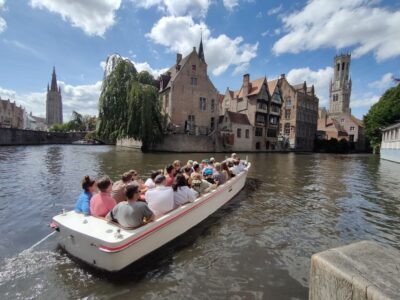
Bruges: Small Group Boat Cruise and Guided Walking Tour
Read our review →
Brussels: Historical Walking Tour with Chocolate & Waffle Tasting
Read our review →
Brussels Walking and Tasting Tour (Beers,Chocolates&Fries/Waffle)
Read our review →
Browse the lists this tour appears in