
Reviewed · FLANDERS FIELDS & WWI BATTLEFIELDS
World War I Private Tour from Brussels
If you want a World War I tour that feels personal instead of checklist-y, this one is worth your time. It’s a private day from Brussels that strings together the most important memorials and battlefield sites around Ypres, so you leave with a clearer sense of the war’s human cost.
I especially like two things. First, the guide can work with what you care about, including family-history requests, and in one booking the guide Nikolai helped make it happen for visitors searching for relatives in German cemeteries. Second, I like the mix of places with different types of evidence, from museums and reconstructed trenches to cemeteries where names do the talking.
One thing to consider: it’s a long day packed with stops where you’ll often have only 30 to 120 minutes per site. That can be perfect if you want structure, but if you prefer slow wandering and long museum time, you may wish you had a bit more breathing room.
Key highlights that make this tour click
- Private van comfort with air-conditioning, WiFi, bottled water, and tablet entertainment
- A guide who adapts, including help tracing family burial spots (Nikolai is specifically praised)
- A strong memorial sequence from the Missing at Menin Gate to named graves at Tyne Cot and more
- Two paid museum stops included: Passchendaele 1917 and Sanctuary Wood (Hill 62)
- Evening option for Last Post at Menin Gate if your schedule lines up (8 PM daily)
A Private Day Through Belgium’s World War I Heart
This tour is built for one main goal: seeing World War I in Belgium in the order your brain needs, not the order that fits neatly on a group bus timetable. You start around Ypres (Ieper), then move through the memorials and cemeteries that mark where the fighting happened and who is still remembered.
Because it’s private, the pace feels more controlled. You’re not constantly asking, Are we there yet? or trying to squeeze photos between other people. The tradeoff is that you still have to cover a lot of ground in one long day, so you’ll want to plan your expectations accordingly.
More days in Brussels:
- Brussels: Atomium Entry Ticket with Design Museum Ticket
★ 4.4 · 9,254 reviews - From Brussels: Guided Day Trip to Bruges and Ghent
★ 4.6 · 8,353 reviews - From Brussels: Bruges & Ghent Day Tour – 2 Fairytale Cities
★ 4.7 · 8,242 reviews
What “private” really changes for you
With a small group of up to three, the guide can adjust in practical ways. That matters most at sites with lots of names. If you’re trying to find one person, you need time and focus, not just a quick glance and a move on.
In a well-reviewed booking, Nikolai’s help made a big difference for visitors looking for relatives in German cemeteries. That’s the kind of payoff you only get when the tour isn’t forced into a rigid script.
Brussels Pickup and a Comfortable Ride to the Western Front
The tour starts with pickup. You can be picked up from the airport (driver waits in the arrival hall with your name sign), your hotel (at entrance or reception), a train station (main exit with a sign), a port terminal, or a custom address you provide.
Inside, you’re in an air-conditioned vehicle with WiFi onboard and bottled water. There’s tablet entertainment available too. If you’re traveling with kids, a child car seat is available on request. Service animals are also allowed.
For me, these details matter because the day is long and emotional. When you’ve got comfort early, you arrive ready to pay attention instead of already tired.
The Tour’s Pace: 8 to 10 Hours, Short Stops, Big Impact
The schedule runs about 8 to 10 hours. Many stops are free admission, and two museums are included. Expect a lot of “see, absorb, and move” moments, with stop durations ranging from about 30 minutes to around two hours.
Here’s how to make that pace work for you:
- If you care about specific people, arrive mentally prepared to spend real time reading names.
- If you want deeper museum time, don’t treat every site like a full day at a museum. Use the guide’s context so the exhibits actually connect in your mind.
- Bring water and wear shoes you can stand in, because cemeteries and trench areas reward leg work.
And one timing note: if your tour ends in the evening, there’s a chance to watch the Last Post ceremony at Menin Gate at 8 PM. It’s a daily tribute, but whether you catch it depends on how your day lands.
A few more Brussels options to weigh up
- Brussels Highlights & Hidden Gems Private Tour with a Local Guide
★ 5.0 · 251 reviews - Brussels: Belgian Beer Tasting and Course at a Private Bar
★ 4.6 · 219 reviews - Brussels PRIVATE TOUR With Locals: Highlights & Hidden Gems
★ 5.0 · 177 reviews - Brussels: Private 3-Hour Sightseeing Walking Tour
★ 4.6 · 112 reviews
Stop 1 in Ypres (Ieper): Medieval Streets Meets World War I
You begin in Ypres, the symbolic heart of the Western Front. This stop is usually around two hours, and it’s where the tour helps you switch from “war as a subject” to “war as a place.”
You’ll see the medieval city center, then head to the In Flanders Fields Museum. The museum uses interactive exhibits and personal stories, which is important. Instead of only listing battles and dates, it gives you human-scale context, so later cemetery visits feel less abstract.
Admission for this stop is listed as free, and you’ll also have time for a short break or lunch before continuing on.
What you’ll likely feel here
This is often the emotional ramp-up point. The museum and the city center together help you understand why the region still matters. If you’ve only ever seen World War I through textbooks, this stop helps you connect the war to real streets and real communities.
Possible drawback
If you want lots of museum reading time, two hours can feel tight. The upside is that the guide can prioritize what will pay off later at the memorials.
Stop 2 at Menin Gate Memorial: Names of the Missing
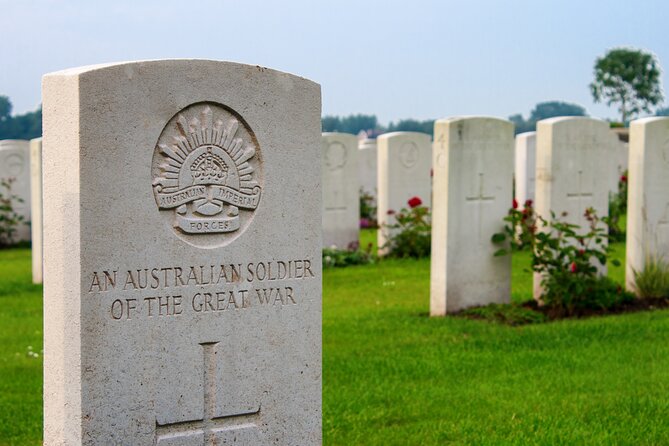
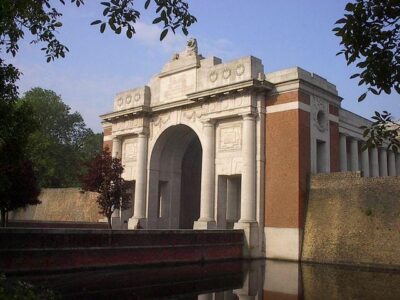
Next comes the Menin Gate Memorial to the Missing. This stop is about one hour, and admission is free.
This is one of those places where the structure matters as much as the message. Your guide will explain the memorial’s significance and talk through how the names are engraved on the walls. It’s not just a sight to photograph, it’s a tool for understanding what “missing” means at this scale.
If you end in the evening, watch Last Post
If your tour ends in the evening, you may get to witness the Last Post Ceremony at 8 PM. It’s described as a daily tribute to the fallen soldiers. Even if you’re not into ceremonies, this part can hit hard because it’s quiet and specific.
Why Menin Gate is a turning point
The emotional logic of the day shifts here. Ypres gives you context, but Menin Gate confronts you with the people who do not have known graves. Once you understand that, the later cemeteries land with more weight.
Stop 3: Tyne Cot Cemetery and the Scale of Commonwealth Loss
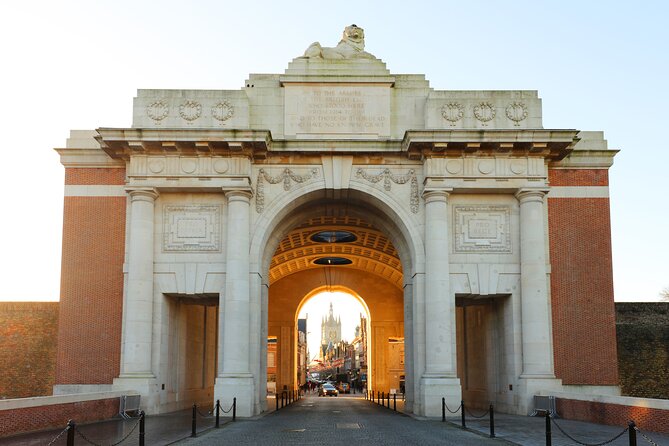
After Menin Gate, you head to Tyne Cot Cemetery. It’s around 45 minutes, with free admission.
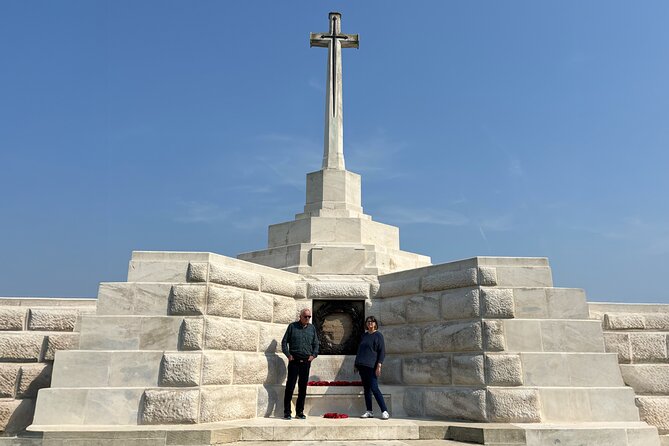
Tyne Cot is described as the largest Commonwealth military cemetery in the world, near Passchendaele. Nearly 12,000 soldiers are resting there, and there’s a striking wall inscribed with names of the missing.
Your guide shares personal stories and explains why this cemetery matters to the UK, Australia, Canada, and New Zealand.
What makes this stop especially worthwhile
Tyne Cot is big enough that it can overwhelm you, but it’s also organized enough that you can still focus. The guide’s context helps you connect individual stories to the collective outcome.
If you’re the type who likes to read memorials carefully, this is a strong match for you.
A practical tip
Bring your attention with you. Spend time at the name areas. If you skim, it becomes just another cemetery. If you pause, it becomes the place where the numbers turn into people.
Stop 4: Memorial Museum Passchendaele 1917 and Trenches Up Close
Now you get the battlefield reality with Memorial Museum Passchendaele 1917. This stop is about one hour, and admission is included.
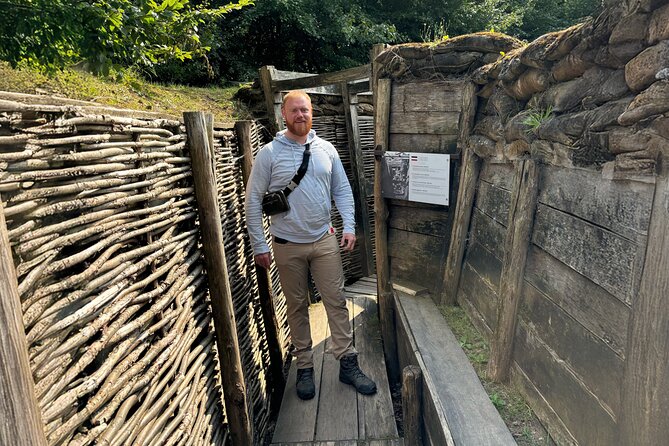
This is where you’ll explore reconstructed trenches, interactive exhibits, and authentic artifacts connected to the Battle of Passchendaele. The point here is not to be entertained. It’s to understand what trench life and battle conditions meant day after day.
Why this works in the overall route
After Tyne Cot’s names and memory, you’re ready for the physical experience of the war. The museum gives you shapes, distances, and the feel of the ground, so later sites like crater areas and woods make more sense.
Possible drawback
If you’re already museum-fatigued, it can be a lot of information at once. In that case, let the guide pick what matters. You’ll likely remember fewer details but understand them better.
Stop 5: Vladslo German War Cemetery and the Grieving Parents Sculpture
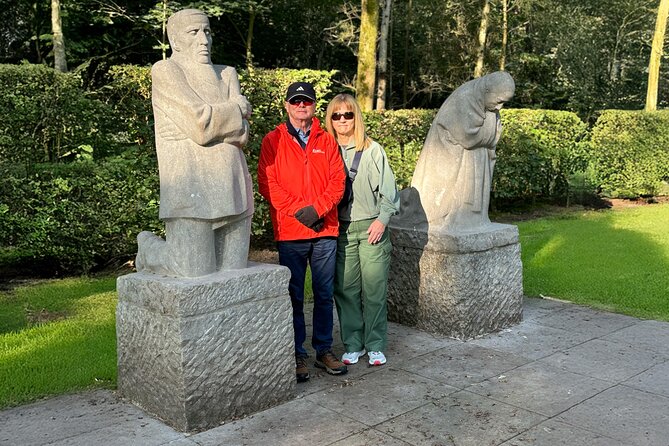
Next is Vladslo German War Cemetery, about 30 minutes with free admission.
This cemetery is the final resting place of over 25,000 German soldiers. It also features the haunting sculpture The Grieving Parents by Käthe Kollwitz. The sculpture was created in memory of her own son, Peter, who died in battle.
Why it’s a powerful balance point
A lot of Western Front tours focus heavily on one side’s perspective. This stop shifts the lens. It reminds you that grief and remembrance are not “who won” issues. It’s about humans, on both sides, losing families.
Possible drawback
Because the emotion is so heavy, some people move through this stop too quickly. If you can, slow down for the sculpture. It’s where the story tends to crystallize.
Stop 6: Flanders Field American Cemetery and the U.S. Footprint
You’ll then visit Flanders Field American Cemetery, about 45 minutes with free admission.
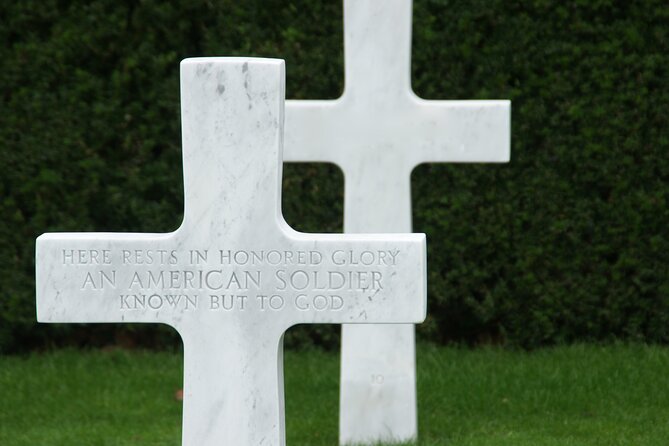
This is described as the only American World War I cemetery in Belgium. It honors 368 fallen American soldiers and includes a chapel with stained glass and engraved maps.
Why U.S. visitors often appreciate this stop
If you’re from the US, this is often the “wait, they were here too?” moment. The cemetery is well kept and designed for quiet reflection, and the engraved maps help you connect the American role to this exact region.
If you’re not traveling from the U.S., you can still appreciate the point: the war was truly multinational, even when it felt distant in everyday life.
Stop 7: Saint Julien Memorial and the First Use of Poison Gas
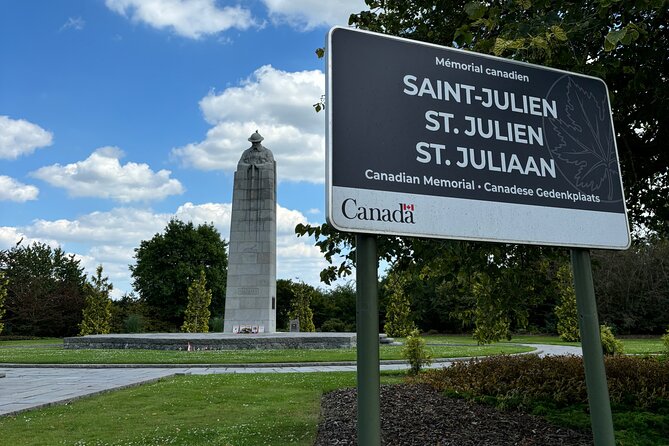
After that, you go to the Saint Julien Memorial, about 30 minutes with free admission.
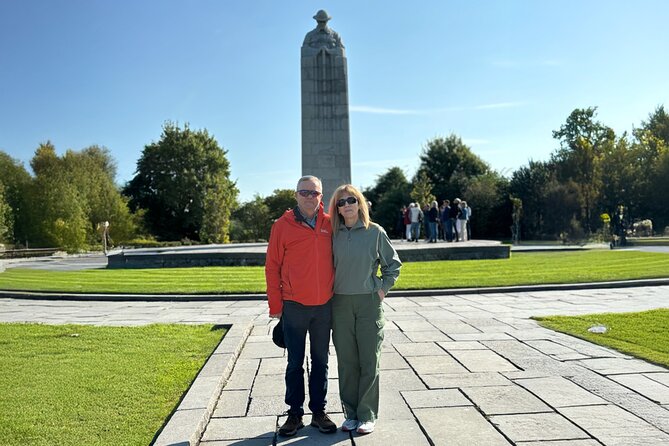
This Canadian monument marks the site where poison gas was first used on the Western Front. There’s also the statue of the Brooding Soldier, described as honoring Canadian troops who held the line during the Second Battle of Ypres in 1915.
Why it matters
This stop gives you a specific moment in the war’s “how it changed” story. You’re not just seeing where battles happened, you’re seeing where methods and horrors evolved.
Possible drawback
The emotional tone can be intense, especially if you don’t know much about the chemical warfare history beforehand. If that’s you, it helps to lean on your guide for context so you’re not left guessing.
Stop 8: Hooge Crater Museum and Underground Mine Explosions
Next is Hooge Crater Museum, about 30 minutes with free admission.
Hooge Crater marks the location of underground mine explosions used in trench warfare. This area changed hands multiple times and became one of the most heavily contested and destroyed sectors near Ypres.
What you’ll likely get from this stop
It’s a concrete reminder that war wasn’t only fought on the surface. The ground itself was part of the battlefield, and the crater is a physical trace of that strategy.
If you’re someone who likes “how did they do it?” questions, this is a good stop. If you want only emotional memorials, it may feel more technical, but it adds crucial understanding.
Stop 9: Polygon Wood Cemetery in the Forest of the Third Battle of Ypres
Then you visit Polygon Wood Cemetery, about 30 minutes with free admission.
Polygon Wood was the site of intense fighting during the Third Battle of Ypres in 1917. Today, it’s a peaceful forest with cemeteries and memorials for soldiers from several nations who fought and fell here.
Why the contrast hits
A quiet forest makes it hard to imagine the violence that happened there. That contrast is part of the point. The guide helps you keep the war timeline in your head while the site does its best to look calm.
Stop 10: Sanctuary Wood Museum at Hill 62, Where Original Trenches Still Show
Next you go to Sanctuary Wood Museum at Hill 62. This stop is about 30 minutes, and admission is included.
Hill 62 is described as one of the rare places where original WWI trenches are still visible. The ridge was fought over because it offered commanding views over Ypres and surrounding battlefields.
Why this stop is a highlight for many people
If you’ve ever felt that trench museums are too “theater,” this is where you see what remains on the ground. Even without going into long technical detail, seeing trench traces makes the day feel more real.
Because the time is short, you’ll get the big points rather than a full archaeological lecture. That’s a good match for a day trip.
Stop 11: Essex Farm Cemetery and the John McCrae Connection
You wrap up at Essex Farm Cemetery, about 30 minutes with free admission.
This is the site where Canadian doctor John McCrae wrote the poem In Flanders Fields. The cemetery includes original bunkers and field dressing stations, giving you a unique look at the medical side of World War I.
Why the medical angle is worth your time
It changes the tone of the day. You’re not only seeing death and destruction, you’re seeing the human response to it. The field dressing stations and bunkers connect war to care, triage, and the impossible job of treating injuries under fire.
The Price: $962.09 for Up to 3, and When It’s Good Value
The price is $962.09 per group for up to three people. That means you’re paying for a private guide, private transport, and a full day of carefully sequenced stops.
Is it worth it? For me, it usually is if one (or more) of these is true:
- You want a private vehicle with pickup so you avoid messy route planning.
- You want to spend time reading names and getting context at memorial sites without feeling rushed.
- You care about a specific story, including family burial research, where a guide’s flexibility can matter.
- You want included museum time at Passchendaele 1917 and Sanctuary Wood, plus free admission at many other stops.
If you’re traveling solo on a tight budget and you’re fine with train changes and self-guided reading, you might find cheaper options. But if you value time, comfort, and a guide who can adapt, this price starts making sense fast.
And one more value point: there’s an optional professional photo and video service included in the tour features. You’re not paying extra for someone to document your day, which can matter if you’re traveling with older relatives or just want memories handled for you.
Who This Tour Fits Best
This is a great match if you:
- Want a structured, high-impact World War I day from Brussels
- Prefer private attention over group logistics
- Care about memorials, cemeteries, and what the names mean
- Want the mix of trench reality plus museums plus multi-nation sites
- Appreciate practical comfort for a long day
It can be a bit much if you want long unstructured downtime at each stop. It’s also emotionally heavy by nature, since the route includes multiple cemeteries and memorials.
Should You Book This World War I Private Tour from Brussels?
I’d book it if you want one day to connect Ypres, Menin Gate, Tyne Cot, and the nearby trench sites into a coherent story you can actually understand and remember. The private structure and the guide support are the difference maker, especially if you have any name-specific goals.
If you’re the type who gets overwhelmed by lots of places in one day, consider whether you can handle short stop windows. For most people, the guide’s pacing and explanations make the short stops feel meaningful rather than rushed.
Bottom line: this is a well-constructed route for people who want a guided day that respects the sites and still keeps things moving.
FAQ
How many people are in a private group?
This is a private tour/activity, with only your group participating, and it’s listed as up to 3 people per group.
How long is the World War I private tour from Brussels?
The duration is about 8 to 10 hours.
What language is the tour offered in?
The tour is offered in English.
Where can the pickup happen?
Pickup is offered from many places: airport, hotel, train station, port, or a custom location you provide.
Are admissions included for the museums?
Passchendaele 1917 and Sanctuary Wood Museum at Hill 62 have admission listed as included. Other stops are listed with free admission.
Is the Last Post ceremony included?
If your tour ends in the evening, you can witness the Last Post Ceremony at Menin Gate at 8 PM, which is described as a daily tribute.
What transportation and comfort are included?
You get an air-conditioned vehicle, private transportation, WiFi on board, bottled water, and onboard entertainment on a tablet.
Is there an option for kids or car seats?
A child car seat is available.
What if I need to cancel?
Free cancellation is offered, and you can cancel up to 24 hours in advance for a full refund.
Can I bring a service animal?
Service animals are allowed.
Reviewed lately in Brussels
- WWII Battle of the Bulge Private Guided Day Tour from Brussels★ 5.0 · 3 reviews
- Taxi Shuttle DE Brussels Airport < - > SPA (1 to 8 SEATS)★ 4.0 · 3 reviews
- Pub Trail Brussels: an adventure full of surprises★ 3.5 · 3 reviews
- Brussels Exploration Game and City Tour on your Phone★ 4.0 · 3 reviews
- Private Day Trip from Brussels to Bruges★ 4.5 · 3 reviews
- Brussels : Must-See Attractions Walking Tour with a Guide★ 4.0 · 3 reviews
- Leuven: City Walk with Audio Guide in 7 Languages on your Phone★ 3.0 · 3 reviews
- Brussels: Museum Halle Gate Entry Ticket★ 4.1 · 3 reviews
Flanders Fields & WWI Battlefields, compared.
From Bruges: Great War Flanders Fields Minibus Tour w/ Lunch
Read our review →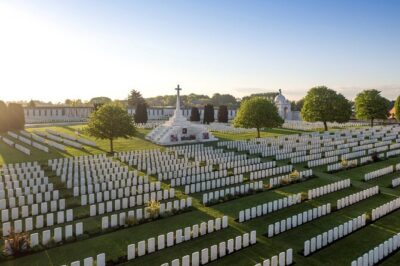
Flanders Fields Remembrance Tour from Brussels
Read our review →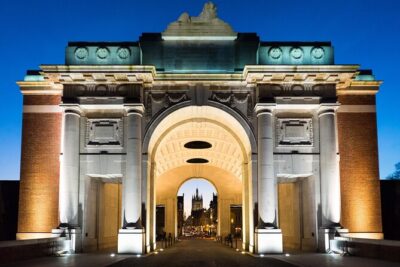
From IEPER Private 4-hour Tour of the Ypres Battlefield
Read our review →
In Flanders Fields and Passchendaele Half Day Morning Tour
Read our review →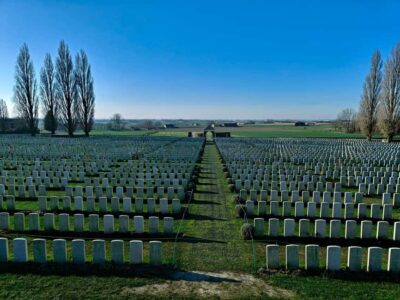
Ypres: An exploration of the deadly salient battlefields
Read our review →
From Bruges: Flanders Fields Remembrance Full-Day Trip
Read our review →
Small Group Ypres Remembrance Day Filled With War History
Read our review →Browse the lists this tour appears in