
Reviewed · BRUSSELS TOURS
Visite guidée : Bruxelles, 1000 Ans de Luttes
Brussels can feel like a postcard until you turn toward the neighborhoods where people fought for space, dignity, and basic survival. This walk through 1,000 years of struggle in and around Les Marolles turns big-city monuments into lived-in stories. I really love the storytelling focus, especially the way the guide connects architecture to everyday hardship and stubborn independence. I also love how the tour uses contrasts, a calm Polish-mass church, a renovation scandal at the justice palace, and the flea market energy at Place du Jeu de Balle.
One thing to consider: it is mostly an on-foot route through tight streets and corners, so if you are sensitive to crowds and uneven walking surfaces, bring good shoes and keep your pace steady. Also, gratuities are not included, with a suggested €10 per person, so factor that in.
Key things you will like on this walk
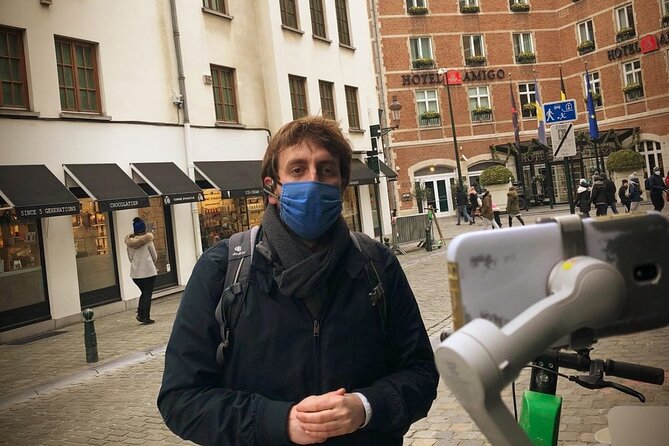
- A local-feeling point of view, with guides who answer questions and keep the tone personal, not textbook.
- Medieval to modern, from a 12th-century church to the long-stalled Palais de Justice renovation story.
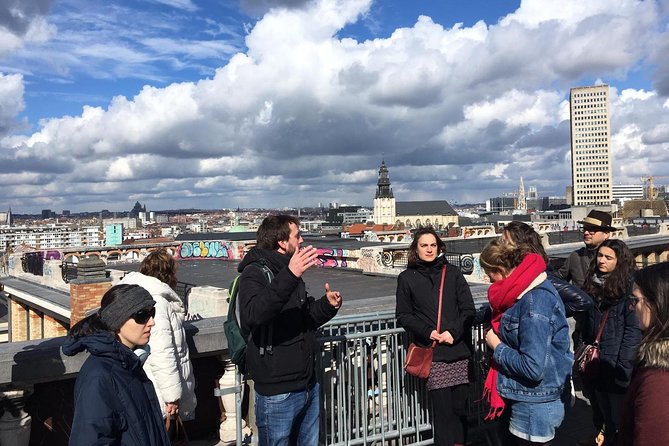
- A view worth the steps, with the elevator from the Marolles giving you a Brussels panorama.
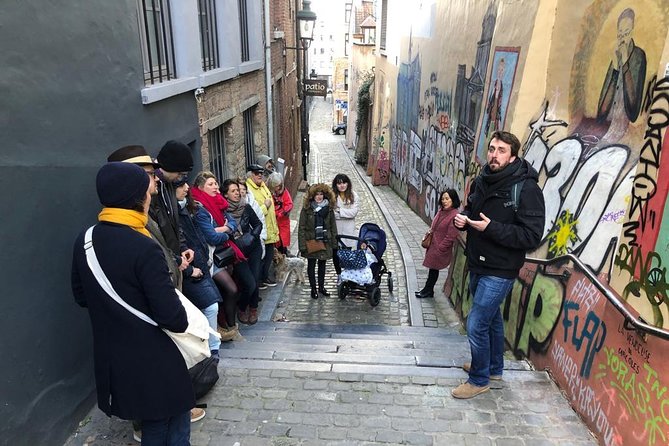
- Les Marolles’ human scale, tiny streets and blind alleys that show you how the neighborhood actually works.
- Place du Jeu de Balle at the right moment, ending at the daily flea market area with places to eat nearby.
Start at Rue de la Chapelle, and get the Marolles angle fast
You begin at Rue de la Chapelle 21, in Brussels 1000, and you end at Pl. du Jeu de Balle 64, right in the Place du Jeu de Balle area. The whole experience is about 2 hours, with a small group capped at 25 people, which helps the guide keep up the pace and still answer questions.
This tour is interesting because it does not treat Brussels like a museum. You will move from a medieval church to the story of Belgium’s public works problem, then into the neighborhood life of Les Marolles, where the past is still visible in street patterns.
More days in Brussels:
- Brussels: Atomium Entry Ticket with Design Museum Ticket
★ 4.4 · 9,254 reviews - From Brussels: Guided Day Trip to Bruges and Ghent
★ 4.6 · 8,353 reviews - From Brussels: Bruges & Ghent Day Tour – 2 Fairytale Cities
★ 4.7 · 8,242 reviews
Église Notre-Dame de la Chapelle: 12th-century stone with a living Sunday rhythm
The first stop is Église Notre-Dame de la Chapelle, a church dating back to the 12th century. On top of that ancient setting, it hosts painting exhibitions and holds mass in Polish every Sunday. That mix matters, because it shows you the building is not frozen in time. It keeps doing what churches were meant to do, bring people together.
When you arrive, take a minute to slow down. This is the kind of place where you start hearing the theme of the walk: survival, community continuity, and identity carried forward in the middle of a changing city.
Practical note: this stop is short, about 10 minutes, so focus on the feel of the place rather than trying to absorb everything at once.
Palais de Justice: the Belgium scandal story you can actually see
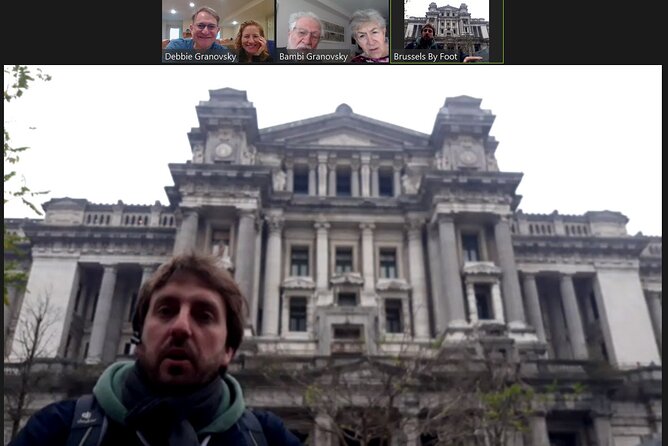
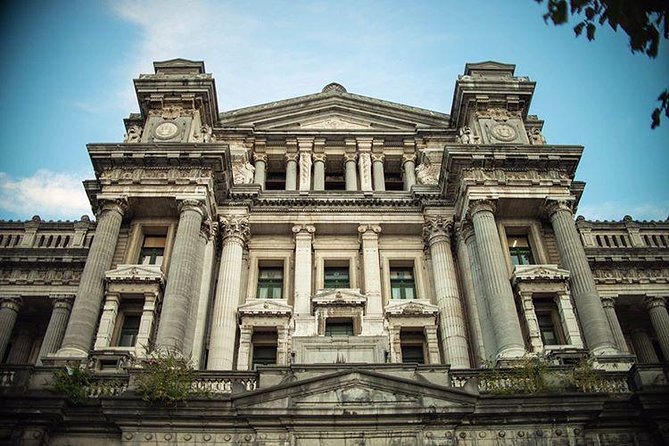
Next up is Palais de Justice. The big idea here is that the renovation began about 40 years ago and has never fully finished. Your guide frames it as a classic public money scandal, and you will likely find yourself thinking about civic promises the way locals must, because the building has always looked like a work in progress.
This stop is usually where monuments go from impressive to meaningful. Instead of just describing the palace, the guide uses it as a springboard to talk about public priorities, delays, and how large institutions affect real neighborhoods around them.
Expect about 15 minutes here. It is enough time to understand the story and look at the scale, but not enough to turn it into a long sit-down history lesson.
Ascenseur des Marolles: a practical viewpoint, not a tourist gimmick
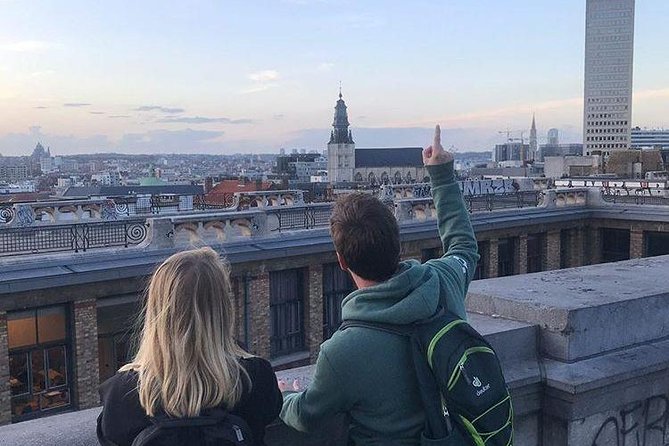
Then you get to the Ascenseur des Marolles, an elevator that gives you one of the best viewpoints over Brussels from this side of town. The stop itself is brief, around 5 minutes, but it packs a lot of value. From up high, you start to understand how the city’s blocks, roofs, and street layers connect.
What I like about this part is that it is functional. You do not just climb for photos, you climb to read the neighborhood.
If you are coming in on a day with good visibility, this is one of those moments where the tour payoff is quick and satisfying.
Something different while you are in Brussels:
- Choco-Story Brussels: Chocolate Museum Entrance with Tasting
★ 4.3 · 4,883 reviews - Bruges and Ghent – Belgium’s Fairytale Cities – from Brussels
★ 4.0 · 4,809 reviews - Brussels: Hop-On Hop-Off Bus Tour
★ 4.0 · 4,016 reviews - Brussels: Guided Walking Tour
★ 4.6 · 3,560 reviews
Les Marolles district: tiny streets, blind alleys, and stubborn independence
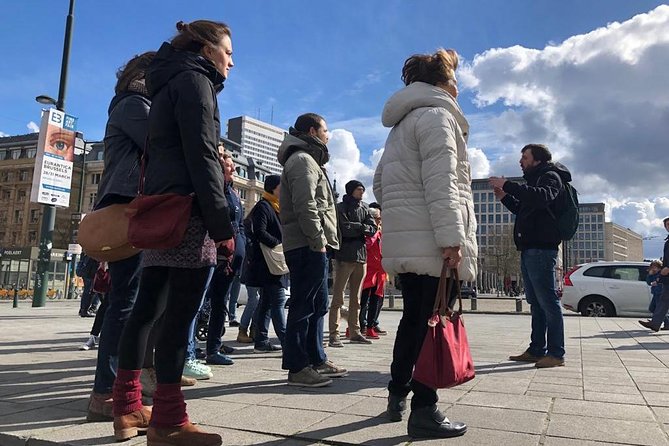
The heart of the walk is the Marolles neighborhood itself. This is described as a quieter, poorer area in central Brussels, but the tour makes clear it is not quiet in history or character. You will weave through tiny streets and blind alleys, and the guide points out what those shapes tell you about how people lived.
This is where the tour earns its reputation for being more than a list of sights. You get a social-history angle: living conditions over centuries, the progress and pressure faced by disadvantaged residents, and the independence that kept communities moving. One review highlight I would echo is how the tour makes you aware of visible and invisible borders within Brussels, and how Les Marolles sits in that picture.
Do not expect polished streets and postcard symmetry here. What you will get is a real neighborhood texture, the kind that makes you understand why people resisted change when it threatened their survival.
The time for this section is about 20 minutes. It is long enough to feel the district, short enough that the guide can keep it energetic.
Place du Jeu de Balle: daily flea market energy and a conservation fight
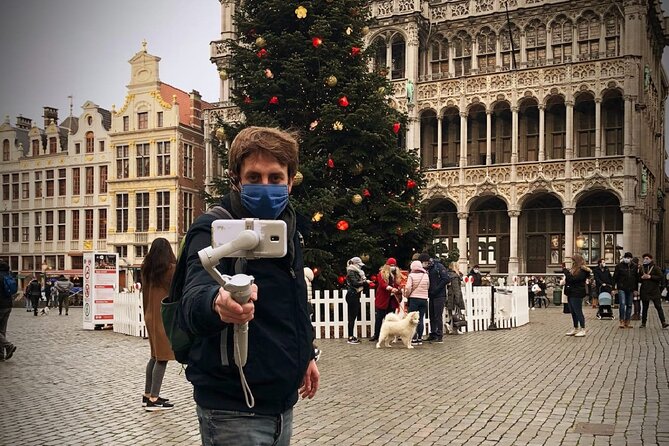
You finish at Place du Jeu de Balle, starting with the daily flea market scene. The market is tied to the tour’s theme of struggle and persistence, including how people work to keep the area conserved and cared for.
This final stop is about 10 minutes, but it is designed to land you in the right place at the right time. After the walk, you can step into the surrounding bars and restaurants around the square and grab a drink or a meal while the stories are still fresh.
If you want a smooth transition from history to food, this is a smart ending. You do not have to go hunting for somewhere to eat in a new neighborhood right after a walking tour.
Price and value: why this feels like a deal on the ground
The price shown is $3.62 per person for an experience lasting about 2 hours, with a mobile ticket and English language service. That is the headline number, but the value comes from what is built in: entrance fee and registration fees are included.
Then there is the one cost you should plan for: gratuities of €10.00 per person are not included. If you like good guides who stop to answer questions and shape a tour into a story you remember, budget for that tipping amount. It is also a signal that the operator expects you to support the guide directly.
In practice, you are paying for an angle, not just access. This walk turns major city structures and small neighborhood corners into a single narrative about how Brussels has changed, and what it did not manage to fully erase.
Language, group size, and how the walk stays enjoyable
The tour runs in English, and the group size max is 25 travelers. That size matters. Big enough to feel like a group, small enough that the guide can keep control, track time, and handle questions without turning every stop into a long wait.
Most people can participate, and the route works well if you are comfortable walking in city conditions for roughly two hours. Service animals are allowed, which is helpful if that is part of your planning.
Also, you are near public transportation, so you can easily connect this tour to the rest of your day in Brussels.
Who should book this walk, and who might not love it
This is a great choice if you like social history done in a street-level way. If your travel style is, I want context, not just sights, you will probably click with this tour’s focus on lived experience, neighborhoods, and how the city’s power shows up in stone and bureaucracy.
You may want to consider another option if you want long museum-style time at a single site. The stops are short and efficient, like a good conversation, not a slow lecture. This is about movement and story, not about deep independent sightseeing inside one building for an hour.
Practical tips so you feel comfortable during the 2 hours
- Wear comfortable shoes. Les Marolles streets can feel tight and the route includes corners and alleys.
- Bring a light layer. Churches and open squares can swing in temperature depending on the day.
- If you care about photos, do it intentionally at the elevator viewpoint and at the Place du Jeu de Balle square area. The other stops are more about noticing details than taking endless pictures.
- If you have questions about Belgium’s public works and why renovation projects get stuck, this tour is built for that. The strongest moments come when the guide explains the why behind what you see.
- Plan your next stop close by. The tour ends in a food-and-drink zone around the square, so it is easy to keep momentum.
Should you book this Brussels 1,000 Years of Struggles walk?
If you want Brussels beyond the usual postcard loop, I think it is an easy yes. You will get medieval architecture, a major civic building with a very human problem behind it, a viewpoint that helps you read the city, and a neighborhood walk that centers ordinary people and real streets.
It is especially worth booking if you are the type who enjoys a guide who can turn “what am I looking at?” into a clear story. Names like Francois, Simon, and Thomas show up in the praise for a reason, they are presented as passionate, attentive, and good at answering questions.
The only real reason to skip is if you do not like walking through older city streets or you want a slower, strictly monument-based day. Otherwise, this is one of the more memorable ways to understand why Brussels feels complicated, and why Les Marolles has stayed itself.
FAQ
Is the tour offered in English?
Yes, the tour is offered in English.
How long is the tour?
The duration is about 2 hours.
Where does the tour start and end?
It starts at Rue de la Chapelle 21, 1000 Bruxelles, Belgium and ends at Pl. du Jeu de Balle 64, 1000 Bruxelles, Belgium, in the middle of the square.
What is the group size limit?
The tour has a maximum of 25 travelers.
Is there an entrance fee included?
Yes. Entrance fee and registration fees are included.
Are tips included in the price?
No. Gratuities €10.00 per person are not included.
Do I need a paper ticket?
No. You get a mobile ticket.
When will I receive confirmation?
You receive confirmation at the time of booking.
Is it suitable for most people?
Yes. The information says most travelers can participate.
Is the tour accessible by public transportation?
Yes. It is near public transportation.
Are service animals allowed?
Yes. Service animals are allowed.
Reviewed lately in Brussels
- WWII Battle of the Bulge Private Guided Day Tour from Brussels★ 5.0 · 3 reviews
- Taxi Shuttle DE Brussels Airport < - > SPA (1 to 8 SEATS)★ 4.0 · 3 reviews
- Pub Trail Brussels: an adventure full of surprises★ 3.5 · 3 reviews
- Brussels Exploration Game and City Tour on your Phone★ 4.0 · 3 reviews
- Private Day Trip from Brussels to Bruges★ 4.5 · 3 reviews
- Brussels : Must-See Attractions Walking Tour with a Guide★ 4.0 · 3 reviews
- Leuven: City Walk with Audio Guide in 7 Languages on your Phone★ 3.0 · 3 reviews
- Brussels: Museum Halle Gate Entry Ticket★ 4.1 · 3 reviews
Brussels Tours, compared.
Brussels: Atomium Entry Ticket with Design Museum Ticket
Read our review →
From Brussels: Guided Day Trip to Bruges and Ghent
Read our review →
From Brussels: Bruges & Ghent Day Tour – 2 Fairytale Cities
Read our review →
Choco-Story Brussels: Chocolate Museum Entrance with Tasting
Read our review →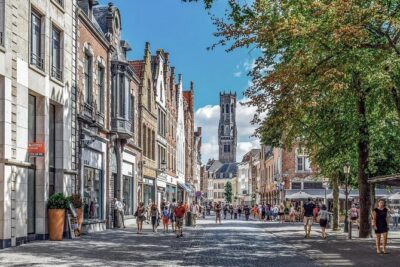
Bruges and Ghent – Belgium’s Fairytale Cities – from Brussels
Read our review →
Hungry Mary’s Famous Beer and Chocolate Tour in Brussels
Read our review →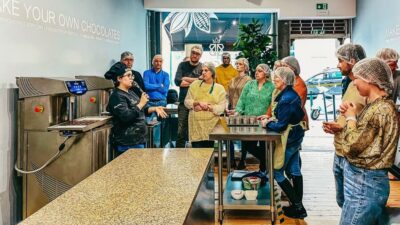
Brussels: Belgian Chocolate Making Workshop with Tastings
Read our review →Browse the lists this tour appears in