
Reviewed · FLANDERS FIELDS & WWI BATTLEFIELDS
Flanders Fields Remembrance Tour from Brussels
A Flanders Fields remembrance day trip is interesting because it strings together real places from the First World War, so the history is not just something you read, it’s something you stand inside. This route focuses on the spots that hit hardest, from quiet cemeteries to the formal evening tribute at Menin Gate, and it’s guided by an expert who ties the pieces together into a clear story.
Two things I really like are the chance to see Käthe Kollwitz’s Grieving Parents at the Vladslo German Military Cemetery, and the evening Last Post Ceremony in Ypres. Both moments have a way of making the day feel personal without turning it into a show.
One consideration: this is a long coach day, about 13 hours, with lots of stops and time on your feet. If you are not a fan of crowded schedules and late finishes, it can feel like too much.
Key highlights you will not want to miss
- Käthe Kollwitz’s Grieving Parents sculpture at Vladslo, one of the most moving memorial artworks tied to the war
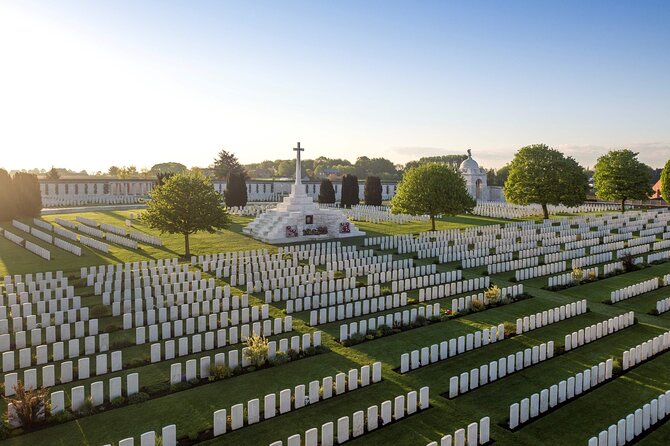
- Tyne Cot Commonwealth War Graves Cemetery, the largest Commonwealth cemetery in the world, with about 35,000 graves
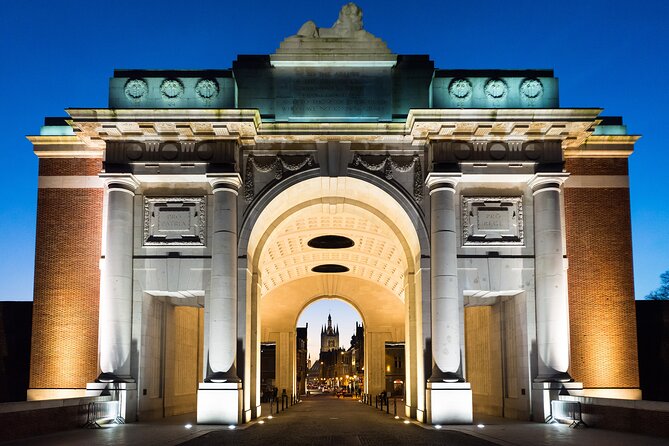
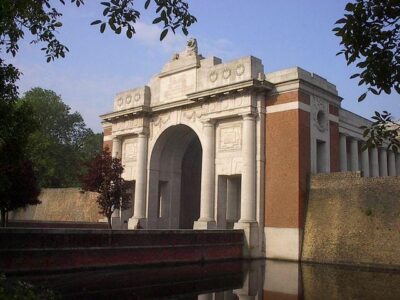
- Last Post at Menin Gate in Ypres, a daily tribute for Commonwealth soldiers and officers missing after battle
- John McCrae’s Essex Farm Field Hospital area, linked to how his poem In Flanders Fields came to life
- Passchendaele, where a devastating battlefield later became a calm, everyday town you can walk through
A Brussels-to-Ypres WWI route that feels like a guided memorial walk
This tour is built like a long, respectful circuit through the Ypres Salient. You start in Brussels and head into West Flanders, working your way through cemeteries, battle sites, and museums, then ending where many people feel the emotional weight of the day at Menin Gate.
The coach ride is comfortable, with air-conditioning, and you get a professional multilingual guide (the tour here is offered in English). Radios and earphones are included, which is a lifesaver when your group grows talkative or the road noise rises.
Price-wise, $113.72 per person is not “cheap,” but you are paying for a full-day guided route, transportation, and the ability to hit multiple major sites in one go. Most entrances are free on this program, so you are not stacking ticket costs on top of the tour price. The real cost is time and energy.
More days in Brussels:
- Brussels: Atomium Entry Ticket with Design Museum Ticket
★ 4.4 · 9,254 reviews - From Brussels: Guided Day Trip to Bruges and Ghent
★ 4.6 · 8,353 reviews - From Brussels: Bruges & Ghent Day Tour – 2 Fairytale Cities
★ 4.7 · 8,242 reviews
Vladslo German Military Cemetery and Grieving Parents: where quiet becomes the point
Your first major stop takes you to Vladslo, at the Deutscher Soldatenfriedhof Vladslo, also called the Vladslo German War Cemetery. This is the kind of cemetery where you instinctively start speaking softer, even before you fully understand why.
The star is the sculpture by Käthe Kollwitz, Grieving Parents. It is hard to explain what it does to you without sounding dramatic, but here’s the practical takeaway: it gives you a visual anchor for the human cost of war. You look at a family grief symbol, then you look at rows of graves, and suddenly the war stops being an abstract timeline.
Admission is free for this stop, and the visit is paced enough that you can actually slow down. Just wear comfortable shoes. Cemetery ground can be uneven, and you will likely walk more than you expect, even if the overall itinerary says “explore.”
Diksmuide and the Brooding Soldier: Canadian sacrifice tied to gas warfare
Next you head to Diksmuide, where you see the monument of the Brooding Soldier dedicated to the sacrifice of 2,000 Canadian soldiers during the first German gas attack. This is not a cemetery, and that matters, because it shifts the tone from mourning to remembrance-in-stone.
This stop works well because it reminds you that WWI was not only artillery and mud. Chemical warfare changed what “surviving” even meant, and monuments like this are a way the community keeps that specific horror from slipping into general WWI memory.
Admission is also listed as free here, so you are not paying extra to make the stop worthwhile. The guide is there to connect the marker to what was happening in the region, rather than leaving it as a photo opportunity.
Flanders Fields Museum plus Passchendaele: from slogans to soldier life
After a lunch break, the tour heads to the Flanders Fields Museum, one of the best ways to turn scattered battlefield facts into a coherent story. The museum visit is designed to explain how the war unfolded and, crucially, what conditions were like for soldiers, including the dank, miserable realities of the trenches.
This part is valuable even if you already know the big names. Museums like this help you understand why soldiers endured the unimaginable. You start to connect what you see outside, the cemeteries and battlefields, to why those sites became what they are.
Then you go to Passchendaele, stopping at the battlefield for about 30 minutes. Admission is free for this stop, but the time is short, so treat it like a “get your bearings” moment rather than a long hike. Passchendaele is often discussed as a symbol of ruined endurance, and this stop also helps you see how a place shaped by blood later became a quiet part of modern Belgium.
Something different while you are in Brussels:
- Choco-Story Brussels: Chocolate Museum Entrance with Tasting
★ 4.3 · 4,883 reviews - Bruges and Ghent – Belgium’s Fairytale Cities – from Brussels
★ 4.0 · 4,809 reviews - Brussels: Hop-On Hop-Off Bus Tour
★ 4.0 · 4,016 reviews - Brussels: Guided Walking Tour
★ 4.6 · 3,560 reviews
Tyne Cot: the cemetery stop that reframes the whole trip
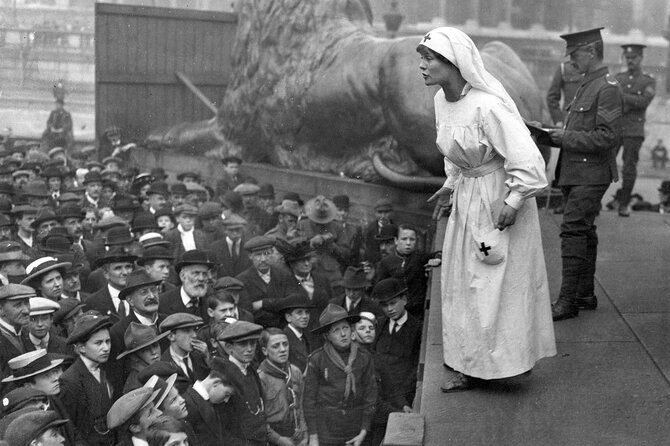
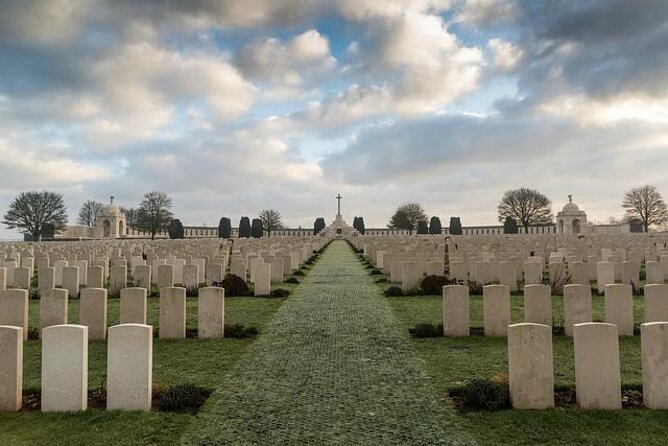
Few places in West Flanders hit as hard as Tyne Cot Commonwealth War Graves Cemetery, the largest Commonwealth cemetery in the world. The scale is the point: about 35,000 graves, with British, Australian, and Canadian soldiers resting there.
I love this stop because it gives the tour a clear emotional structure. Earlier sites offer specific stories and specific art. Tyne Cot widens the view into something larger and more equalizing, the kind of remembrance that does not need extra explanation to be understood.
Admission is free, and the tour includes enough time for you to walk the rows and take in the layout. Here’s a practical tip: pause more often than you think you should. At a cemetery this large, your feet and attention can drift into autopilot. If you keep stopping on purpose, you’ll absorb more.
Essex Farm Field Hospital, Hill 60 tunnels, and why poetry still matters
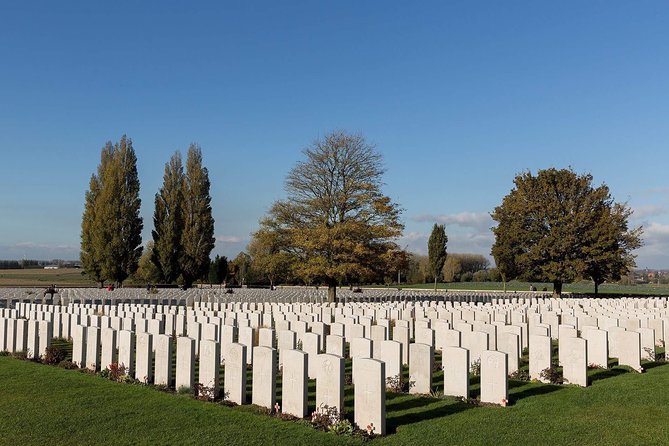
Two more stops turn the day from mourning into “how did it happen” details.
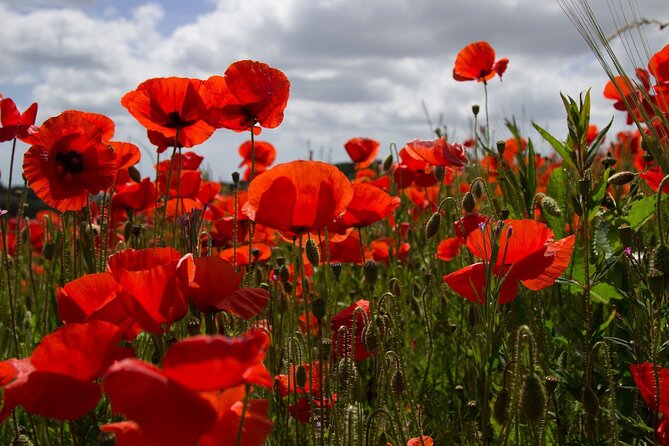
First is Essex Farm Cemetery, tied to the dressing station where Dr. John McCrae wrote his poem, In Flanders Fields. Even if you have never read the poem closely, seeing the connection on-site changes how you understand it. You start to see the words not as a school assignment, but as a human attempt to hold meaning while everything fell apart.
This stop is shorter, about 15 minutes, so make it count. If you are the type who wants to read every plaque, adjust your expectations and use the guide to point you toward what to focus on.
Then the itinerary includes Hill 60, known for strategic tunnels. Seeing this part of the battlefield landscape helps you remember WWI was also a battle of underground movement, engineering, and positioning. The tunnels explain why the ground itself was a weapon, not just a setting.
Ypres time, then Menin Gate at 8 pm: the Last Post moment
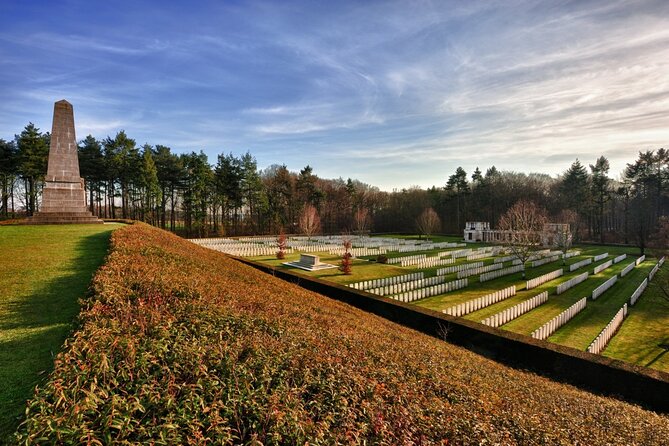
After Hill 60, you end up in Ypres, with time for independent exploration and dinner on your own expense. The important thing here is to treat this break as real recovery time. You have been on a coach all day, you’ve walked through memorial spaces, and your emotions will be higher than normal. Eat something, drink water, and give your brain a reset.
When it’s time to return, you meet your guide again for the Last Post Ceremony at Ypres’ Menin Gate at 8 pm. This is described as a daily tribute to Commonwealth soldiers and officers missing after battle, and the atmosphere is typically quiet, formal, and focused.
The ceremony does not last forever. What matters is that you show up ready to stand through it. If you want photos, take them earlier. Once the tribute begins, the respectful play is to stay present and let the moment land.
Finally, you return to Brussels by coach.
Price and logistics: what you gain, and where the day can feel long
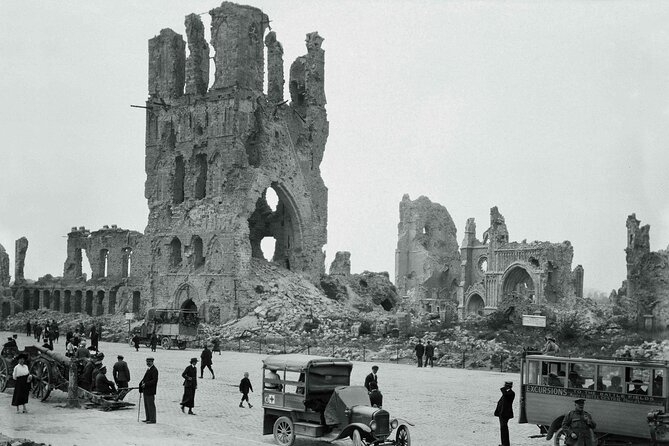
Let’s talk straight about the “how does it feel” side of a 13-hour route.
The upside is efficiency. You are not spending your day driving between scattered WWI sites, plus you get an expert guide to connect events and geography. That matters in Flanders, where places can look similar from a distance, but each cemetery, monument, and trench-related site carries its own meaning.
You also get a comfortable vehicle with air-conditioning, and the tour provides radios and earphones when needed, so you should be able to follow the guide without craning your neck.
The common drawback is simply the long day. You start at 9:15 am and you are back later in the evening after the ceremony. Even with the best pacing, this is still a full day of scheduled stops.
Another logistics detail to keep in mind: while the tour is structured around the main WWI sites, some departures can include extra driving time for pick-ups and drop-offs beyond the direct route. If you are sensitive to delays, build a little flexibility into your day planning in Brussels.
Who should book this Flanders Fields remembrance tour
This is a strong fit if you want a guided “greatest hits” version of the Ypres Salient: Vladslo, Tyne Cot, Passchendaele, Essex Farm, and Menin Gate in one day.
It’s also a good option if you like clear narrative structure. A well-told guide makes the difference between seeing sites and understanding them. Many people come away focused and moved, not just tired.
Because it involves walking on cemetery grounds and standing for the ceremony, I suggest it for people with moderate physical fitness. Comfortable shoes are not optional on this one. If you are traveling with teenagers, it can work well for curious older kids, but plan for a long, emotional day, not a casual sightseeing sprint.
Should you book? My practical take
If you have limited time in Brussels and you want an organized, respectful route through the places tied to WWI remembrance, this tour is an easy yes. The value comes from the combination of transportation, expert guidance, and the emotional payoff of Menin Gate in the evening.
I would hesitate only if you know you hate long coach days, dislike frequent boarding and disembarking, or you strongly prefer to control your own pacing across fewer sites. Otherwise, for a first-time trip to Flanders Fields, this is a very solid way to get your bearings and leave with a sharper understanding of what you are seeing.
FAQ
Where do I meet the tour, and what time does it start?
You meet at Bd de Berlaimont 18, 1000 Bruxelles, Belgium. The start time is 9:15 am.
Is the tour offered in English?
Yes. This experience is offered in English.
Is lunch included in the price?
No. Lunch is not included.
How much free time will I have during the day?
You get free time on every excursion, except within Brussels. The exact amount varies by stop, and the itinerary includes independent time in Ypres for dinner on your own expense.
Does the coach have air-conditioning?
Yes. The coaches are equipped with air-conditioning (AC).
What is the cancellation policy?
You can cancel for a full refund up to 24 hours before the experience’s start time. Free cancellation is available as long as you meet that cutoff.
Reviewed lately in Brussels
- WWII Battle of the Bulge Private Guided Day Tour from Brussels★ 5.0 · 3 reviews
- Taxi Shuttle DE Brussels Airport < - > SPA (1 to 8 SEATS)★ 4.0 · 3 reviews
- Pub Trail Brussels: an adventure full of surprises★ 3.5 · 3 reviews
- Brussels Exploration Game and City Tour on your Phone★ 4.0 · 3 reviews
- Private Day Trip from Brussels to Bruges★ 4.5 · 3 reviews
- Brussels : Must-See Attractions Walking Tour with a Guide★ 4.0 · 3 reviews
- Leuven: City Walk with Audio Guide in 7 Languages on your Phone★ 3.0 · 3 reviews
- Brussels: Museum Halle Gate Entry Ticket★ 4.1 · 3 reviews
Flanders Fields & WWI Battlefields, compared.
From Bruges: Great War Flanders Fields Minibus Tour w/ Lunch
Read our review →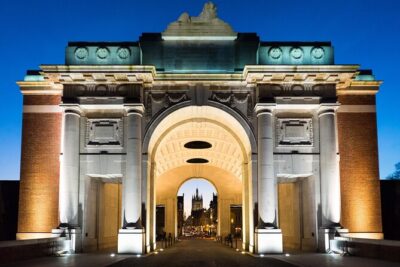
From IEPER Private 4-hour Tour of the Ypres Battlefield
Read our review →
In Flanders Fields and Passchendaele Half Day Morning Tour
Read our review →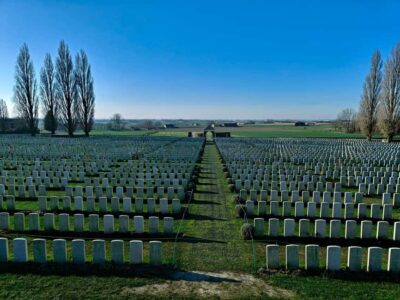
Ypres: An exploration of the deadly salient battlefields
Read our review →
From Bruges: Flanders Fields Remembrance Full-Day Trip
Read our review →
Small Group Ypres Remembrance Day Filled With War History
Read our review →
From Ypres, The Christmas Truce to Passchendaele Ypres Based WW1 private tour
Read our review →Browse the lists this tour appears in