
Reviewed · FLANDERS FIELDS & WWI BATTLEFIELDS
Ypres: An exploration of the deadly salient battlefields
This is the kind of tour that makes World War I feel real, fast. You are not just reading about the Ypres salient, you are standing in the same ground where the fighting and the aftermath happened, from trench lines to major CWGC cemeteries. I love that the guide ties it all together with the casualty system and CWGC context, so the memorials make sense. I also like the time at Yorkshire Trench and Dug-out, because you get a real feel for how brutal and close-quarters this war was.
One thing to consider: the subject is heavy, and the day is fairly packed. If you want slow, wandering time with lots of silence, you may feel the schedule moving along a bit quicker than you’d like.
Key points to know before you go
- Small group, max 7 people means you get a more human pace and the guide can adjust to your questions.
- Trench warfare on your feet at Yorkshire Trench and Dug-out, not just photos from the car window.
- CWGC and the casualty system explained clearly, so you know what you are looking at in each cemetery.
- Tyne Cot Cemetery’s scale is the big moment, and it is tied to the CWGC’s role in how the war is remembered.
- Two perspectives of the conflict, with Langemark German Cemetery alongside Allied memorial sites.
- Passchendaele battlefields drive-by view, so you understand how the ground itself shaped the fighting.
The Ypres salient, explained on the ground
Ypres is one of those places where the history does not sit politely behind glass. It is out there in the open, in the shape of graves, memorial stones, and trench remains. The war was fought in a tight patch of Belgium where fields, roads, and water management mattered as much as soldiers.
What makes this tour especially effective is the way it builds from cause to consequence. You start with the setup for the Great War and the logic behind how Commonwealth graves are recorded. Then you move through sites that show different parts of the story, including where people fought, where they were buried, and how later generations tried to restore meaning.
And yes, it is sobering. You are going to see the human cost in ways that are hard to shake off. Still, the best part is that the tour does not treat tragedy like a theme park. It gives you a framework for understanding what you are seeing, and it does so in plain language.
More around Ypres:
- From IEPER Private 4-hour Tour of the Ypres Battlefield
★ 5.0 · 154 reviews - In Flanders Fields and Passchendaele Half Day Morning Tour
★ 5.0 · 117 reviews - From Ypres, The Christmas Truce to Passchendaele Ypres Based WW1 private tour
★ 5.0 · 29 reviews
Getting there in a 7-person van, starting and ending in Ypres
This is a small-group tour limited to 7 participants, using a minivan for transport between sites. The ride time matters here because the sites are spread out, and you want a guide who can keep the pace moving without feeling rushed.
You get pickup and drop-off at an agreed location in Ypres. Expect short van legs between stops, then guided time at each key location. The van is described as clean and comfortable, and it is kept warm, including during winter visits. That sounds like a small detail, but on a day with lots of standing around, it makes a real difference.
One practical tip: bring comfortable shoes. You will be on your feet for memorial areas and cemetery paths. If your walking is limited, you should still consider the tour, but think ahead about where you might need extra pacing during guided segments.
Essex Farm Cemetery: the tone-setter with guided time
The day begins with Essex Farm Cemetery, with a full guided hour. That matters because this is where the tour’s emotional and historical tone is set. Cemeteries like this are not just “pretty spots” or a quiet photo stop. They are organized records of loss, and the layout helps you read the scale of what happened.
In many battlefield tours, you get the drama but not the system behind it. Here, the guide uses the CWGC framework and casualty approach to help you understand what the stones represent. Once you grasp that, you stop seeing the cemetery as a blur of names and start recognizing patterns, individual stories, and the way the war’s dead were accounted for after the fighting.
The guided time also gives you a chance to ask questions. If you are tracing a family line, or you want to know how graves and records were managed, this is one of the easiest moments in the itinerary to get the answers.
Yorkshire Trench and Dug-out: the war at close quarters
Then comes the most physically immediate stop: Yorkshire Trench and Dug-out. You get guided time here (about 25 minutes), but the effect can last longer than that. Trench warfare was not abstract. It was narrow space, constant threat, and conditions that wore people down long before combat ended them.
I like this stop because it is a reality check. You can read about trenches at home. But standing in and looking out from a trench shape, even with limited time, gives your brain a better map. You start to understand why small differences in positioning mattered and why visibility, cover, and movement were so dangerous.
If you are the type who likes history with visuals, this is a strong point too. Guides on these tours often use photos and maps to connect what you see on the ground to what the units faced. Even when you are not a military-history nerd, it clicks fast.
Something different while you are in Ypres:
- From Ypres: WWI Battlefields Private Tour
★ 5.0 · 25 reviews - Bellewaerde Aquapark Entrance Ticket
★ 4.4 · 19 reviews - Ypres Battlefields and Passchendaele Museum Full Day Tour
★ 5.0 · 10 reviews - Full Day Canadian WW1 Vimy and Somme Battlefield Tour from Ypres
★ 5.0 · 6 reviews
John McCrae memorial and the casualty system
One of the most praised parts of the tour is the explanation of the casualty system, plus time at the John McCrae memorial. This is a key shift. It takes you from “what happened” to “how the aftermath was documented.”
Why that matters: memorials are not random collections of names. They connect to recordkeeping, battlefield recovery, and the long work of the Commonwealth War Graves Commission. When you understand that system, you stop treating each headstone as just a person you will never know and start seeing them as part of a carefully maintained historical record.
The John McCrae connection also helps you feel the human side of the war. McCrae is strongly tied to how people expressed grief and meaning in the period, and the memorial gives that emotion a specific, grounded place to attach to.
Even if the war subject makes you uncomfortable, this is often the point where people feel they learned something concrete. You leave with a clearer sense of how remembrance is built.
St Julien Canadian War Memorial and Vancouver Corner’s Brooding Soldier
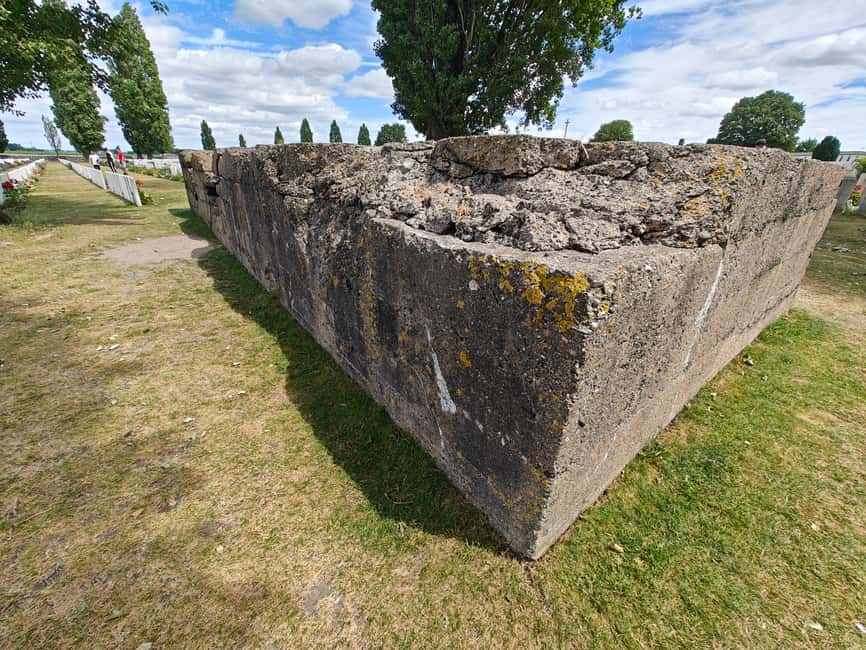
Next up is St Julien Canadian War Memorial, with guided time around 25 minutes. This is one of those stops that balances scale with focus. A memorial like this highlights how national contributions were recognized, and it also helps you place the Canadian role in the wider fight around Ypres.
You also visit the Brooding Soldier at Vancouver Corner. That kind of landmark is designed to do more than mark a location. It gives you a place for your attention, and it nudges you into reflecting on the human cost instead of only the military moves.
I like pairing these two because they change the way you interpret the day. Earlier stops might feel like “where fighting happened.” These memorial points feel more like “how later generations chose to remember the people who did not come home.”
Langemark German Cemetery: learning the German perspective
A standout feature of this tour is that it does not limit itself to one side. You visit Langemark German Military Cemetery, with guided time around 45 minutes, and the focus includes the German perspective.
This is valuable even if you already know the basics of the war. When you see how graves and remembrance work for the opposing side, the war’s impact feels more universal. It also makes it easier to understand that the fighting created losses on all sides, not just one national narrative.
Langemark is especially meaningful because it forces you to widen your lens. You are not just walking through a victory storyline. You are looking at the full human footprint of the conflict in one of its most intense areas.
This stop can also be emotionally intense for people, because it asks you to relate to individuals as individuals, even when they belonged to the side you might not identify with. That is not comfortable, but it is honest.
The Passchendaele battlefields drive: seeing the ground’s role
One part of the day is a drive across the Passchendaele battlefields to see the setting and how it shaped the fighting. You do not get hours to roam on your own, but you do get a guided look at the terrain as you travel between points.
This matters because WWI in Flanders was not fought on a simple battlefield. It was a war affected by conditions, movement limits, and how the land could help or hinder an advance. Seeing the area from the road helps you connect the memorials and trenches to something more practical: geography.
I also like that this portion keeps the itinerary moving. After longer cemetery time, a drive gives you a chance to reset, listen, and still stay in “understand mode” instead of “transport mode.”
If you are the type who gets motion sick easily, you might want to plan for it like any van ride. But overall, the structure keeps you oriented rather than lost.
Tyne Cot Cemetery: the CWGC scale moment you will remember
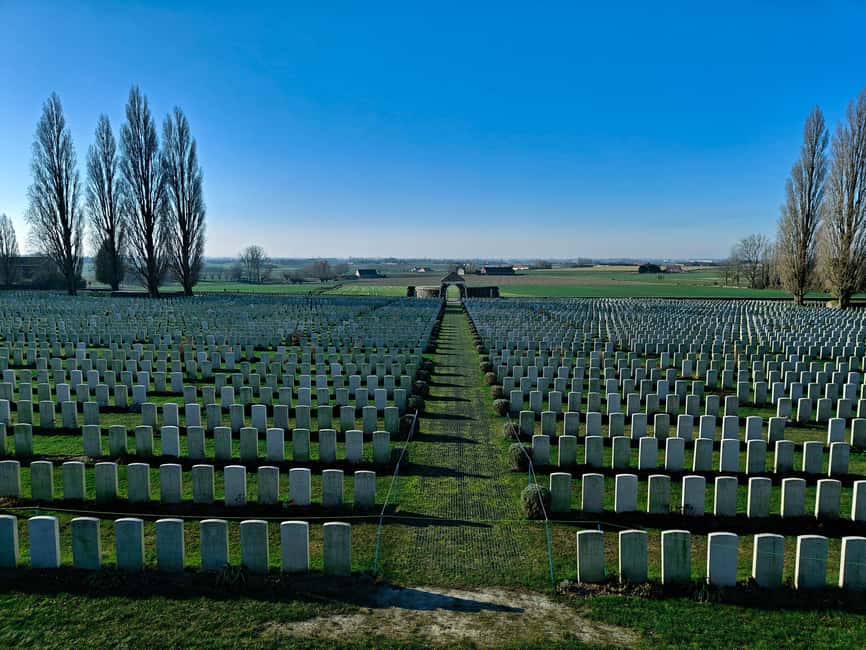
Then you reach the big one: Tyne Cot Cemetery. You get guided time around 45 minutes, and this is described as the largest CWGC cemetery in the world. Even without focusing on exact comparisons, the scale hits you immediately.
This is the stop where the CWGC work becomes impossible to ignore. The cemetery is a physical reminder of how many lives were lost and how much effort went into collecting, recording, and honoring those who died. If earlier stops helped you understand the system, Tyne Cot lets you feel the scale of what that system had to handle.
I recommend slowing down here mentally, even if the guide is moving to cover points. Let yourself absorb the patterns of the graves and the sense of order. It can feel strange at first, like order in the middle of chaos. But that is part of what remembrance does.
If you care about thoughtful storytelling, this is also a place where good guiding pays off. The guide’s photos and explanations help you read the cemetery instead of just looking at it.
The guide, timing, and why this tour feels different
The tour runs with a live English guide and a small group size, and that combination is where a lot of the magic comes from. Many people have been happy with the guide’s delivery, including the ability to explain complex things in clear steps.
This company is led by Kimberley Wright, and on different departures the guide may be known as Kim, with other guides such as Lucas or Roger also leading at times. Regardless of the name, the consistent theme is presentation that feels friendly and balanced, with photos and maps used to connect ground to story.
Another praised element is pacing. Even with multiple stops, people describe enough time at each location to take it in. That is important because battlefield sites are not like art museums where you can skim and bounce. The meaning comes from standing there long enough to notice details and connect your guide’s explanations to what your eyes are seeing.
The ability to adjust for different nationalities or interests is also a plus. One of the strongest feelings from people who take this tour is that it is not cookie-cutter. A small detour can happen when it fits the route, and it can mean a lot if you are connecting to a family link or just want a slightly different angle on the war’s geography.
Price and value: what $88 buys you for 210 minutes
At $88 per person for about 210 minutes, you are not just paying for a driver. You are paying for guided interpretation plus a packed, well-thought-out route.
Here is how I think about value on a tour like this:
- You get pickup and drop-off in Ypres, which saves you the stress of coordinating multiple trips.
- Transport in a minivan keeps you from turning your day into a map-planning exercise.
- The route includes multiple guided segments at major sites, not only one big stop.
Compared to doing it on your own, the money buys clarity. Battlefield sites in this area can feel overwhelming if you do not know what to look for first. A good guide gives you that starting point fast, which makes your time feel more like understanding and less like wandering.
Who should book this, and who might want a different plan
This tour is ideal if you want a structured day that covers the key pillars of the Ypres salient story: major cemeteries, trench remains, memorial landmarks, and a look at the conflict from both sides.
It also suits people who like small groups and a clear pace. If you are traveling with someone less interested in history, the guide’s approach can still work because it connects the story to the places instead of drowning you in dates.
If you are extremely sensitive to war topics, consider that you will be walking through cemeteries and memorials where the purpose is to remember loss. There is no way to make that light. Also, if you want lots of free-roaming time at one cemetery, this route is designed for coverage rather than long solo time in a single place.
Should you book this Ypres battlefield tour?
If you want WWI history with practical meaning, I think this is a strong choice. You get trench time, major CWGC stops, the casualty system explained, and even a German cemetery perspective. The small group setup and guide-led pacing help you understand the sites instead of just ticking them off.
I would book it if you are short on time in Ypres and want the essentials done well, in a guided route that keeps you oriented. I would skip or adjust your expectations if you are looking for a relaxed day with lots of independent wandering, because the schedule is built to cover several high-impact stops.
FAQ
How long is the Ypres battlefield tour?
The tour duration is listed as 210 minutes.
What is the price per person?
The price is $88 per person.
Is pickup and drop-off included?
Yes. Pickup and drop-off at an agreed location are included, and you will be driven between sites in a minivan.
How big is the group?
The tour is limited to a small group of 7 participants.
What language is the tour guide speaking?
The live tour guide provides the tour in English.
What sites are included on the itinerary?
The itinerary includes Essex Farm Cemetery, Yorkshire Trench and Dug-out, Langemark German Military Cemetery, St Julien Canadian War Memorial, Passchendaele battlefields drive-through, Tyne Cot Cemetery, plus the Brooding Soldier at Vancouver Corner.
What should I bring?
Bring comfortable shoes.
What is the cancellation policy?
Free cancellation is available up to 24 hours in advance for a full refund.
Is reserve now, pay later offered?
Yes. You can reserve your spot and pay later.
Reviewed lately in Ypres
- Ypres Battlefields and Passchendaele Museum Full Day Tour★ 5.0 · 10 reviews
- Bellewaerde Aquapark Entrance Ticket★ 4.4 · 19 reviews
- In Flanders Fields and Passchendaele Half Day Morning Tour★ 5.0 · 117 reviews
- From IEPER Private 4-hour Tour of the Ypres Battlefield★ 5.0 · 154 reviews
- From Ypres: WWI Battlefields Private Tour★ 5.0 · 25 reviews
- From LIlle or Bruges, Christmas Truce to Passchendaele Ypres 1 day WW1 private★ 5.0 · 5 reviews
- From Ypres, The Christmas Truce to Passchendaele Ypres Based WW1 private tour★ 5.0 · 29 reviews
- Full Day Canadian WW1 Vimy and Somme Battlefield Tour from Ypres★ 5.0 · 6 reviews
Flanders Fields & WWI Battlefields, compared.
From Bruges: Great War Flanders Fields Minibus Tour w/ Lunch
Read our review →
Flanders Fields Remembrance Tour from Brussels
Read our review →
From IEPER Private 4-hour Tour of the Ypres Battlefield
Read our review →
In Flanders Fields and Passchendaele Half Day Morning Tour
Read our review →
From Bruges: Flanders Fields Remembrance Full-Day Trip
Read our review →
Small Group Ypres Remembrance Day Filled With War History
Read our review →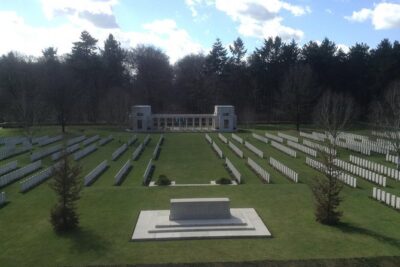
From Ypres, The Christmas Truce to Passchendaele Ypres Based WW1 private tour
Read our review →Browse the lists this tour appears in