
Reviewed · FLANDERS FIELDS & WWI BATTLEFIELDS
In Flanders Fields and Passchendaele Half Day Morning Tour
WWI tours can turn into long drives and hurried stops. This one works because it pairs the Ypres Salient story with real places you can look at, pause at, and absorb at a human pace.
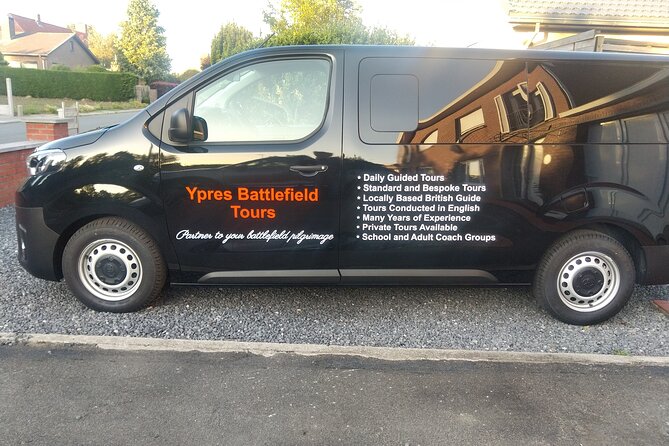
Two things I especially like are the small group size (max 8), which keeps the conversation flowing, and Roger’s style of explaining what you’re seeing in plain language. That combination is ideal when you want meaning, not just dates.
One consideration: the half-day plan moves quickly through several sites, so if you prefer lots of museum time, you may feel a bit rushed. Also, the Sanctuary Wood Museum has an extra fee.
Key points to know before you go
- Max 8 people keeps the pace calm and the questions coming
- Air-conditioned transport helps you reach the harder-to-get sites without fatigue
- Sanctuary Wood Museum is the one paid stop (admission not included)
- Essex Farm Cemetery focuses on the evacuation of wounded troops, not just memorials
- Langemark German Cemetery includes a WWII connection tied to Nazi ideology
- Tyne Cot Cemetery is the big, moving finale you will remember long after
Why this Ypres Salient tour hits in just 3.5 hours
The best part of this half-day morning is how it gives you a map of the conflict. You start with the wider picture of the Ypres Salient, then you peel back the layers cemetery by cemetery, trench by trench feel. By the time you reach Passchendaele and Tyne Cot, the whole area stops feeling random.
You also get the benefit of a guided thread. Instead of bouncing between signs and statues, you’re guided to notice patterns, like how sites shift from front-line remnants to burial grounds and then to post-war meaning. That makes your photos better too, because you know what you’re looking at.
If you’re short on time in Belgium, this is a smart way to get your bearings fast. It’s also a good fit if you’ve already read a bit about WWI and want the places to click into place.
Booked on the same trip to Ypres:
- From IEPER Private 4-hour Tour of the Ypres Battlefield
★ 5.0 · 154 reviews - Ypres: An exploration of the deadly salient battlefields
★ 5.0 · 76 reviews - From Ypres, The Christmas Truce to Passchendaele Ypres Based WW1 private tour
★ 5.0 · 29 reviews
Meeting at Ypres Station and getting comfortable fast
You meet at Station Ieper, at Colaertplein 35. The tour starts at 10:00am and ends back at the same meeting point, which is handy if you’re stitching this together with lunch or an afternoon ride.
Even though it’s only half a day, you’re not stuck walking from stop to stop. You travel by air-conditioned vehicle, which matters in warm weather and also on long, uneven roads in the countryside. This is especially helpful when the sites are spread out and you want to spend your legs on the places that really matter.
A mobile ticket is used, and the tour is offered in English. And because the group is capped at 8, you’re not fighting for time with the guide, or trying to hear explanations over a crowd.
Sanctuary Wood: the Ypres Salient story begins where the fighting happened
The tour starts at Sanctuary Wood with an overview of the fighting in the Ypres Salient. This first stop is short, but it’s a big deal. It sets the emotional and geographic frame, so the later cemeteries and memorials don’t feel like isolated spots on a map.
In plain terms, you learn how the front line in this area worked, how attackers and defenders kept colliding in the same rough zone, and why Ypres became such a symbol. This kind of groundwork helps you understand why a burial ground or a memorial in one field can connect to an earlier battle you might have seen mentioned elsewhere.
Expect time to look around, not just listen. Roger’s approach is respectful and paced, so you can take in the setting at your speed before moving on.
Sanctuary Wood Museum: one paid stop that explains what you’re seeing
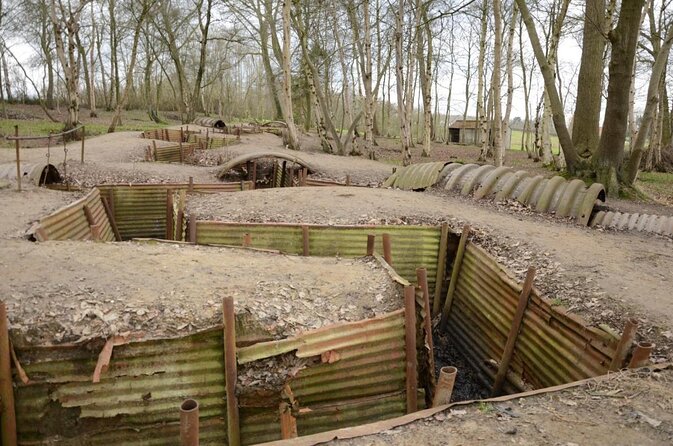
Next comes the Sanctuary Wood Museum and preserved trench areas. This is the one stop with an entrance fee that is not included, and it’s about €8.00 per person.
Why this matters: outdoor WWI sites can be emotionally powerful, but a museum with preserved trenches helps you connect scale and purpose. You see features that are easy to miss from the outside. You also get a stronger grasp of how soldiers lived, worked, and moved through damaged ground.
There’s one practical note. The museum is not open on Mondays. On those days, the tour visits alternative trenches instead. If you’re traveling around a Monday, I’d treat that as a normal change, not a problem, since the tour still keeps the trench focus.
More around Ypres:
- From Ypres: WWI Battlefields Private Tour
★ 5.0 · 25 reviews - Bellewaerde Aquapark Entrance Ticket
★ 4.4 · 19 reviews - Ypres Battlefields and Passchendaele Museum Full Day Tour
★ 5.0 · 10 reviews - Full Day Canadian WW1 Vimy and Somme Battlefield Tour from Ypres
★ 5.0 · 6 reviews
Essex Farm Cemetery: dressing station bunkers and the wounded evacuation routine
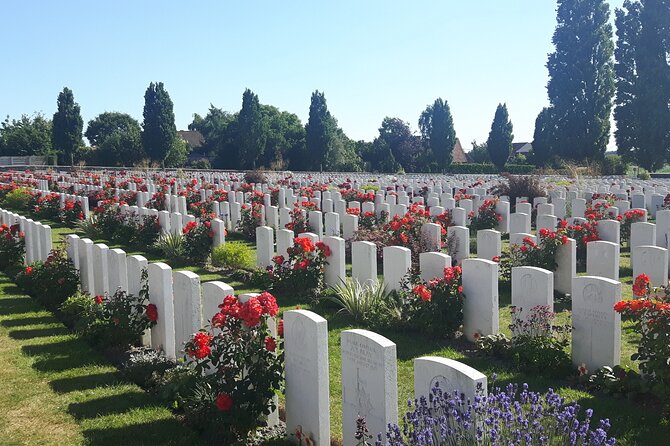
Essex Farm Cemetery is where the tour gets more “human logistics.” You look at preserved dressing station bunkers and learn about the procedure for evacuating wounded troops.
That angle can be jarring, but it’s also one of the most educational parts of a WWI visit. It turns the war from big-picture strategy into the day-to-day reality of what happened after someone was hit. You start understanding why certain sites were built where they were, and why the system around the front line was just as important as the fighting.
You get about 30 minutes here, which is enough for the key stories without dragging on. If you want to ask questions, this is the stop where the group size really helps.
Langemark German Cemetery: 44,000 graves and a WWII link you should know
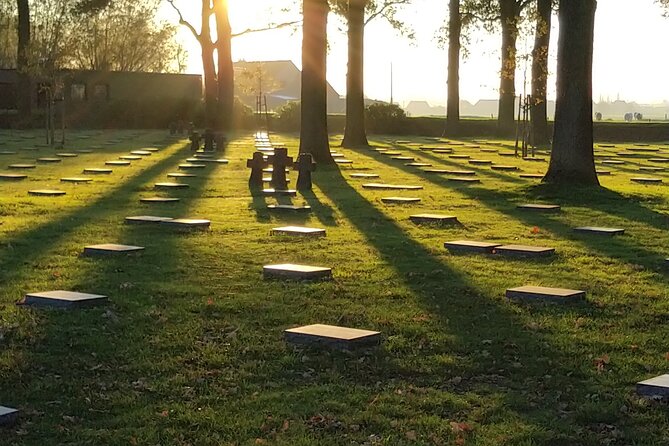
Langemark German Cemetery is known for its sheer scale, with about 44,000 burials. But the tour adds an extra layer by discussing its links to Hitler and the Nazis of World War Two.
This part can feel uncomfortable, and that’s fair. The meaning of memorials can change over time, and WWI sites were later used for political messaging. With a guide explaining the connections, you’re not left guessing why a cemetery might be talked about in later European history classes.
The practical takeaway for you: don’t just look for names. Look for how the site has been framed by memory and politics. That context makes your visit clearer and helps you avoid oversimplifying what these places represent.
Saint Julien Memorial: the Brooding Soldier and the first gas attacks story
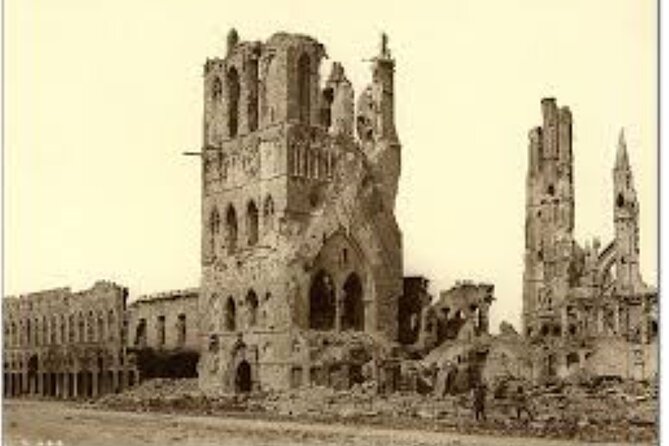
At Saint Julien Memorial, you’ll see the Brooding Soldier Memorial and hear the story of the first gas attacks. This stop is brief, around 10 minutes, but it lands with focus.
Why it works in such a short time is the way the guide ties the memorial to a specific moment in the war’s escalation. Gas attacks are often described in broad strokes, but hearing how that shift happened makes the terror of it more understandable. You also learn why certain memorials carry such heavy symbolism.
If you’re someone who likes to read the details on memorials, bring a little extra patience here. The time is short, but you’ll likely want a minute to absorb the stonework before the group moves on.
Passchendaele: battlefield legacy, not just a name on a map
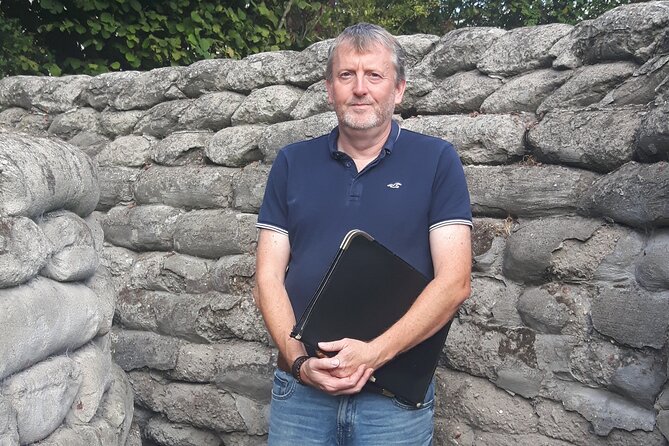
Then you head to Passchendaele, where you get the battlefields of Passchendaele and its legacy of the Great War. Expect about 15 minutes.
Passchendaele can become a slogan from books, so this stop helps you ground the word in place. The goal here isn’t to teach you every tactical term. It’s to show how the battle’s outcome and reputation shaped what people remembered afterward.
This is also a good “breather” stop in the schedule. It’s short enough that you don’t feel burned out, but still timed after the heavier cemeteries and memorials so you can handle the emotional load.
Tyne Cot Cemetery: the largest British and Commonwealth cemetery that really gets you
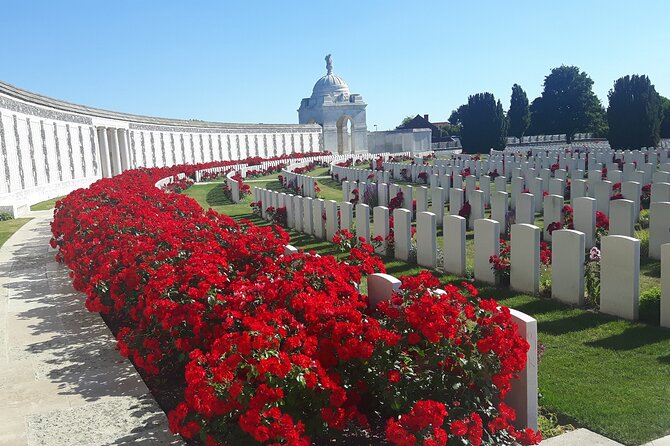
Tyne Cot Cemetery is the finale, and it’s a strong one. It’s described as the largest British and Commonwealth War grave cemetery in the world, and it’s stunning.
This is the stop where you slow down whether you plan to or not. The scale is hard to shake off your mind, and the uniform rows make the human cost feel immediate. With a guide, you can understand what makes Tyne Cot significant, not just how many graves there are.
You get about 35 minutes here, which is the right amount of time. You need space for your own reflection, and you also benefit from hearing context before you wander among the headstones.
Why the guide matters as much as the sites
A WWI tour without a strong guide can feel like reading labels in the wind. This experience gets praised for Roger’s approach, and you can feel the difference right away.
Roger’s explanations are respectful and paced, and he encourages questions. That matters because WWI history is full of overlapping fronts and moving parts. If something doesn’t make sense, you can ask and get an answer that connects to what you’re standing in front of.
The personal touches are also part of the value. In one case shared by the group, Roger even helped trace a relative buried at Hooge Crater. He has also written two books about the war, including Reclaiming The Salient, and copies have been signed after the tour.
If your group includes different national backgrounds, that’s another advantage. Roger has a way of bringing in national context so the story doesn’t feel like one country’s perspective only. For example, Canadians often appreciate when contributions are highlighted in the places they visit.
Practical tips so you get the most out of the morning
Wear shoes you trust on uneven ground. Cemeteries and trench-adjacent areas can be damp, and you’ll want your footing when you pause for photos.
Bring a light layer. Even in a short tour, you can spend time outside looking over stone and fields, and the weather can shift fast.
If you have a specific person you want to find or a question you’ve been carrying, write it down before you go. The pace is guided but not rigid, and a small group means you’re less likely to lose your chance to ask.
Finally, keep your expectations realistic. This is a half-day introduction. You’ll get meaningful context and a well-paced route, but you won’t see everything at a deep museum level at each stop.
Price and value: what $108.84 buys you and what it doesn’t
The price is $108.84 per person for about 3 hours 30 minutes. For WWI touring in and around Ypres, that’s fairly priced when you consider two big value points: small-group guiding and air-conditioned transport.
Admissions are mostly covered through the guided stops. Sanctuary Wood Museum is the one clearly listed fee, at €8.00, and it’s not included. So if you know you want museum time, mentally budget that extra amount.
The biggest value is the guided sense-making. If you do these stops on your own, you can get there, but you may miss the thread connecting why each cemetery or memorial sits where it does, and how the fighting story evolves across the region. With Roger, you’re not just collecting sights, you’re building understanding fast.
Who should book this tour, and who might prefer something else
This works best if you want a high-impact overview of the Ypres Salient without doing a full day. It’s also a great choice for first-timers to WWI sites who feel overwhelmed by the number of memorials.
It’s ideal if you care about respectful, thoughtful explanations, not just walking and stopping. The small group size makes it a good match for families too, especially if you want answers in a way that doesn’t talk down to kids.
If you already know all the battles and want a deeper dive into museums, you might want to pair this with extra self-guided time later. The half-day structure is tight by design.
If you’re sensitive to heavy topics, it helps to know the tour covers gas attacks, evacuation procedures, and politically charged memorial history. Go in with that awareness, and you’ll get more from it.
Should you book the Flanders Fields and Passchendaele half-day morning tour?
If you want your Ypres visit to make sense fast, I’d book it. The route efficiently links the Ypres Salient framework to key memorials and cemeteries, and the guide quality seems to be the difference-maker, especially if you like asking questions.
I’d pay extra attention to the museum details if you’re traveling on a Monday, since Sanctuary Wood Museum is not open then. And if you strongly prefer slow, long museum visits, you may want to build in extra time elsewhere.
Overall, this is a solid way to see the major WWI sites around Ypres in a single focused morning, with a guide who turns stone, trenches, and names into something you can actually understand.
FAQ
How long is the half-day morning tour?
The duration is about 3 hours 30 minutes.
What does the tour cost, and what is included?
The price is $108.84 per person. Included is an air-conditioned vehicle.
Which language is the tour offered in?
The tour is offered in English.
Where do we meet, and where does the tour end?
You start at Station Ieper, Colaertplein 35, 8900 Ieper, Belgium, and it ends back at the same meeting point.
Is a museum ticket included?
No. The Sanctuary Wood Museum entrance fee is not included, and it is listed as €8.00 per person.
Is the Sanctuary Wood Museum open every day?
No. It is not open on Mondays. When it is closed, the tour visits alternative trenches.
What is the group size limit?
The maximum group size is 8 travelers.
Is the tour suitable for people with mobility limits or service animals?
Most travelers can participate. Service animals are allowed, and the meeting point is near public transportation.
What is the cancellation policy?
Free cancellation is available up to 24 hours in advance for a full refund. After that point, refunds are not available.
Reviewed lately in Ypres
- Ypres Battlefields and Passchendaele Museum Full Day Tour★ 5.0 · 10 reviews
- Bellewaerde Aquapark Entrance Ticket★ 4.4 · 19 reviews
- Ypres: An exploration of the deadly salient battlefields★ 5.0 · 76 reviews
- From IEPER Private 4-hour Tour of the Ypres Battlefield★ 5.0 · 154 reviews
- From Ypres: WWI Battlefields Private Tour★ 5.0 · 25 reviews
- From LIlle or Bruges, Christmas Truce to Passchendaele Ypres 1 day WW1 private★ 5.0 · 5 reviews
- From Ypres, The Christmas Truce to Passchendaele Ypres Based WW1 private tour★ 5.0 · 29 reviews
- Full Day Canadian WW1 Vimy and Somme Battlefield Tour from Ypres★ 5.0 · 6 reviews
Flanders Fields & WWI Battlefields, compared.
From Bruges: Great War Flanders Fields Minibus Tour w/ Lunch
Read our review →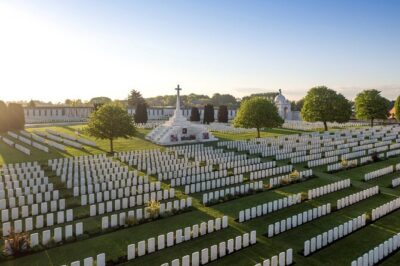
Flanders Fields Remembrance Tour from Brussels
Read our review →
From IEPER Private 4-hour Tour of the Ypres Battlefield
Read our review →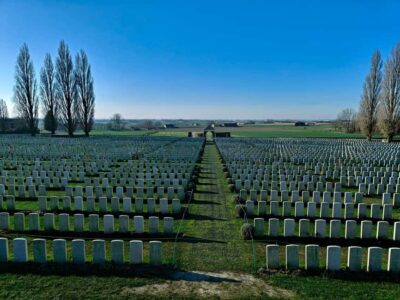
Ypres: An exploration of the deadly salient battlefields
Read our review →
From Bruges: Flanders Fields Remembrance Full-Day Trip
Read our review →
Small Group Ypres Remembrance Day Filled With War History
Read our review →
From Ypres, The Christmas Truce to Passchendaele Ypres Based WW1 private tour
Read our review →Browse the lists this tour appears in